Tuesday, July 15, 2008

Bishop Robinson at London Premier: For the Bible Tells Me So

With the every ten years Lambeth Conference within days of beginning, pre-events are taking place in London and Canterbury. Katie Sherrod reports the following from the Walking with Integrity blog.
__________________
Tonight the London Literature Festival at the Southbank Centre featured the UK premier of For The Bible Tells Me So, “a provocative documentary about the chasm that separates gay life and Christianity today,” produced by Dan Karslake. It was followed by a conversation and Q&A with the Rt. Rev. Gene Robinson and Sir Ian McKellen, Shakespearean actor and star of The Lord of the Rings. The evening started with a beautiful bass voice giving the standard instructions for everyone to turn off their cell phones and pagers. Turns out it was Sir Ian, who arrived on stage a few minutes later.  He introduced the movie, saying he had seen it in Minneapolis when he was touring with Lear. He then retired to the audience to watch it. The full house was clearly engrossed in the film, laughing, applauding, sighing, and wiping away tears as it progressed. When it was finished, they applauded enthusiastically for well over a minute.  Sir Ian returned to the stage to introduce Bishop Robinson, comparing him to the “heroes” who helped overturn the ban on gays in the military in the UK. Then he introduced Bp. Robinson as “a man of hope, but so much more than, all the way from New Hampshire, all the way from Sodom and Gomorrah, but not all the way from the Lambeth Conference.”  Bp. Robinson entered to laughter and wild applause. He began by introducing producer Karslake and then introducing the audience “to the person who makes my life possible and the love of my life, my partner, Mark Andrew.”  Sir Ian began by asking why the bishop agreed to participate in this film – wasn’t taking care of his diocese enough without getting involved in something larger?  Bp. Robinson told how after all the death threats that followed his consecration, Karslake managed to get past all his security and appear in his office to tell him about his idea for the film. Karslake impressed him with his passion. But more than that, the bishop felt he could trust Karslake with his parents.  “As for the diocese, they are so wonderful – I love these people and they love me back. It’s been hard for people in my diocese to share me with the world. . . They hear about me sharing the stage with Sir Ian McKellan but the press is never there in the church basement with potluck with macaroni and cheese and the Jello molded salads, doing the things a bishop does on a day in, day out basis,” he said.  “I turn down a lot of offers. I tell them I have this day job. You know, my call was to ministry and my personal call has been to the marginalized, to those told for so long by the church, by the culture, by parents, by who knows that they are less worthy of God’s love. And my own life and experience, by God working in my life, I know what resurrection is about because not only have I seen it, I’ve lived it.”  He went on to talk lovingly about the people in his diocese, praising their Christian outreach to the world.  “You know, I say to people if you want to see what the church is going to be like after we stop obsessing about sex, come to New Hampshire. Oddly enough, ours may be the diocese out of the entire worldwide communion dealing the least with this. Everybody else seems to be having to work on this all the time and we’re just getting on with the Gospel,” he said.  Bp. Robinson said he thought one of the reasons the discussion in the Episcopal Church was getting so much attention was that all the mainline Protestant denominations in America are having to deal with the issue of full inclusion of GLBT people. They are watching very closely to see if the Episcopal Church splits apart, or starts hating each other, or pulls this off. They are waiting to see if “we are going to make a statement about the expansiveness of God’s love in a way that will bring people in,” he said.  “My sense is that we have a lot of people who have stopped hating us and they are happy to join us to work against hate crimes and so on, but they’re not ready to celebrate us either. These people in the vast movable middle are the people we can reach, the people that Dan made this film for, who want to be in the right place. . . but this Bible thing keeps hanging over them and the minute someone pulls scripture on them, they crumble. What I love about this film is I think it gives people a firm piece of ground to stand on to say, ‘No, actually I don’t think that’s what the Bible says.’  “It’s time for us to take back the Bible from people who have been using it as a bludgeon against some of the most vulnerable people in society.”  The audience responded with loud applause. Then Sir Ian called for questions from the audience.  The first question was from a man who said he understood that after excluding him from the Lambeth Conference, the archbishop of Canterbury sent a letter to the Diocese of New Hampshire asking him to donate $4000 to help support the Lambeth Conference. Bishop Robinson replied that that was not true – the request was for $7000.  The next question was asked by a transgender person who wanted to know what he thought was the origin of the neglect of the transgender community not only by society and the church, but also by the gay and lesbian community, some members of which “can hardly bear to use the T in LGBT.” The questioner related the story of a trans woman who was forced by security guards to use the men’s room where she was sexually abused.  Bp. Robinson said he could not speak to the situation in England, but he could talk about what he thought the situation is in America. He said, “This is big concern in the LGBT community in the United States and I think in some ways the gay and lesbian community has been insensitive and non-inclusive and needs to be called to account for that. I think there is work that needs to be done in the bisexual community and in the transgender community that for whatever reason we’ve done more work on in the gay and lesbian community, and that is for people to come out and really to tell their stories.  "Oddly enough, I would put bisexual people at the bottom of that list in America. We get more information and get exposed to more stories of real people in the transgender community than we do from bisexuals and I would say that most people in the church are more undone by bisexuality because they assume that means a person is by definition being promiscuous, having sexual relationships with people of both sexes at the same time. I guess what I would hope for both the bisexual and the transgender communities is that you continue telling your stories, because like this movie – it’s knowing people, having faces to put with the issues that has brought about this change. If people get to know us as people, then when we talk about the issue, a face comes up with the issue, and that irrevocably changes people.  “You’re absolutely right, we’ve got a long way to go -- even with the gay and lesbian community -- we have been careless with bisexual and transgender people and with their inclusion and with showing them the respect that should be there. We are on this remarkable journey and we’re living in this difficult transition time. It’s not up to me to ask, but I would both ask for your patience in teaching us and leading us and calling us to account, just the way you have done now. And you and others are in my prayers,” he said.  The next questioner asked about same sex couples adopting children. Bp. Robinson said that research – which is usually ignored – shows that there is only one difference in children raised by parents of opposite sexes and parents of the same sex, and that is that children of same sex partners are invariably more tolerant. He said his kids had four parents, three men and one woman. Both his daughters, unbeknownst to him, wrote their college entrance essays on what they had learned by having two gay dads.  An older gentleman then related his experience of sitting with his partner of many years behind the man who had heckled Bp. Robinson the previous night at St. Mary’s Putney. Prior to verbally attacking the bishop, the man said, he had vented his venom on this man’s partner. He said he and his partner had given up on the Anglican community for many years because they had been effectively ostracized and persecuted and excluded by the Anglican community in this country.  Bp. Robinson replied, “First of all, thank you for coming last night. Given your experience, that’s an act of faith in and of itself. What I say to people whose experience has been like yours is remember that God and the church are not the same thing. The church is our feeble attempt to discern God’s will and to live it out in our lives individually and in community. We get it wrong and history is full of times despicable times when the church has gotten it wrong. But God doesn’t ever get it wrong.  “Second of all, the church that many gay and lesbian people, bisexual and transgender people have left is not the church that’s there now. So I say to people go back and give it another try. Maybe the church you rightfully left because of abuse at the hands of religious people -- maybe that community isn’t what it used to be.”  He said that just because laws changed about racial discrimination doesn’t mean racism has gone away, nor have laws against discrimination against women ended sexism. He said there are two parts to the work. The first is getting the laws changed so that the system of heterosexism is not enforced by power. The other half is “changing people’s hearts, and like racism and sexism, homophobia will take a long time to disappear.”  He told of a sculpture at the Civil Rights Museum in Memphis at the Lorraine Hotel where Martin Luther King was shot. It is a relief showing a spiral of African Americans moving upward, and every one of them is standing on someone else’s shoulders. He said he is only where he is because he is standing on the shoulders of the gay men at the Stonewall Bar in New York who stood up against police harassment thirty or forty years ago, and of other gays and lesbians who stood up against injustice.  “There are people who will need or want to stand on yours and my shoulders, and there are things you can do to change your world and the world, and I think that’s exactly what we’re doing,” he said.  When asked by another man how he, Bp.Robinson, and the people of New Hampshire and people of good will could support the Archbishop of Canterbury as he tries to mend the communion in the face of those bent on splitting it, Bp. Robinson said that as a bishop, he benefits from the critiques of the people he serves, and that people can best help Archbishop Rowan Williams by offering loving critiques.  “I am coming to Lambeth Conference not to storm into the pulpit and rip the microphone from his hands or to protest in any way. I’m simply wanting to be there both to tell the story of God’s astounding work in my own life that enables me to be who I am, and to tell people that God is available and wants a relationship.  “I’m not willing to have them leave and not be reminded on a daily basis not just by my presence but by many people from around the Communion who are both faithfully and unabashedly Christian and unashamedly gay, and we’re going to be there to remind them that we are here too and we’re not going anywhere. They took vows to serve all their flock, not just some of their flock, so I made that witness in respectful critique in hopes that in their conversations they will remember that all of them, no matter what country they come from, no matter what the legal or religious stance about homosexuality is, we are members of their churches and they have vowed to serve us all. I pray for the archbishop of Canterbury every day,” he said.  He said it’s very odd for Americans to think about an established church, because we are so intent on separation of church and state. How can a state church go against laws that affect every other part of the state? He said it’s hard to get his head around that.  He said he is for separating the civil rights of LGBT people from the religious rites, that he believes a lot of religious people would support civil rights for them if they were separated from religion. He suggested that people might get married in a civil ceremony and then the religious people would go to church to have the union blessed, as people in France already do.  A man said that given that Archbishop Akinola was not going to change his views, and Archbishop Jensen was not, why would the Anglican Communion not benefit by splitting into different churches.  “The strongest argument that can be made for the Anglican Communion, and I make it all the time, is that we actually need each other. We need it for our own salvation, because if our brothers and sisters in Africa and Asia and other parts of the world aren’t there to tell us what we need to hear, those of us in the West and especially in America, we need to hear the ramifications of America’s waltzing around the world acting like a drunken cowboy, having our way, what we’ve done through colonialism, in terms of racism. We need to have a Communion so we can have those conversations."  He said American, British and Canadian bishops at Lambeth are going to hear what life is like in Mozambique, in Kenya and in other places.  “I long for those kinds of discussions. And you know, the world needs a model like that. Right? If we don’t figure out how to live together as the world gets smaller and smaller, even though we disagree about things, it’s not going to be pretty. And wouldn’t it be nice if the Anglican Communion could offer a model that the world might learn from?"  He went on to say, “You see in the movie deeply religious people who have a world view, don’t they? And that world view seems to explain pretty much everything that’s happening. And then they have an experience for which that world view is insufficient to explain. And in the film the families are caught between what they’ve been taught and love for their child. And then inevitably that throws one into chaos and confusion and anger and denial and all kinds of things. And at the end of that process comes hopefully a new worldview that takes into account that new experience.  “I think those of us in the Anglican Communion need one another to have that kind of transformational experience on a variety of topics, including this one. So let’s put it this way. I am not optimistic, but I am hopeful. Optimism seems to me to depend only upon what I’m able to do, and that’s not very trustworthy. Hope depends on what God is able to do.”  The last question was from a young woman who said there was a Christianity before there was a Bible. Could he imagine a Christianity without a Bible or is it integral to the faith as we perceive it now? He said he did not think he could imagine such a thing.  “The central tenet of Christian belief is that for a reason we can only imagine is self-giving love, God makes this astounding decision to reveal God’s self to us. For Christians, that happened in the person of Jesus Christ. And the most we know about that is in those sacred texts. Now what we do with those sacred texts is very important here. You know the four Gospels are not unlike four people who witnessed an accident and each noticed different things, remembered different things that the others didn’t. So we have to use our brains here. God doesn’t ask us to check our brains at the door. We are to use the intellect we have been given to make sensible and reasonable and right choices about those interpretations. So I can’t imagine out doing that without the Bible.  “Let me say this about the Bible, and this is something I’m ashamed to say I only grasped in the last year or so even though I must have read it a thousand times. In John’s Gospel, on the night before Jesus dies, he says this remarkable thing to his disciples. He says, there is much more that I will teach you that you cannot bear right now, so I will send the Holy Spirit who will lead you into all truth.  “I take from that that Jesus is saying I’ve done just about all I can do with you bunch of fishermen and workman but you know what, God isn’t finished with you and God’s self. That’s why I say I don’t worship a God that’s locked up in the scripture two thousand years ago. The God I know in my life is alive and well and interacting with us all the time. And I believe that Holy Spirit – God -- is leading us closer and closer to a better and better understanding of God’s truth. It’s not that God’s changing, but our ability to apprehend and comprehend God is changing. Thank goodness for that. Look how we used scripture to justify slavery or the subjugation of women and now LGBT people.  “I am hopeful that Spirit will lead us forward into an ever better picture of God’s truth.”  Posted By Katie Sherrod to Walking With Integrity at 7/14/2008 09:40:00 PM _________________________________________________________________ To unsubscribe, turn on digest mode, change your address, or otherwise modify your subscription options, please visit: http://lists.integrityusa.org/mailman/options/walkingwithintegrity/flagordon%40aol.com

Atchbishop of Canterbury Needs a Miracle

Church of England: Beset by liberals, hounded by conservatives, Williams needs a miracle to keep church intact

Link:     Church of England: Williams needs a miracle to keep church intact | World news | The Guardian

By Stephen Bates

When Rowan Williams was appointed Archbishop of Canterbury almost exactly six years ago, one Church of England bishop is said to have rolled his eyes heavenwards and murmured: "God save us from a holy bishop."

That was not the general view at the time. Williams's appointment as the 104th archbishop since St Augustine was broadly welcomed, both within the church and even from the massed choir of leader-writers and commentators, as an inspirational one.

At last, after decades of decline, dismay and disillusionment under dull, wily or managerial primates, there was to be a leader who was not only an intellectually brilliant theologian, but someone who was a wonderful speaker, almost ostentatiously spiritual, a deep thinker and self-evidently holy.

If anyone could reverse the decline and lead the renewal of the established church, Williams was that man. He might even be its last chance.

At the time, the anonymous bishop's remarks seemed out of joint. But now many are not so sure whether holiness is enough and Williams can handle the crisis tearing Anglicanism apart.

As he prepares to welcome the bishops of the worldwide Anglican communion to their once-a-decade meeting at the Lambeth conference tomorrow, his first as Archbishop of Canterbury, Williams knows that as many as a quarter will not turn up and that there are open challenges to his leadership of the third largest Christian denomination, both from across the world and within the Church of England.

Last week, as the Anglican general synod in York overruled his advice to provide stronger safeguards for those opposed to women bishops - even though he himself is in favour of women in the episcopate - he sat with his head in his hands. Derided by conservatives, despaired of by progressives, his leadership flounders in division and dismay.

One archbishop from outside the church said: "There is an unholy alliance of Church of England dissidents and the disaffected. The potential for further disintegration is clear. Quite honestly, his personality and way of doing things are not geared for conflict diplomacy. He means well. He's a godly man, but he's theorising when what is needed is action.

"Is he the wrong person to deal with this? He looks for consensus where there is none and, when you listen to everyone, you end up losing sight of the plot. The gifts for which he was chosen are being stifled. It's a tragedy. I am sorry for a man who wants to do what's best but doesn't see it in terms of leadership. He has all the gifts to be a professor or an academic, but not an archbishop. What is needed is someone who can get their sleeves rolled up and provide some downright unintellectual leadership."

With the Anglican communion crumbling around his ears; with revolt among the remaining rump of high Anglo-Catholics over the church's palsied progress towards women bishops; with conservative evangelicals around the world in alliance with some African primates against any accommodation with gay people and with a fierce internecine struggle over authority and property in the sister American Episcopal church, Williams must wonder whether it wouldn't have been better to do what he considered as a student and become a Catholic instead.

As he shuts the double doors leading to his family's gloomy second-floor flat in Lambeth Palace, among its gothic battlements and surrounded by the high wall that once kept out the London mob, the archbishop must reflect on what on earth he has taken on. "He thinks it's horrible," says one close to him.

Even worse, he must ask himself whether he might be the last Archbishop of Canterbury to preside over the worldwide Anglican communion, which stretches across 164 countries in 38 church provinces and still claims to be the third largest Christian denomination. It notionally embraces 70 million followers, though as a third of those are English, of whom fewer than a million go to church in any given week, the number of true believers is much smaller and - as with many other denominations - sinking.

Power struggle

If this ever was a dispute about what the church thinks men get up to in bed together, or even, as evangelicals like to claim, about scriptural authority and obedience to the Bible, it now looks much more like a highly politicised power struggle for the soul of Anglicanism, with the archbishop stuck in the middle, trying to hold the show together.

Are they people of the Book, or people of the Spirit: governed by indelible words and rules laid down 2,000 years ago, or by the evolving spirit of Christian understanding in a changing world?

Some evangelicals are demanding a church within a church with their own disciplinary structures and self-appointed tests for orthodoxy; some archbishops claim loudly that the church is broken; others will not share communion - the fundamental test of fellowship - with those they deem unclean because of their liberalism towards gay people.

Although archbishops of Canterbury have only seen themselves as leading a truly international church in the last 50 years, just as the British empire evaporated, the office has always remained a central focus of Anglicanism. Part of the definition of being an Anglican is that you are in communion with Canterbury.

But now Anglicans are at each other's throats, seemingly obsessed to the exclusion of what might be thought rather more important matters of faith and Christian concerns, such as world poverty. Williams himself has come under almost continuous, virulent and often vicious attack from Anglicans who think of themselves as Christians. Is the game worth the candle? Is it worth all the effort to keep Anglicans singing from the same hymn sheet?

"There is a martyrdom complex there," says one senior cleric who has known the archbishop for many years. "He believes this is a cross he has to bear. I've heard him say it."

There is also concealed anger, according to another friend, a former primate. "He is exploding with anger ... He can hardly bear to hear the names of some of the bishops who are causing him grief."

And not only bishops. This is David Virtue, an American blogger of the spittle-flecked variety: "Williams puts collegiality ahead of gospel truth. That won't fly with these folk any more. The schism has already been caused by the liberals and pan-sexualists. If there is a break ... it is precisely because of the intransigence of the liberals and Affirming Catholics like Williams who want to change what revealed truth is.

"The post-colonial mentality of Williams and the Church of England hierarchs ... are appalling examples of xenophobia. The vast majority of the Anglican communion will no longer take it. They are done. Their leaders have tolerated the patronising tones of Williams long enough."

This is just the small change of daily abuse from Virtue and other online commentators and so far the reverse of truth or reason as to be risible. Although Anglicanism has gone through previous crises, this is the first to be fomented and exacerbated by the internet.

Not so long ago, it would have taken weeks to get a letter to Nigeria and then a response. Now, Peter Akinola, Archbishop of Abuja, one of the leaders of the conservative faction, a man who says homosexuals are worse than beasts, can be juiced up to outrage within minutes.

This was him at a meeting of conservative Anglicans in Jerusalem last month: "We must rescue what is left of the Church from the error of apostates ... we cannot dare not to allow ourselves and the millions we represent to be kept in a religious and spiritual dungeon ... We can no longer trust where some of our Christian leaders are taking us."

Not all African Anglicans think like Akinola. Njongo Ndungane, recently retired Archbishop of Cape Town, says: "There is a lack of charity, tolerance and magnanimity, a lack of listening and understanding, and Rowan has been taken advantage of. Our strength is unity but instead colleagues are focusing on the disintegration of the communion. They are fixated on one issue. It's a power-play going on."

Williams has tried hard to steer a middle course. It has not stopped him suffering regular abuse, more repeatedly, harshly and degradingly than most - he has had dog excrement in the post - but on a more concerted and organised scale than his predecessors.

He's meekly taken it too: "The trouble with Rowan," Richard Chartres, the Bishop of London, once boomed, "is he's too damn Christian towards these people."

Not that Williams has the united support of the English bishops. Factionalism is rife with ambitious men such as Rochester's Michael Nazir-Ali, overlooked when Williams was appointed and again when John Sentamu was made Archbishop of York, scarcely giving Williams his support. Nazir-Ali may be a darling of the rightwing press for saying rude things about the Islam of his forebears, but he is not collegiate, or broadly liked even by fellow evangelicals among his colleagues - some of whom regard him as arrogant and patronising.

Nazir-Ali was one of two English bishops to attend the Jerusalem gathering where he spoke in barely veiled terms about his disdain for the church leadership. He will boycott the Lambeth conference, 20 miles down the road from his diocese.

Conservative evangelicals in the C of E never liked Williams's appointment. From the start they harangued him as a heretic and false teacher, words which ring archaically in the 21st century even from men (it's always men) who go on to tell you seriously that the 17th-century Reformation still needs to be finished. Philip Jensen, dean of Sydney Cathedral and brother of the city's archbishop, Peter, who is one of the leaders of the insurgency, even called him a "theological prostitute".

Such men would not allow the Archbishop of Canterbury to preach anywhere near their pulpits lest he infect their congregations with falsehood.

What they don't like is that Williams has in his academic past suggested that sexually active, partnered gay people might actually have a part in church life. In a lecture in 1989, long before he became a bishop, while he was still Oxford's Lady Margaret professor of divinity, he said: "If we are afraid of facing the reality of same-sex love because it compels us to think through the processes of bodily desire and delight in their own right, perhaps we ought to be more cautious of appealing to scripture as legitimating only procreative heterosexuality."

Williams has never recanted his views. But he has also never been forgiven by gays and liberal Anglicans for forcing Jeffrey John, a celibate gay theologian, to stand down after he had previously agreed to his appointment as suffragan bishop of Reading in 1993.

The climbdown came following pressure from conservative evangelicals who enlisted support not only from bishops but from leaders such as Akinola. Williams, less than a year in office, thought the appointment would split the communion. It didn't help that the American diocese of New Hampshire was at the same time electing (in contrast to the church here, where soundings are taken and then prime ministers appoint and the Queen approves) a partnered gay bishop of its own, Gene Robinson - and he could not be forced to resign.

Five years on, the fury remains. Here's Marilyn McCord Adams, the American theologian who is Oxford's regius professor of divinity: "He has undermined us big time. He's not a good leader - he'd be better to be what he was before, a bishop in a small diocese.

"With its current attitudes to gays and women, what intelligent English person is going to think it is good to be part of the Church of England?"

Or Richard Kirker, leader of the Lesbian and Gay Christian Movement in Britain: "I wonder whether Rowan's desire to hold the communion together has been more important to him than making it clear where he stands. Leadership is about clarity of vision, not appeasing factions with irreconcilable differences. The evangelicals have never been in the compromise business. They've been indulged and emboldened."

Confused

The US and Canadian churches also feel confused and abandoned. Robinson's election was the excuse for some conservatives in the traditionally socially liberal Episcopal church to launch their attempt to dissociate themselves by setting up their own networks, supervised by province-breaking African bishops. The Africans have even started making some of the conservatives bishops in their own churches - Rwanda has nearly as many American bishops in its church as Rwandans - entirely against Anglican traditions of episcopal autonomy.

Liberal American bishops - many of them old friends of Williams, who knows the US well - have been baffled by his apparent unwillingness to understand their democratic polity. Although some who consecrated Robinson privately now say it was a mistake because it upset the rest of the communion so much, they insist that he was properly chosen and rightfully elected.

It exasperates them that the archbishop has spoken as though the Episcopal church is evenly divided, when actually its schism involves half a dozen dioceses out of 113, and that it took Williams four years to attend a meeting of the US bishops in New Orleans last September. By all accounts, they were distinctly unimpressed - and he and his staff were surprised to find that the Americans were serious and godly men and women, not the atheistic ogres painted by their opponents.

There are complaints on all sides about the calibre of the archbishop's staff - mediocre, indolent and out-of-touch, say many, preferring to keep their man walled up at Lambeth. But they can point to what happens when he gets loose, as with his much-criticised speech on incorporating aspects of sharia law into the English legal system.

Williams did not consult his staff before making the speech, otherwise they would have advised him to reword it. But he doesn't always listen to that sort of advice, from men less clever but more worldly then he is. There is still something of the don about him. He has lots of study time and last year, amid the Anglican crisis, took three months off in which he completed a 110,000-word book on Dostoevsky.

Admirable though such detachment is, it leaves an impression of drift, often dressed up as an example of his reflectiveness, allowing time for wounds to heal, for the greater good to prevail.

Actually, it may be just cluelessness. One former primate says: "I once asked Rowan what his strategy was. He twitched his eyebrows and said, 'There is no strategy.' That shocked me."

The crisis has just got worse, however, with the vacuum of leadership. Williams sometimes seems to bear the imprint of whoever last sat on him, translated as, in the words of Akinola, overheard chortling to colleagues at a primates' meeting: "He'll do what we tell him."

But Williams's supporters say this is deliberate: he doesn't "do" leadership like his predecessors: his is a collegiate, consensual approach.

Martyn Percy, principal of Ripon College Cuddesdon, the theological training college near Oxford, says: "He is deeply unpopular because he looks dithery and prevaricative, but the institution is woolly and thick-knit. He has this theological vision to hold all this together. Rowan is calling the church to account and sacrifice. There should be no reason to break apart: that would be failure. He's a priest and teacher, not a CEO."

Nevertheless the void has been filled by more determined and aggressive characters than he and disaffection is spreading. The recent meeting of evangelicals in London attracted far more attendees than the organisers expected.

Stupid

"It wasn't just the usual suspects," one evangelical English bishop said. "The church will have to take them more seriously, but the House of Bishops isn't ready to do that. He's lost the respect of liberal catholics over the gay issue and conservative evangelicals don't like him because they are too stupid to understand his theological nuances and think he isn't a proper Christian. History will judge Rowan to have been much more effective than people like to suggest. The Lambeth conference and the Anglican communion are busted flushes now, but that's not Rowan's fault for trying."

The insurgent coalition remains confused: American high church Catholics making convenient common cause with English, African and Australian evangelicals such as the Jensens who say they could never attend a high church mass.

They want their definition of Anglican orthodoxy imposed, but not by an archbishop with views such as Williams's. They insist they are not leaving, but that is possibly because they mostly have nowhere else to go. Anglicanism remains, in the old evangelical phrase, a convenient boat to fish from: outside the seas are dark and choppy. They would not have the status of the institution, its buildings or its resources.

Alister McGrath, one of the most respected moderate evangelical academics, said: "It is not Rowan's fault that he is left looking like King Canute. Big cultural forces are causing the church to split and what held it together in the past is no longer there. While there are undoubtedly theological issues, it is also profoundly political.

"Rowan has a very high view of unity and has worked hard, but it is not going to be enough. It is virtually impossible to achieve consensus and it is very difficult to exercise leadership in that context. Leadership is about more than finding consensus - you also have to map out the route that you believe to be right."

What is constantly overlooked is that the archbishop of Canterbury has purely symbolic influence, not power. He can't impose his will even on the Church of England, let alone the other provinces of the worldwide communion. What the position has is authority. What it has lost is respect.

CV

Background Born 1950, in Swansea, where his father was a mining engineer. Married to Jane, with whom he has two children, Rhiannon and Pip.

Education Christ's College, Cambridge, BA 1971, MA 1975. Wadham College, Oxford, PhD 1975.

Work Theology lecturer, College of the Resurrection, Mirfield, West Yorkshire 1975-77; ordained priest in 1978; canon theologian, Leicester Cathedral 1981-1982; dean and chaplain, Clare College, Cambridge 1984-1986; Lady Margaret professor of divinity, University of Oxford 1986-91; Bishop of Monmouth 1991-2002; Archbishop of Wales 1999-2002; elected as Archbishop of Canterbury in 2002.

Publications Prolific author and essayist on philosophy, theology and religious aesthetics. Recent work examines contemporary cultural and interfaith issues.

Recreations music, fiction, languages

Wednesday, July 09, 2008

Episcopal Priest, Others Attacked in NYC

I hope that hate crimes are indeed enforced in this awful situation. God bless Father Braxton and his ministry.
Gordon
from gay.com
Four held in attack on priest at LGBT center
July 9, 2008
Four teenagers have been arrested on suspicion of assaulting an Episcopal priest who tried to halt theirattack on transgender youth outside a Queens, N.Y., shelter, The New York Times reported.

The Rev. Louis Braxton Jr. said he was returning to the shelter, Carmen's Place, on Monday night when he saw the teens hit a center resident with a garbage can.

Braxton, the shelter's director, told the Times that he shouted at the attackers and they fled, but that four youths soon returned, wielding a paint bucket, a miter box, steel brackets and a belt.

Braxton and other witnesses said the attackers spewed obscenities and slurs. A district attorney's spokeswoman told the Times that hate-crime charges are being investigated.

"Father was trying to make peace with them, but then one of them hit him in the back of the head with a paint can," Alessandra-Michelle Carver, 21, told the New York Daily News. "He fell to the ground, and they kept hitting him."

Braxton was treated for bruises and cuts at a local hospital.

The suspects were arrested as they ran past New York transit police, the Daily News said. Police identified three suspects as Shara Mozie, 17, Tyreek Childs, 17, and Trevaughn Payne, 16. The fourth suspect, a 15-year-old boy, was not identified because he is likely to be charged as a juvenile.

The suspects face assault, weapons and harassment charges, the Times said. (The Advocate)

◊

Saturday, July 05, 2008

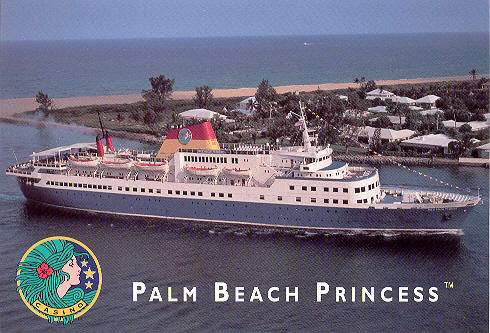
4th of July on the Palm Beach Princess

It rained like crazy starting at about 11AM on the 4th of July and continued all afternoon.
We had plans to meets our friends Bruce and Jack at their condo in North Palm Beach at 5PM to go out on the Palm Beach Princess, our casino ship in West Palm Beach. But the rained stopped at about 5.
We had a great time. They feed you alot. The barbecue dinner was fitting for the 4th of July and was really good.  Larry and I watched the show in the theater and took pictures while Jack and Bruce were playing the slot machines. Then they fed as breakfast at about 11. We had a great time.
The Pictures:
1: The view of North Palm Beach from Bruce and Jack's condo patio
2. A view of Singer Island from the ship
3. Bruce and Jack at breakfast
4. Gordon
5. Larry
6. The Palm Beach Princess

Friday, July 04, 2008

America's Birthday at St. Andrew's Episcopal

St. Andrew's Episcopal Church, Lake Worth, FL celebrated a wonderful civic 4th of July service last night. The choir was wonderful, especially on The Battlehymn of the Republic.
Lake Worth historian Helen Green did a great dramatic presentation of the history of the Statue of Liberty.
The reception was beautiful.  
Pictures above:
1) Refreshment table
2) Father Paul Rasmus in his really cool Florida patriotic shirt with flags and hibiscus
3) Your's truly
4) Larry getting some food
Tonight it's off to the ocean on the Palm Beach Princess where we hope it doesn't rain and where we should get some awesome pictures of the fireworks being shot off from barges on the intracoastal waterway along West Palm Beach

Tuesday, July 01, 2008

Anglican Communion Rift

Anglican head warns against conservative challenge

Published: 6/30/08, 5:06 PM EDT By MEERA SELVA

LONDON (AP) - The spiritual leader of the world's Anglicans raised questions Monday about the legitimacy of plans to create a global network of conservative Anglicans that would challenge his authority and the teachings of liberal North American churches.

Archbishop of Canterbury Rowan Williams said the proposal to form a separate global council of conservative bishops who will train priests and interpret Scripture would create more problems than it solves.

A council "which consists of only a self-selected group ... will not pass the test of legitimacy for all in the Communion," he said.

The plan emerged from a weeklong meeting in Jerusalem of conservative Anglican bishops, clergy and lay people from Africa and some north American and British churches. In a declaration Sunday, they announced plans for the fellowship as a "church within a church," stopping short of a complete break with the communion.

Conference participants expressed outrage at what they consider a "false gospel" that has led churches in the U.S., Canada and elsewhere to accept gay relationships. Long-standing divisions over how Anglicans should interpret the Bible erupted in 2003 when the U.S. Episcopal Church, the Anglican body in the U.S., consecrated the first openly gay bishop, V. Gene Robinson of New Hampshire.

On Monday, Episcopal Presiding Bishop Katharine Jefferts Schori, said that "much of the Anglican world must be lamenting the latest emission" from the Jerusalem conference.

"Anglicanism has always been broader than some find comfortable," she said. "This statement does not represent the end of Anglicanism, merely another chapter in a centuries-old struggle for dominance by those who consider themselves the only true believers."

In recent years, overseas conservatives have taken leadership of the more than 60 Episcopal parishes that have split from the denomination. The Episcopal Church includes more than 7,000 parishes.

As part of their new fellowship, the conservatives said they would continue to take in breakaway churches.

Williams warned that the conservatives' plans to intervene when congregations or priests around the world complain about the teachings of their local bishops would lead to the church being used to settle personal scores.

"How is a bishop or primate in another continent able to discriminate effectively between a genuine crisis of pastoral relationship and theological integrity, and a situation where are underlying non-theological motivations at work?" he said.

In their official statement from the conference, the conservative groups said they "do not accept that Anglican identity is determined necessarily through recognition by the archbishop of Canterbury." They also called the current setup for the communion, with the archbishop of Canterbury at its center, "a colonial structure."

The Anglican Communion is a 77 million-member family of churches that trace their roots to the Church of England. It is the third-largest grouping of churches in the world, behind Roman Catholics and Orthodox Christians, and has always held together different views.

The Jerusalem meeting was held just ahead of a once-a-decade gathering of all Anglican bishops, called the Lambeth Conference. Some of the more than 200 bishops in Jerusalem plan to boycott Lambeth, which begins July 16 in England.

___

AP Religion Writer Rachel Zoll in New York contributed to this report.

Celebrating Inclusion and a Great Englishman

After the 6PM service at St. Andrew's Episcopal Saturday night, we celebrated Herb's (pictured )91st birthday. He loved the surprise.
Margo Emery  (pictured) gave a wonderful message about inclusion and the St. Andrew's became an inclusive church.  It's a great read and I've posted it below. Thank you, Margo!
-------------------------------------------

WHATEVER HAPPENED TO THE PRINCE OF PEACE?


If I asked you to describe the personality of Jesus what would you say? What adjectives would you use to describe his temperament? Most people would say that he’s gentle, loving, kind, and compassionate. Then what do we do with Jesus as he appears in tonight’s lesson? The Jesus who says:


“Do not think that I came to bring peace on earth, I did not come to bring peace but a sword.”


Whatever happened to The Prince of Peace? What in the world is Jesus getting at?


Some Christians believe that Jesus was approving the use of violence. For them the sword is literally a weapon and a justification for violence, war, and capital punishment.


Other Christians see the sword as a symbol of conflict. I personally don’t think that Jesus was advocating violence – but he was warning us that we might encounter violence or conflict when we follow his teaching.


Standing up for our beliefs is sometimes painful. When I first came to St. Andrews’ several years ago, things were changing. There was a small group of people who had a vision of what St. Andrews’ might become. They wanted to start a chapter of Integrity – the Episcopal Church ministry for Lesbian, Gay, Bisexual and Transgendered people and their friends and families. They had a vision of St. Andrew’s as a radically inclusive, loving church where ALL would be truly welcome. They proposed to our rector at the time, Fr. Bill Hamilton, to found a Palm Beach County Chapter of Integrity. Some of those founding members were Canon Nolan, Bob Pingpank, John Lacy, Vance Oden, and Herb Steer. Not only did this group have a wonderful vision – they were also fortunate that Fr. Bill is a man who understands something about the inclusive love of Jesus – not only did he understand, but he also had the courage of his convictions. So Integrity Palm Beach was founded! What a wonderful innovative addition to the life of St. Andrew’s! What a great new ministry!


But guess what. It wasn’t all wonderful. There were some in the congregation who felt that Integrity had no place here. Felt it so strongly that they left the church.  I was new here at the time, so I didn’t know all the people involved, but I did know one: a man that I became acquainted with in my short time at St. Andrew’s – someone who truly loved the Episcopal Church and truly loved St. Andrew’s. But under the circumstances he felt that he couldn’t stay. He believed that the mission of Integrity was wrong. Now this was not some ultra conservative crank just making noise. He was a thoughtful man who served St. Andrew’s in many ways. He was valuable to the church for any number of reasons. I couldn’t understand his position but that was how he felt. So he left. And it really was a loss. I suppose some of the others who couldn’t agree with the concept of Integrity left a terrible void as well.


Just as Jesus told us in tonight’s lesson:


“One’s foes will be members of one’s own household.”


But as time went by things got better. Many of those who remained came to embrace the new ministry. Because of Integrity, we began to attract new members – and I don’t just mean the gay community – I mean all kinds of people who are simply attracted to the idea of a radically inclusive church. One of the new people who came to St. Andrew’s told me that she’d seen a flyer about Integrity in an ice cream parlor and as she put it – “ I decided that that was the kind of church I really wanted to belong to.”


It can’t have been easy for Fr. Bill in those difficult days, and it can’t have been easy for those who were on the vestry at the time. But following this moral struggle St. Andrew’s has come to embrace Integrity and there’s now a tremendous inner peace that we feel with this unique ministry. It was the right thing to do! Because the Kingdom of God is a divine place whose hallmark is radical inclusivity. None of us has a right to say who gets in and who doesn’t: not the congregation of St. Andrew’s Church, nor any Bishop, nor, may I add, the Lambeth Conference.


But just because we’re home to Integrity doesn’t mean that we’re the perfect church. We have far to go in some ways. We need to think about the millennium goals of the Episcopal Church and what we can do about them. We need to look for new ways to be in relationship with our home, planet Earth, and with other children of God.  We need to find ways to welcome in the Kingdomof Heaven even if it doesn’t make us popular. Jesus is asking a lot of us, but that’s the life of a disciple. Don’t we come here every week to renew our discipleship?


Whatever happened to the Prince of Peace? He’s still here, and he’s still loving and compassionate. But sometimes he asks us to take up the sword of conflict. As we’ve seen right here at St. Andrew’s, conflict can lead to tolerance, tolerance can lead to transformation,  

and transformation can lead to peace.


Margot Emery

for the Core Ensemble

561.582.0603


Does Senator Reid Have Alzheimer's?

John Lott is reporting over on his blog that Senate majority leader, Harry Reid will be stepping down from his position as majority leader due to having Alzheimer's disase.
Let's hope it's not true. I love receing  his "Give em Hell" emails.
He's a great guy.
Gordon

My Recent Alzheimer's Setback

I couldn't go to work yesterday. I woke up feeling weak, lightheaded and dizzy. Later, I started feeling extremely nauseated. I had a similar event about two weeks ago. It lasted for 6-8 hours and then I was fine.
This time, Larry called my neurologist and left a message. The doctor called back in about 10 minutes and told me to stop the Exelon patch for and make an appointment to see him in two weeks.
Since I have to be on my alzheimer's medication for 3 months in order to be considered for a clinical trial, I am disappointed. I don't know if the doctor will change the dosage, change the medication or what. I just hope it doesn't affect my ability to get into the research program.
Heck, for all I know it might not even be the Exelon that is causing the problem.
Gordon