Showing posts with label blog. Show all posts

Thursday, July 24, 2008

Lambeth Bishop March to End Poverty

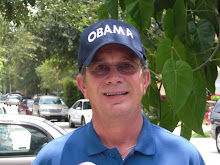
Here is a picture of Larry and myself taken with Bishop Frade in Miami last November.
Although marching to end poverty, sexuality issues were addrssed through sings of some of the marchers. I am so proud of my Bishop, Bishop Leo Frade. Here is the last sentence of this report:

The sexuality controversy roiling the Anglican world was not absent, with one protestor, the Rev. David Braid, holding a sign "Jesus never ordained sodomites. Neither should the church. Hitler was a sodomite."

Bishop Leo Frade of Southeast Florida had wrapped a rainbow flag around his sign because, he said, "when we talk about justice and mercy, we need to remember that gay and lesbian persons are discriminated against by the church and the government."

[Episcopal News Service, London] Anglican bishops and their spouses demonstrated on July 24 in support of poverty reduction worldwide, walking in purple cassocks and native dress past symbols of British power such as the Houses of Parliament and the prime minister's residence at Downing Street.

Archbishop of Canterbury Rowan Williams and other Christian and interfaith leaders were at the head of the march, walking behind a banner reading "Keep the Promise/ Halve Poverty by 2015," references to one of the United Nations' Millennium Development Goals for global progress.

The one-hour march, which created a river of violet down Whitehall Road, ended at Williams' residence, Lambeth Palace, across the River Thames from the seat of Great Britain's government.

Prime Minister Gordon Brown, speaking to the bishops at Lambeth, called the march "one of the greatest demonstrations of faith this great city has ever seen."

Brown said wealthier nations are not moving fast enough to meet the development goals. "At our current rates of progress," they will not be met by 2015 deadline set in the MDGs. Some, he said, will not be met for 100 years if the rate of progress is not increased.

"I say to you that the poor of the world have been patient but 100 years is too long for people to wait for justice and that is why we must act now. We know that with the technology we have, the medicine we have, the science we have, it is the will to act that must be found," he said.

Williams noted that "unless we address this great gulf between human beings, we cannot expect a future of stability or welfare. As the world grows smaller, the truth is that the suffering and the needs of anyone in our global community is going to be the suffering and needs of everyone in our global community. This is not and should not be a surprise to those of us who hold the Christian faith and who have believed for 2,000 years that when one part of the body suffers, all suffer."

Flanked by Christian and other faith leaders including Cardinal Cormac Murphy-O’Connor, Rabbi Sir Jonathan Sacks and Sir Iqbal Sacranie, representing Islam, Williams said that the goal must be "to give to each person what they deserve in the eyes of God, not what they deserve because of their prosperity but what they deserve because they are made in God's image and demand our respect, our love and our service without qualification -- that is justice."

Referring to an emergency session of the UN General Assembly on the global food and fuel crises, set for Sept. 25 in New York, Brown told the rally "we need a march not just to Lambeth, we need a march also to New York."

"I ask you to go back to your countries and I ask you to ask your governments and I ask you to ask all of civil society to tell people that on September 25 we have got to make good the promises that have been made, redeem the pledges that have been promised, make good the Millennium Development Goals that are not being met," he said.

Brown asked the crowd to join him in asking their governments to commit to three goals. The first is that by 2010, 40 million more children would be in school "on the road to every child being in schooling by 2015."

The second pledge would be to train medical workers and provide them with the equipment "to eradicate polio, tuberculosis, malaria and diphtheria, then go on to eliminate HIV/AIDS in our generation."

The third is to allocate $20 billion in food aid "and not for only food aid but to give people the means -- free of the old agricultural protectionism -- to grow food themselves with help from our countries to develop a green revolution in Africa."

Speaking after Brown, Hellen Wangusa, the Anglican Observer at the UN, said that she would bring word of the Walk of Witness to the UN meeting.

The march was organized in partnership with Christian social justice advocacy group Micah Challenge UK. Board member Paul Cook said the organization hopes to see "a roadmap" and a "global action plan" for getting back on track with the development goals' timeline.

With a slight breeze blowing off the Thames, the demonstrators enjoyed a perfect sunny summer day. Many of the bishops’ wives wore dresses and hats or such native costumes as saris, ready for a garden party scheduled to take place in the afternoon at Buckingham Palace. Occasionally, there was a burst of hymn singing, with "We are marching in the light of God" being one selection.

Some bishops had customized the backs of their signs: one read "Derby 4 justice" and another, "British Columbia 4 justice and peace." The march passed statues of British military leaders: Field Marshal Earl Haig, Field Marshal the Viscount Slim and one monument simply for "The Women of World War II." As they passed the statue of Oliver Cromwell outside Parliament, the deep tones of Big Ben began to toll the hour at eleven o'clock.

The one-hour march stopped traffic on one of London's busiest streets, with tourists gazing from the top of double-decker sightseeing buses and passersby snapping photos.

As the 600 bishops and their spouses assembled before the walk on a side street of government offices, workers hung out of the windows, taking pictures.

Bishop Henry Parsley of Alabama, who took advantage of several pedicabs hired for the marchers who found walking difficult, noted that his diocese contributes to Millennium Development Goal work. The march, he said, "is an opportunity to make a visual statement of support for the goals." Although the United States is generous in the area of foreign aid, its environmental record is poor, he said, adding that he hoped the march "gets translated back to (President) George Bush's office so he sees the bishops of the world care a great deal (about such issues)."

Bishop John Gladstone, Moderator of the Church of South India in S. Kerala, an ecumenical partner, said that in his area, "there are four million people who are very economically disadvantaged. The local church and diocese generate employment, attempt to attend to health care and to alleviate poverty through different ways."

Kallistos of Diokleia from the Orthodox Church  Patriarchate in Constantinople, dressed in black robes and headdress and wearing gold icons around his neck, stressed the universality of poverty. "Anglican problems are our problems," he said. "We are here today to bear witness against worldwide poverty so many people who are pleading for a fair distribution of wealth between the rich and poor can be heard."

The Rev. Dr. Michael Battle from Los Angeles, a chaplain at the Lambeth Conference, referred to Queen Elizabeth’s garden party later in the day and said the march “will show bishops can be relevant for the whole world. This is the first time they (the Lambeth Conference bishops) have done this. Usually it’s [just] high tea with the Queen.”

Bishop George Councell of New Jersey noted the so-called "Walk of Witness" was especially important since "later in the afternoon we have this privileged access to Buckingham Palace. I pray that we'll carry the hunger of the world and our own hunger for justice with us."

Bishop Ezekiel Malaandit of the Diocese of Bor in Sudan, whose primate earlier in the conference criticized the U.S. church's inclusive stance on homosexuality, said that "We are here to help people, to be supportive, to show we are one communion. Changing minds, sharing ideas and experiences, talking and working together like this we benefit from one another."

Bishop David Beetge of the Diocese of Highveld in South Africa said the development goals have a high profile in his area. "On HIV/AIDS, we've got 73 projects going: orphans and vulnerable children, early developmental childhood centers, reflecting on gender issues. We are trying to embrace the MDGs although there are eight different ones in a very holistic way to bring about a humanity and compassionate society which reflects the very heart of Christ."

Among the passersby watching the march, Thomas Pope said he traveled from his farm in Dorset to see the parade and applauded the bishops as they passed. "They have tremendous courage to stand out and walk down Whitehall in such a dignified way. I heard the archbishop (of Canterbury) speak on the wireless (radio) this morning and thought I would come and see it."

Another spectator, Jane Nelson, said she had come "to be in solidarity with the Episcopal Church of the USA. They have set a courageous example and I think it is sad that one of their duly elected bishops was not invited to Lambeth."

The sexuality controversy roiling the Anglican world was not absent, with one protestor, the Rev. David Braid, holding a sign "Jesus never ordained sodomites. Neither should the church. Hitler was a sodomite."

Bishop Leo Frade of Southeast Florida had wrapped a rainbow flag around his sign because, he said, "when we talk about justice and mercy, we need to remember that gay and lesbian persons are discriminated against by the church and the government."

Tuesday, July 22, 2008

Press Release: the Rev. Susan Russell Pres. of Integrity

As the majority of bishops attending the Lambeth Conference settled into daily Bible Study, Indaba groups and conversations across differences it was made clear that at least a percentage of the purple shirts on the Canterbury campus are focused on conflict rather than collegiality. Having issued statements on the ongoing genocide in Sudan and the ongoing discussions on human sexuality in the Anglican Communion, it was not genocide but sexuality that was the focus of the Sudanese primate's briefing to the media. In the press conference on Tuesday afternoon, the Primate of the Sudan (the Most Rev. Dr. Daniel Deng Bul) called for the resignation of the Bishop of New Hampshire, declaring in the statement released ahead of the press conference that he had come to the Lambeth Conference “to take the necessary steps to safeguard the precious unity of the Church.” When asked about ministering to the gays and lesbians in his province, the archbishop declared that he did not think there were any homosexuals in the Sudan as “none had come forward.” And when queried about his position on the ordination of women to the priesthood and episcopate said he “believed in women priests and bishops because they were human” – leaving listeners to wonder if the inference was that homosexuals were not. The fact that there are those within the communion who think the Bishop of New Hampshire should resign is not news. Indeed, there have been calls for his resignation since the day he was elected. What is news is that the Archbishop of the Sudan helped make the case on Tuesday that the schism facing the Anglican Communion is the direct result of hard-line reactionaries who will stop of nothing short of compliance with their narrow, exclusionist agenda as their criterion for being in communion. What is news is that a bishop in the Church of God would deny the existence of gay and lesbian member of his province despite the call for listening to the experience of homosexual people throughout the communion. On Wednesday evening, Integrity USA will present a preview screening of the documentary Voices of Witness: Africaas one of the Lambeth Conference Fringe Events. Everyone is welcome – most particularly Archbishop Deng Bul. We would love to share with him the witness of gay and lesbian Africans who are not only fully human but fully loved by the God who created them in love.  -- Posted By SUSAN RUSSELL to Walking With Integrity at 7/22/2008 01:55:00 PM

Anglican Chaos at Lambeth

Ruth Gledhill, religious writer for the London Times wrote this entry in her blog today.
Ruth tends to be rather dramatic with her stories, so I am awaiting word from other press releases to determine if Ms. Gledhill's reporting is indeed accurate.
Gordon
Lambeth Diary: Into the 'Miry Pit' of Chaos.

It's about a hundred degrees and getting hotter in the Big Top at Lambeth but the £1 million black hole in the budget at the Lambeth Conference means they can't afford air conditioning. Expect fainting bishops to be ferried out by ambulances any moment now, if they don't start shooting each other first. The press conference this morning was a farce. Excommunications officers declined to comment on who is here for reasons of 'security' but declined to say what the 'security' issues were. Apparently there are some Nigerian bishops at the conference but we are not allowed to know who they are. Even the totally harmless and innocuous Church Press here are  being denied access to the evening Eucharists. As for me, I was told yesterday that it was worth applying to attend the afternoon indaba groups. Today there is one called 'Never say No to Media',  led by Rev Dr Joshva Raha, tutor at the Centre for Mission Studies at Queen's, Birmingham. I applied and they said no.

The conference is falling apart and it is only day two of official business. The Sudanese bishops, who were, astonishingly, stationed as Salisbury with the US Presiding Bishop and her team before the conference, have almost derailed the whole thing by virtually calling for Gene Robinson's resignation. One of their two statements today is here.

The funding crisis is more severe than we realised. A senior source has told me that the conference is up to £2 million in debt, and they are at a loss of how to meet this. 'We can't pay for it,' he told me, looking desperate. The prospect of the bailiffs turning up at Lambeth Palace to requisition some of those lovely old paintings of previous Archbishops is to unbearable for words. The Church Commissioners cannot help out because their trust deeds restrict financial aid to the English church only.

An emergency meeting has been called for the Commissioners and the Archbishop's Council immediately after the conference. Will TEC be handed the begging bowl? A bit embarrassing, isn't it, if on the one hand the conference organisers say, your legally elected bishop cannot come. And then on the other, they say: 'Help! Save us from our debt!'

This is why, I understand, we are all sweating like the proverbials. The big blue top where the bishops have their plenaries is, literally, hotter than hell itself. The prospect of air conditioning was explored, but when the estimate came in it was turned down. They just couldn't afford it.

And of course think of all that accommodation that has been booked. More than 230 rooms, presumably paid for, and lying empty. What a shame.

Poor Rowan Williams is trying his best, as we report. The retreat went well, the Archbishop seemed even to be beginning to enjoy himself. There are some genuinely good ideas for covenant and canon being worked out here. The trouble is, too many of the bishops don't want to know. It really is increasingly difficult to see how the Archbishop is going to resolve this mess. As he said yesterday, it will take nothing short of a miracle, and none knows how many Anglican bishops still believe in those.

Anglican Archbishop of Sudan Wants BP Gene to Resign

Archbishop of the Sudan, the Most Rev. Dr. Daniel Deng Bul wants Bishop Robinson to resign...
so what's new about that? Most of the global south wants that to happen.
My words to Bishop Robinson would be, "hang in there Bishop Robinson. A lot of us are holding you up in our prayers and think you're doing a great job."
Gordon
From anglican-mainstream.net

Lambeth Report #6 Tuesday afternoon, July 22, 2008

Cherie Wetzel reporting from Canterbury, England

We have just had a briefing with the Archbishop of the Sudan, the Most Reverend Dr. Daniel Deng Bul.  He informed the press room this morning that he would come and speak with us, since the Anglican Communion News Bureau running this conference, would not schedule a time for him to address the press. 

The archbishop is young – I would guess that he is in his 40’s.  He is very articulate and has an earned Ph.D.  By his own admission, he has been an Anglican since he was a very small child.

His words are responses to questions asked.  I think the questions are self-evident.

“Gene Robinson should resign for the sake of the Church and the entire Anglican Communion.  We are pleading with them (the others at this conference) for the Anglican World, to not throw that away.

“We do not want to throw any people away, either.  But we are here to determine how to remain united.  That begins with forgiving one another for errors made.  Gene Robinson is an error.  The American church has not admitted they are wrong and we cannot forgive them until they do.

“I do not see a way out of these problems with the Indaba groups.  The main issues have not been touched.

“300 bishops are not here because of Gene Robinson.  Can he not resign to allow them to come?  Why has he not done that? 

“He is a human being and we are not throwing him away but the norms of the Anglican Communion have been violated.  The question is not if Gene Robinson comes but what are we being challenged to do by GAFCON?”

“Let the Anglican world be united and be a normal, respected Christian body.” 

“We have not punished the American church yet.  We are asking them to repent.  I am talking about the institutional church in America, no specific bishops.  I am here to speak within the House.  I cannot be silent on this issue; I must speak to the House for the reality I know with my people.  I should not hesitate to be here since I have been an Anglican since I was a child. 

When asked what would happen to the Communion if Robinson did not resign, the archbishop continued, “I cannot predict what will happen if he will not resign.”

Ruth Gledhill of the Times of London asked the archbishop who would pay for this conference, reportedly 2.6 million pounds in debt at this minute, and not able to pay for this by the parishes in the Church of England, if the American church was not invited.  He replied very gently, “Issues of faith cannot be mixed with materialism.”

I do hope he means that, because you can bet the province of the Sudan has seen its last American dollar.  It is rumored that liberal elements in the American church paid all or a significant part of the cost for the Sudanese to attend.

The archbishop, known as an expert in the field of reconciliation said, “I am here talking to my brothers and sisters in America.  We have experienced offense by their actions.  I am not trying to offend them in return but tell them that I love them.  We have had a painful experience and they must ask for forgiveness so we can go on together.

“If there is a cultural problem in America, it should be kept in America and not allowed to come into the Anglican world.  I am not saying the Americans should all be excluded, but keep Gene Robinson away and we will find a way to help them.  (Imagine the  American Episcopal Church actually acknowledging that they need the help of the Sudan!)

“This issue of homosexuality in the Anglican Communion has a very serious effect in my country.  We are called ‘infidels’ by the Moslems.  That means that they will do whatever they can against us to keep us from damaging the people of our country.  They challenge our people to convert to Islam and leave the infidel Anglican Church.  When our people refuse, sometimes they are killed.  These people are very evil and mutilate and harm our people.  I am begging the Communion on this issue so no more of my people will be killed.

“My people have been suffering for 21 years of war.  Their only hope is in the Church.  It is the center of life of my people.  No matter what problem we have, no material goods, no health supplies or medicine; no jobs or income; no availability of food.  The inflation rate makes our money almost worthless and we have done this for 21 years.  The Church is the center of our life together. 

“The culture does not change the Bible; the Bible changes the culture. Cultures that do not approve of the Bible are left out of the Church’s life; people who do not believe in the Bible are left out of our churches.  The American church is saying that God made a mistake.  He made Adam and Eve, not Adam and Adam. 

“We will not talk to Gene Robinson or listen to him or his testimony.  He has to confess, receive forgiveness and leave.  Then we will talk.  You cannot bring the listening to gay people to our Communion.  People who do not believe in the Bible are left out of our churches, not invited in to tell us why they don’t believe.

“I have just come from a meeting of the African and Global South bishops who are here.  There were almost 200 bishops there.  They support the statement my Church made yesterday.  That’s 17 provinces. 

“The Authority of the Bible is always the same.  You cannot pull a line out or add a line to it.  That brings you a curse.  We are saying no.  You are wrong.

Archbishop Deng Bul then talked about the humiliation his country faces with the indictment of their president by the International Court.  He feels it reflects badly on the whole country and will make more people in Darfur die.  He spoke of a recent attack in Sudan by the Lord’s Resistance Army from the Congo and Uganda.  They came across the border and slaughtered a whole town of people.

When asked if he knows any gay people in the Sudan he replied, “They have not come to the surface.  We do not have them.”  The press from TEC that were in the room did not laugh out loud at this statement, but nearly.

He concluded by saying that he felt the purpose of the Lambeth Conference is for the bishops to act as counselors to Rowan and the Primates.  They will take these matters under discussion and decide on a way forward.  The Archbishop of Canterbury will then act on the counsel he receives from the bishops.  We will help him determine what is good for the Communion. 

The final question was about the women and ordination, an issue that is still a smoking topic in the Church of England.  “Yes,” he said.  “Women are human beings that have ministered with the Lord Jesus Christ and to the Lord Jesus Christ.”  He does believe in the ordination of women.

Archbishop Deng Bul was accompanied by his Canon, the Rev. Francis Loyo. 

As they left the pressroom, the Rev. Dr. Charles Robertson, Canon to the Presiding Bishop of the Episcopal Church, said he had a short statement.  He clarified that the Episcopal Church has had a positive relationship with the Sudan for many years and has been there with the intention of making a difference.  They have succeeded in doing that.  The Episcopal Church expects to continue that relationship and continue to bring the Good News of Jesus Christ to the people of the Sudan, finding a way to move forward from yesterday’s statement.  Canon Robertson declined to answer questions.

People ran to their laptops to get the message out on the Web.  I had a chance to personally thank Canon Loyo for their statement and told him that it would cheer and encourage many faithful Episcopalians in the United States.  I hope YOU have been encouraged by this.  No matter how it might feel.  We are not alone!

Cherie Wetzel

Naming Sewage Plant for Bush Goes to Voters

I think our president looks like a miserable, angry man in this picture.
Is Mr. Grumpy having another bad day?
Voters to decide on naming sewage plant for Bush

SAN FRANCISCO, California (AP) 

A measure seeking to commemorate President Bush's years in office by slapping his name on a San Francisco sewage plant has qualified for the November ballot.

The measure certified Thursday would rename the Oceanside Water Pollution Control Plant the George W. Bush Sewage Plant.

Supporters say the idea is to commemorate the mess they claim Bush has left behind by actions such as the war in Iraq. Local Republicans say the plan stinks and they will oppose it.

Friday, July 18, 2008

When Racism is a Last Resort

Have you seen seen the much-talked about cartoon on the cover of

the New Yorker yet? Here's a description from the Right:

"It's got Obama in his Muslim dress with a turban, and he's

there with his wife. His wife has a 'mad at the world' afro,

circa 1968, she -- she's got bandoliers and an assault weapon,

and there in their fireplace is burning the American flag. The

New Yorker finally got it right." -- G. Gordon Liddy.

Regardless of whether you think this particular satire is

offensive or funny or a failure, there's no doubt that it

focused some attention on the kind of outrageous attacks that

continue to be made against Sen. Obama's patriotism and faith. I

believe many of these attacks on Sen. Obama, and on his wife

Michelle, are proxies for race.

I remember watching Sen. Obama's major address on race on my

second day on the job as president of People For the American

Way. It felt like the start of a different kind of conversation

about race in America, one that is honest, direct and

respectful. It hasn't always turned out that way. We've seen

plenty of ugliness, from anonymous e-mailers to national

television figures, attempting to stir up and exploit the racism

that stubbornly infects our society. And I am sure we'll see

more of it between now and November.

But when I ask myself why this election is shaping up to be so

ugly, I realized that the Right must think its only chance is

character assassination. I think some of the stuff being thrown at

Obama by the Far Right is a sign of desperation. Their old wedge-issue

tactics aren't quite as reliable as they used to be. The

country, especially the younger generation, is moving beyond its

bigotries. People want to focus on solving the nation's urgent

problems. When Larry King asked about the New Yorker, Obama

downplayed its importance, saying, "But you know what, it's a

cartoon, Larry." I think his instinct not to have the

presidential campaign get mired in the muck is a good one.  

For our part, we should not let this history-making campaign,

or other signs of progress, keep us from being keenly aware of

the ways that racism and other prejudice do still affect the

lives and opportunities of millions of Americans -- and the role

we can play in challenging bigotry and discrimination, and

preserving the legal and constitutional principles of equality

under the law for everyone.   

Those principles are at stake this year, and that's why we're

here. That's why the future of the Supreme Court is so important

... why we're so committed to defeating the Right's efforts to

use gay rights as a divisive wedge issue in California this year

... why our African American Religious Affairs program equips

and mobilizes progressive Black clergy and other leaders to

resist these wedge campaigns and to bring their voices more

effectively into the public arena ... and why in this election,

as with every election, we'll be working hard to stop voter

suppression and make sure eligible voters are aware of, and able

to exercise, their rights.  

If you have thoughts about the ways that race is being handled

or manipulated in this campaign season -- or suggestions for

what we can do about it -- e-mail me at Kathryn@pfaw.org.

All the best,

Kathryn Kolbert, President 

P.S. I love it when our opponents go after us when our work

makes them uncomfortable. This week Pat Robertson griped on the

700 Club about People For the American Way distributing segments

of his program to reporters. I can't understand how he thinks

we're stifling free speech by encouraging news coverage of his

statements ... but I can sure understand why he and his guests

are embarrassed by some of the things we catch them saying. 

http://www.PFAW.org

Sense of Pilgrimage as Bishops Prepare for Lambeth Conference

From Press Release on the Walking With Integrity blog
By Katie Sherrod
“As you know we are in the second day of our three-day retreat for the beginning of the Lambeth Conference and started our small group bible studies of eight in each group. And I’d like to say that the bible studies universally as I’ve talked with my brother and sister bishops are being very well received -- small group fellowship, study, prayer, all forms a very strong foundation for the weeks ahead. I myself have been privileged to listen to stories of challenges of mission and ministry in places like South Africa and Tanzania, Australia and upper British Columbia in Canada as well as tales from my colleagues here in the United States. So that looks like a very sustaining and strong feature of the conference going forward.
“Then we for the second day went to Canterbury Cathedral. Some of us enjoyed the walk from Kent University down to the Cathedral and that had a kind of pilgrimage feeling to it. We walked in different configurations with different bishops from all over the world and then arrived only to have the immense privilege of having the precincts and the entire cathedral to ourselves for these two days. It’s a wondrous place, a wondrous historic space obviously of great symbolic significance to us as Anglicans and to be gathered in the nave there and to sing, to pray and to listen to the archbishop of Canterbury has been a great source of strength. I personally believe with any of the bishops this is a right and proper foundation for the work that we’ll do over the next couple of weeks. And I can hardly stress enough how privileged one feels to sit in that group of 650 bishops and have the opportunity to listen to the archbishop of Canterbury give us really substantive and profound spiritual reflections and really important challenges about how we’re going to live and serve together as a communion going forward.
“He in his third address today began by saying that the bishop is both a friend and a stranger. The bishop is a linguist, he said, who learns the language of the people but who also speaks the word of God, listens to the needs of the people but listens to the word of God, and that kind of dynamic tension between being present and being available to the people but also being at some remove from the community in order to listen to the word of God was really a great teaching and a great challenge I’m sure for all of us.
“And in his fourth meditation, he began by quoting an early Christian theologian who said that the single Christian is no Christian. Christians live and serve in community. And he went on from there to address, I thought quite directly and quite profoundly the need that we have as a Communion at this time to restore a wounded Communion for the benefit of a wounded world – those are my words not the archbishop’s words.
“He had two very practical challenges, one which was to think of a bishop about whom we might feel nervous going forward and then to go to that person today and ask that person to pray with you.
“We have had time to walk together and to pray and to reflect together and it’s made for a very strong and a very good beginning for the Lambeth Conference.”
Then he took questions. Rachel Zoll asked him if it was becoming clear that different bishops had different understandings of the role of bishop.
“I think we do serve in different contexts and operate out of different heritages. So quite a bit of the work, I think, is to be in the small group bible study and listen to the different context and challenges and to understand that our perceptions of our role varies but the archbishop has been laying that out very strongly and very clearly in his meditations,” Councell said.
I asked him if being in the Cathedral created a palpable sense of being in a sacred space, a sense of true pilgrimage.
“I do sense that in myself. It’s profoundly moving, for example, to sing in that space and the bishops are singing together. I take great hope that we came and we sang together. We pray together. One of the most moving dimensions of doing liturgy together is that we’re invited to pray in our own, pray the Lord’s Prayer in our own languages. So it begins, and it’s just sort of a beautiful muffled rumble of voices and sounds and languages as we pray the Lord’s Prayer. Somehow we start together and we conclude together and then singing together with different harmonies. It takes different notes to make a harmony, doesn’t it, so that’s been moving,” he said.
“And to come to your question another way, I looked down on the pavement in front of me as we were praying our evening prayers and there was the marker for a bishop who served from 13-something to 1362. That puts you in a different space, doesn’t it, spiritually and historically and in different contexts. We’ve been at this for a long time in the Christian movement.”
Another reporter asked, “Was there a sense of a void or sadness in your heart that Gene Robinson was not among you at these retreats?”
Councell said, “In my heart personally a very deep ache for my brother . . .’ and then had to stop because he choked up and had to compose himself.
Another reporter asked if a broader range of issues are coming come forward in addition to human sexuality.
“Yes, I think we are staged for that in the weeks to come by the different themes that will be presented, one of which is human sexuality, and again, I think we’re laying the foundation to engage those as colleagues as part of one Communion to work together and serve together. I think we’re on the right track,” he said.
-- Posted By Katie Sherrod to Walking With Integrity at 7/18/2008 02:55:00 PM _________________________________________________________________ To unsubscribe, turn on digest mode, change your address, or otherwise modify your subscription options, please visit:

Tuesday, July 15, 2008

Bishop Robinson at London Premier: For the Bible Tells Me So

With the every ten years Lambeth Conference within days of beginning, pre-events are taking place in London and Canterbury. Katie Sherrod reports the following from the Walking with Integrity blog.
__________________
Tonight the London Literature Festival at the Southbank Centre featured the UK premier of For The Bible Tells Me So, “a provocative documentary about the chasm that separates gay life and Christianity today,” produced by Dan Karslake. It was followed by a conversation and Q&A with the Rt. Rev. Gene Robinson and Sir Ian McKellen, Shakespearean actor and star of The Lord of the Rings. The evening started with a beautiful bass voice giving the standard instructions for everyone to turn off their cell phones and pagers. Turns out it was Sir Ian, who arrived on stage a few minutes later.  He introduced the movie, saying he had seen it in Minneapolis when he was touring with Lear. He then retired to the audience to watch it. The full house was clearly engrossed in the film, laughing, applauding, sighing, and wiping away tears as it progressed. When it was finished, they applauded enthusiastically for well over a minute.  Sir Ian returned to the stage to introduce Bishop Robinson, comparing him to the “heroes” who helped overturn the ban on gays in the military in the UK. Then he introduced Bp. Robinson as “a man of hope, but so much more than, all the way from New Hampshire, all the way from Sodom and Gomorrah, but not all the way from the Lambeth Conference.”  Bp. Robinson entered to laughter and wild applause. He began by introducing producer Karslake and then introducing the audience “to the person who makes my life possible and the love of my life, my partner, Mark Andrew.”  Sir Ian began by asking why the bishop agreed to participate in this film – wasn’t taking care of his diocese enough without getting involved in something larger?  Bp. Robinson told how after all the death threats that followed his consecration, Karslake managed to get past all his security and appear in his office to tell him about his idea for the film. Karslake impressed him with his passion. But more than that, the bishop felt he could trust Karslake with his parents.  “As for the diocese, they are so wonderful – I love these people and they love me back. It’s been hard for people in my diocese to share me with the world. . . They hear about me sharing the stage with Sir Ian McKellan but the press is never there in the church basement with potluck with macaroni and cheese and the Jello molded salads, doing the things a bishop does on a day in, day out basis,” he said.  “I turn down a lot of offers. I tell them I have this day job. You know, my call was to ministry and my personal call has been to the marginalized, to those told for so long by the church, by the culture, by parents, by who knows that they are less worthy of God’s love. And my own life and experience, by God working in my life, I know what resurrection is about because not only have I seen it, I’ve lived it.”  He went on to talk lovingly about the people in his diocese, praising their Christian outreach to the world.  “You know, I say to people if you want to see what the church is going to be like after we stop obsessing about sex, come to New Hampshire. Oddly enough, ours may be the diocese out of the entire worldwide communion dealing the least with this. Everybody else seems to be having to work on this all the time and we’re just getting on with the Gospel,” he said.  Bp. Robinson said he thought one of the reasons the discussion in the Episcopal Church was getting so much attention was that all the mainline Protestant denominations in America are having to deal with the issue of full inclusion of GLBT people. They are watching very closely to see if the Episcopal Church splits apart, or starts hating each other, or pulls this off. They are waiting to see if “we are going to make a statement about the expansiveness of God’s love in a way that will bring people in,” he said.  “My sense is that we have a lot of people who have stopped hating us and they are happy to join us to work against hate crimes and so on, but they’re not ready to celebrate us either. These people in the vast movable middle are the people we can reach, the people that Dan made this film for, who want to be in the right place. . . but this Bible thing keeps hanging over them and the minute someone pulls scripture on them, they crumble. What I love about this film is I think it gives people a firm piece of ground to stand on to say, ‘No, actually I don’t think that’s what the Bible says.’  “It’s time for us to take back the Bible from people who have been using it as a bludgeon against some of the most vulnerable people in society.”  The audience responded with loud applause. Then Sir Ian called for questions from the audience.  The first question was from a man who said he understood that after excluding him from the Lambeth Conference, the archbishop of Canterbury sent a letter to the Diocese of New Hampshire asking him to donate $4000 to help support the Lambeth Conference. Bishop Robinson replied that that was not true – the request was for $7000.  The next question was asked by a transgender person who wanted to know what he thought was the origin of the neglect of the transgender community not only by society and the church, but also by the gay and lesbian community, some members of which “can hardly bear to use the T in LGBT.” The questioner related the story of a trans woman who was forced by security guards to use the men’s room where she was sexually abused.  Bp. Robinson said he could not speak to the situation in England, but he could talk about what he thought the situation is in America. He said, “This is big concern in the LGBT community in the United States and I think in some ways the gay and lesbian community has been insensitive and non-inclusive and needs to be called to account for that. I think there is work that needs to be done in the bisexual community and in the transgender community that for whatever reason we’ve done more work on in the gay and lesbian community, and that is for people to come out and really to tell their stories.  "Oddly enough, I would put bisexual people at the bottom of that list in America. We get more information and get exposed to more stories of real people in the transgender community than we do from bisexuals and I would say that most people in the church are more undone by bisexuality because they assume that means a person is by definition being promiscuous, having sexual relationships with people of both sexes at the same time. I guess what I would hope for both the bisexual and the transgender communities is that you continue telling your stories, because like this movie – it’s knowing people, having faces to put with the issues that has brought about this change. If people get to know us as people, then when we talk about the issue, a face comes up with the issue, and that irrevocably changes people.  “You’re absolutely right, we’ve got a long way to go -- even with the gay and lesbian community -- we have been careless with bisexual and transgender people and with their inclusion and with showing them the respect that should be there. We are on this remarkable journey and we’re living in this difficult transition time. It’s not up to me to ask, but I would both ask for your patience in teaching us and leading us and calling us to account, just the way you have done now. And you and others are in my prayers,” he said.  The next questioner asked about same sex couples adopting children. Bp. Robinson said that research – which is usually ignored – shows that there is only one difference in children raised by parents of opposite sexes and parents of the same sex, and that is that children of same sex partners are invariably more tolerant. He said his kids had four parents, three men and one woman. Both his daughters, unbeknownst to him, wrote their college entrance essays on what they had learned by having two gay dads.  An older gentleman then related his experience of sitting with his partner of many years behind the man who had heckled Bp. Robinson the previous night at St. Mary’s Putney. Prior to verbally attacking the bishop, the man said, he had vented his venom on this man’s partner. He said he and his partner had given up on the Anglican community for many years because they had been effectively ostracized and persecuted and excluded by the Anglican community in this country.  Bp. Robinson replied, “First of all, thank you for coming last night. Given your experience, that’s an act of faith in and of itself. What I say to people whose experience has been like yours is remember that God and the church are not the same thing. The church is our feeble attempt to discern God’s will and to live it out in our lives individually and in community. We get it wrong and history is full of times despicable times when the church has gotten it wrong. But God doesn’t ever get it wrong.  “Second of all, the church that many gay and lesbian people, bisexual and transgender people have left is not the church that’s there now. So I say to people go back and give it another try. Maybe the church you rightfully left because of abuse at the hands of religious people -- maybe that community isn’t what it used to be.”  He said that just because laws changed about racial discrimination doesn’t mean racism has gone away, nor have laws against discrimination against women ended sexism. He said there are two parts to the work. The first is getting the laws changed so that the system of heterosexism is not enforced by power. The other half is “changing people’s hearts, and like racism and sexism, homophobia will take a long time to disappear.”  He told of a sculpture at the Civil Rights Museum in Memphis at the Lorraine Hotel where Martin Luther King was shot. It is a relief showing a spiral of African Americans moving upward, and every one of them is standing on someone else’s shoulders. He said he is only where he is because he is standing on the shoulders of the gay men at the Stonewall Bar in New York who stood up against police harassment thirty or forty years ago, and of other gays and lesbians who stood up against injustice.  “There are people who will need or want to stand on yours and my shoulders, and there are things you can do to change your world and the world, and I think that’s exactly what we’re doing,” he said.  When asked by another man how he, Bp.Robinson, and the people of New Hampshire and people of good will could support the Archbishop of Canterbury as he tries to mend the communion in the face of those bent on splitting it, Bp. Robinson said that as a bishop, he benefits from the critiques of the people he serves, and that people can best help Archbishop Rowan Williams by offering loving critiques.  “I am coming to Lambeth Conference not to storm into the pulpit and rip the microphone from his hands or to protest in any way. I’m simply wanting to be there both to tell the story of God’s astounding work in my own life that enables me to be who I am, and to tell people that God is available and wants a relationship.  “I’m not willing to have them leave and not be reminded on a daily basis not just by my presence but by many people from around the Communion who are both faithfully and unabashedly Christian and unashamedly gay, and we’re going to be there to remind them that we are here too and we’re not going anywhere. They took vows to serve all their flock, not just some of their flock, so I made that witness in respectful critique in hopes that in their conversations they will remember that all of them, no matter what country they come from, no matter what the legal or religious stance about homosexuality is, we are members of their churches and they have vowed to serve us all. I pray for the archbishop of Canterbury every day,” he said.  He said it’s very odd for Americans to think about an established church, because we are so intent on separation of church and state. How can a state church go against laws that affect every other part of the state? He said it’s hard to get his head around that.  He said he is for separating the civil rights of LGBT people from the religious rites, that he believes a lot of religious people would support civil rights for them if they were separated from religion. He suggested that people might get married in a civil ceremony and then the religious people would go to church to have the union blessed, as people in France already do.  A man said that given that Archbishop Akinola was not going to change his views, and Archbishop Jensen was not, why would the Anglican Communion not benefit by splitting into different churches.  “The strongest argument that can be made for the Anglican Communion, and I make it all the time, is that we actually need each other. We need it for our own salvation, because if our brothers and sisters in Africa and Asia and other parts of the world aren’t there to tell us what we need to hear, those of us in the West and especially in America, we need to hear the ramifications of America’s waltzing around the world acting like a drunken cowboy, having our way, what we’ve done through colonialism, in terms of racism. We need to have a Communion so we can have those conversations."  He said American, British and Canadian bishops at Lambeth are going to hear what life is like in Mozambique, in Kenya and in other places.  “I long for those kinds of discussions. And you know, the world needs a model like that. Right? If we don’t figure out how to live together as the world gets smaller and smaller, even though we disagree about things, it’s not going to be pretty. And wouldn’t it be nice if the Anglican Communion could offer a model that the world might learn from?"  He went on to say, “You see in the movie deeply religious people who have a world view, don’t they? And that world view seems to explain pretty much everything that’s happening. And then they have an experience for which that world view is insufficient to explain. And in the film the families are caught between what they’ve been taught and love for their child. And then inevitably that throws one into chaos and confusion and anger and denial and all kinds of things. And at the end of that process comes hopefully a new worldview that takes into account that new experience.  “I think those of us in the Anglican Communion need one another to have that kind of transformational experience on a variety of topics, including this one. So let’s put it this way. I am not optimistic, but I am hopeful. Optimism seems to me to depend only upon what I’m able to do, and that’s not very trustworthy. Hope depends on what God is able to do.”  The last question was from a young woman who said there was a Christianity before there was a Bible. Could he imagine a Christianity without a Bible or is it integral to the faith as we perceive it now? He said he did not think he could imagine such a thing.  “The central tenet of Christian belief is that for a reason we can only imagine is self-giving love, God makes this astounding decision to reveal God’s self to us. For Christians, that happened in the person of Jesus Christ. And the most we know about that is in those sacred texts. Now what we do with those sacred texts is very important here. You know the four Gospels are not unlike four people who witnessed an accident and each noticed different things, remembered different things that the others didn’t. So we have to use our brains here. God doesn’t ask us to check our brains at the door. We are to use the intellect we have been given to make sensible and reasonable and right choices about those interpretations. So I can’t imagine out doing that without the Bible.  “Let me say this about the Bible, and this is something I’m ashamed to say I only grasped in the last year or so even though I must have read it a thousand times. In John’s Gospel, on the night before Jesus dies, he says this remarkable thing to his disciples. He says, there is much more that I will teach you that you cannot bear right now, so I will send the Holy Spirit who will lead you into all truth.  “I take from that that Jesus is saying I’ve done just about all I can do with you bunch of fishermen and workman but you know what, God isn’t finished with you and God’s self. That’s why I say I don’t worship a God that’s locked up in the scripture two thousand years ago. The God I know in my life is alive and well and interacting with us all the time. And I believe that Holy Spirit – God -- is leading us closer and closer to a better and better understanding of God’s truth. It’s not that God’s changing, but our ability to apprehend and comprehend God is changing. Thank goodness for that. Look how we used scripture to justify slavery or the subjugation of women and now LGBT people.  “I am hopeful that Spirit will lead us forward into an ever better picture of God’s truth.”  Posted By Katie Sherrod to Walking With Integrity at 7/14/2008 09:40:00 PM _________________________________________________________________ To unsubscribe, turn on digest mode, change your address, or otherwise modify your subscription options, please visit: http://lists.integrityusa.org/mailman/options/walkingwithintegrity/flagordon%40aol.com

Atchbishop of Canterbury Needs a Miracle

Church of England: Beset by liberals, hounded by conservatives, Williams needs a miracle to keep church intact

Link:     Church of England: Williams needs a miracle to keep church intact | World news | The Guardian

By Stephen Bates

When Rowan Williams was appointed Archbishop of Canterbury almost exactly six years ago, one Church of England bishop is said to have rolled his eyes heavenwards and murmured: "God save us from a holy bishop."

That was not the general view at the time. Williams's appointment as the 104th archbishop since St Augustine was broadly welcomed, both within the church and even from the massed choir of leader-writers and commentators, as an inspirational one.

At last, after decades of decline, dismay and disillusionment under dull, wily or managerial primates, there was to be a leader who was not only an intellectually brilliant theologian, but someone who was a wonderful speaker, almost ostentatiously spiritual, a deep thinker and self-evidently holy.

If anyone could reverse the decline and lead the renewal of the established church, Williams was that man. He might even be its last chance.

At the time, the anonymous bishop's remarks seemed out of joint. But now many are not so sure whether holiness is enough and Williams can handle the crisis tearing Anglicanism apart.

As he prepares to welcome the bishops of the worldwide Anglican communion to their once-a-decade meeting at the Lambeth conference tomorrow, his first as Archbishop of Canterbury, Williams knows that as many as a quarter will not turn up and that there are open challenges to his leadership of the third largest Christian denomination, both from across the world and within the Church of England.

Last week, as the Anglican general synod in York overruled his advice to provide stronger safeguards for those opposed to women bishops - even though he himself is in favour of women in the episcopate - he sat with his head in his hands. Derided by conservatives, despaired of by progressives, his leadership flounders in division and dismay.

One archbishop from outside the church said: "There is an unholy alliance of Church of England dissidents and the disaffected. The potential for further disintegration is clear. Quite honestly, his personality and way of doing things are not geared for conflict diplomacy. He means well. He's a godly man, but he's theorising when what is needed is action.

"Is he the wrong person to deal with this? He looks for consensus where there is none and, when you listen to everyone, you end up losing sight of the plot. The gifts for which he was chosen are being stifled. It's a tragedy. I am sorry for a man who wants to do what's best but doesn't see it in terms of leadership. He has all the gifts to be a professor or an academic, but not an archbishop. What is needed is someone who can get their sleeves rolled up and provide some downright unintellectual leadership."

With the Anglican communion crumbling around his ears; with revolt among the remaining rump of high Anglo-Catholics over the church's palsied progress towards women bishops; with conservative evangelicals around the world in alliance with some African primates against any accommodation with gay people and with a fierce internecine struggle over authority and property in the sister American Episcopal church, Williams must wonder whether it wouldn't have been better to do what he considered as a student and become a Catholic instead.

As he shuts the double doors leading to his family's gloomy second-floor flat in Lambeth Palace, among its gothic battlements and surrounded by the high wall that once kept out the London mob, the archbishop must reflect on what on earth he has taken on. "He thinks it's horrible," says one close to him.

Even worse, he must ask himself whether he might be the last Archbishop of Canterbury to preside over the worldwide Anglican communion, which stretches across 164 countries in 38 church provinces and still claims to be the third largest Christian denomination. It notionally embraces 70 million followers, though as a third of those are English, of whom fewer than a million go to church in any given week, the number of true believers is much smaller and - as with many other denominations - sinking.

Power struggle

If this ever was a dispute about what the church thinks men get up to in bed together, or even, as evangelicals like to claim, about scriptural authority and obedience to the Bible, it now looks much more like a highly politicised power struggle for the soul of Anglicanism, with the archbishop stuck in the middle, trying to hold the show together.

Are they people of the Book, or people of the Spirit: governed by indelible words and rules laid down 2,000 years ago, or by the evolving spirit of Christian understanding in a changing world?

Some evangelicals are demanding a church within a church with their own disciplinary structures and self-appointed tests for orthodoxy; some archbishops claim loudly that the church is broken; others will not share communion - the fundamental test of fellowship - with those they deem unclean because of their liberalism towards gay people.

Although archbishops of Canterbury have only seen themselves as leading a truly international church in the last 50 years, just as the British empire evaporated, the office has always remained a central focus of Anglicanism. Part of the definition of being an Anglican is that you are in communion with Canterbury.

But now Anglicans are at each other's throats, seemingly obsessed to the exclusion of what might be thought rather more important matters of faith and Christian concerns, such as world poverty. Williams himself has come under almost continuous, virulent and often vicious attack from Anglicans who think of themselves as Christians. Is the game worth the candle? Is it worth all the effort to keep Anglicans singing from the same hymn sheet?

"There is a martyrdom complex there," says one senior cleric who has known the archbishop for many years. "He believes this is a cross he has to bear. I've heard him say it."

There is also concealed anger, according to another friend, a former primate. "He is exploding with anger ... He can hardly bear to hear the names of some of the bishops who are causing him grief."

And not only bishops. This is David Virtue, an American blogger of the spittle-flecked variety: "Williams puts collegiality ahead of gospel truth. That won't fly with these folk any more. The schism has already been caused by the liberals and pan-sexualists. If there is a break ... it is precisely because of the intransigence of the liberals and Affirming Catholics like Williams who want to change what revealed truth is.

"The post-colonial mentality of Williams and the Church of England hierarchs ... are appalling examples of xenophobia. The vast majority of the Anglican communion will no longer take it. They are done. Their leaders have tolerated the patronising tones of Williams long enough."

This is just the small change of daily abuse from Virtue and other online commentators and so far the reverse of truth or reason as to be risible. Although Anglicanism has gone through previous crises, this is the first to be fomented and exacerbated by the internet.

Not so long ago, it would have taken weeks to get a letter to Nigeria and then a response. Now, Peter Akinola, Archbishop of Abuja, one of the leaders of the conservative faction, a man who says homosexuals are worse than beasts, can be juiced up to outrage within minutes.

This was him at a meeting of conservative Anglicans in Jerusalem last month: "We must rescue what is left of the Church from the error of apostates ... we cannot dare not to allow ourselves and the millions we represent to be kept in a religious and spiritual dungeon ... We can no longer trust where some of our Christian leaders are taking us."

Not all African Anglicans think like Akinola. Njongo Ndungane, recently retired Archbishop of Cape Town, says: "There is a lack of charity, tolerance and magnanimity, a lack of listening and understanding, and Rowan has been taken advantage of. Our strength is unity but instead colleagues are focusing on the disintegration of the communion. They are fixated on one issue. It's a power-play going on."

Williams has tried hard to steer a middle course. It has not stopped him suffering regular abuse, more repeatedly, harshly and degradingly than most - he has had dog excrement in the post - but on a more concerted and organised scale than his predecessors.

He's meekly taken it too: "The trouble with Rowan," Richard Chartres, the Bishop of London, once boomed, "is he's too damn Christian towards these people."

Not that Williams has the united support of the English bishops. Factionalism is rife with ambitious men such as Rochester's Michael Nazir-Ali, overlooked when Williams was appointed and again when John Sentamu was made Archbishop of York, scarcely giving Williams his support. Nazir-Ali may be a darling of the rightwing press for saying rude things about the Islam of his forebears, but he is not collegiate, or broadly liked even by fellow evangelicals among his colleagues - some of whom regard him as arrogant and patronising.

Nazir-Ali was one of two English bishops to attend the Jerusalem gathering where he spoke in barely veiled terms about his disdain for the church leadership. He will boycott the Lambeth conference, 20 miles down the road from his diocese.

Conservative evangelicals in the C of E never liked Williams's appointment. From the start they harangued him as a heretic and false teacher, words which ring archaically in the 21st century even from men (it's always men) who go on to tell you seriously that the 17th-century Reformation still needs to be finished. Philip Jensen, dean of Sydney Cathedral and brother of the city's archbishop, Peter, who is one of the leaders of the insurgency, even called him a "theological prostitute".

Such men would not allow the Archbishop of Canterbury to preach anywhere near their pulpits lest he infect their congregations with falsehood.

What they don't like is that Williams has in his academic past suggested that sexually active, partnered gay people might actually have a part in church life. In a lecture in 1989, long before he became a bishop, while he was still Oxford's Lady Margaret professor of divinity, he said: "If we are afraid of facing the reality of same-sex love because it compels us to think through the processes of bodily desire and delight in their own right, perhaps we ought to be more cautious of appealing to scripture as legitimating only procreative heterosexuality."

Williams has never recanted his views. But he has also never been forgiven by gays and liberal Anglicans for forcing Jeffrey John, a celibate gay theologian, to stand down after he had previously agreed to his appointment as suffragan bishop of Reading in 1993.

The climbdown came following pressure from conservative evangelicals who enlisted support not only from bishops but from leaders such as Akinola. Williams, less than a year in office, thought the appointment would split the communion. It didn't help that the American diocese of New Hampshire was at the same time electing (in contrast to the church here, where soundings are taken and then prime ministers appoint and the Queen approves) a partnered gay bishop of its own, Gene Robinson - and he could not be forced to resign.

Five years on, the fury remains. Here's Marilyn McCord Adams, the American theologian who is Oxford's regius professor of divinity: "He has undermined us big time. He's not a good leader - he'd be better to be what he was before, a bishop in a small diocese.

"With its current attitudes to gays and women, what intelligent English person is going to think it is good to be part of the Church of England?"

Or Richard Kirker, leader of the Lesbian and Gay Christian Movement in Britain: "I wonder whether Rowan's desire to hold the communion together has been more important to him than making it clear where he stands. Leadership is about clarity of vision, not appeasing factions with irreconcilable differences. The evangelicals have never been in the compromise business. They've been indulged and emboldened."

Confused

The US and Canadian churches also feel confused and abandoned. Robinson's election was the excuse for some conservatives in the traditionally socially liberal Episcopal church to launch their attempt to dissociate themselves by setting up their own networks, supervised by province-breaking African bishops. The Africans have even started making some of the conservatives bishops in their own churches - Rwanda has nearly as many American bishops in its church as Rwandans - entirely against Anglican traditions of episcopal autonomy.

Liberal American bishops - many of them old friends of Williams, who knows the US well - have been baffled by his apparent unwillingness to understand their democratic polity. Although some who consecrated Robinson privately now say it was a mistake because it upset the rest of the communion so much, they insist that he was properly chosen and rightfully elected.

It exasperates them that the archbishop has spoken as though the Episcopal church is evenly divided, when actually its schism involves half a dozen dioceses out of 113, and that it took Williams four years to attend a meeting of the US bishops in New Orleans last September. By all accounts, they were distinctly unimpressed - and he and his staff were surprised to find that the Americans were serious and godly men and women, not the atheistic ogres painted by their opponents.

There are complaints on all sides about the calibre of the archbishop's staff - mediocre, indolent and out-of-touch, say many, preferring to keep their man walled up at Lambeth. But they can point to what happens when he gets loose, as with his much-criticised speech on incorporating aspects of sharia law into the English legal system.

Williams did not consult his staff before making the speech, otherwise they would have advised him to reword it. But he doesn't always listen to that sort of advice, from men less clever but more worldly then he is. There is still something of the don about him. He has lots of study time and last year, amid the Anglican crisis, took three months off in which he completed a 110,000-word book on Dostoevsky.

Admirable though such detachment is, it leaves an impression of drift, often dressed up as an example of his reflectiveness, allowing time for wounds to heal, for the greater good to prevail.

Actually, it may be just cluelessness. One former primate says: "I once asked Rowan what his strategy was. He twitched his eyebrows and said, 'There is no strategy.' That shocked me."

The crisis has just got worse, however, with the vacuum of leadership. Williams sometimes seems to bear the imprint of whoever last sat on him, translated as, in the words of Akinola, overheard chortling to colleagues at a primates' meeting: "He'll do what we tell him."

But Williams's supporters say this is deliberate: he doesn't "do" leadership like his predecessors: his is a collegiate, consensual approach.

Martyn Percy, principal of Ripon College Cuddesdon, the theological training college near Oxford, says: "He is deeply unpopular because he looks dithery and prevaricative, but the institution is woolly and thick-knit. He has this theological vision to hold all this together. Rowan is calling the church to account and sacrifice. There should be no reason to break apart: that would be failure. He's a priest and teacher, not a CEO."

Nevertheless the void has been filled by more determined and aggressive characters than he and disaffection is spreading. The recent meeting of evangelicals in London attracted far more attendees than the organisers expected.

Stupid

"It wasn't just the usual suspects," one evangelical English bishop said. "The church will have to take them more seriously, but the House of Bishops isn't ready to do that. He's lost the respect of liberal catholics over the gay issue and conservative evangelicals don't like him because they are too stupid to understand his theological nuances and think he isn't a proper Christian. History will judge Rowan to have been much more effective than people like to suggest. The Lambeth conference and the Anglican communion are busted flushes now, but that's not Rowan's fault for trying."

The insurgent coalition remains confused: American high church Catholics making convenient common cause with English, African and Australian evangelicals such as the Jensens who say they could never attend a high church mass.

They want their definition of Anglican orthodoxy imposed, but not by an archbishop with views such as Williams's. They insist they are not leaving, but that is possibly because they mostly have nowhere else to go. Anglicanism remains, in the old evangelical phrase, a convenient boat to fish from: outside the seas are dark and choppy. They would not have the status of the institution, its buildings or its resources.

Alister McGrath, one of the most respected moderate evangelical academics, said: "It is not Rowan's fault that he is left looking like King Canute. Big cultural forces are causing the church to split and what held it together in the past is no longer there. While there are undoubtedly theological issues, it is also profoundly political.

"Rowan has a very high view of unity and has worked hard, but it is not going to be enough. It is virtually impossible to achieve consensus and it is very difficult to exercise leadership in that context. Leadership is about more than finding consensus - you also have to map out the route that you believe to be right."

What is constantly overlooked is that the archbishop of Canterbury has purely symbolic influence, not power. He can't impose his will even on the Church of England, let alone the other provinces of the worldwide communion. What the position has is authority. What it has lost is respect.

CV

Background Born 1950, in Swansea, where his father was a mining engineer. Married to Jane, with whom he has two children, Rhiannon and Pip.

Education Christ's College, Cambridge, BA 1971, MA 1975. Wadham College, Oxford, PhD 1975.

Work Theology lecturer, College of the Resurrection, Mirfield, West Yorkshire 1975-77; ordained priest in 1978; canon theologian, Leicester Cathedral 1981-1982; dean and chaplain, Clare College, Cambridge 1984-1986; Lady Margaret professor of divinity, University of Oxford 1986-91; Bishop of Monmouth 1991-2002; Archbishop of Wales 1999-2002; elected as Archbishop of Canterbury in 2002.

Publications Prolific author and essayist on philosophy, theology and religious aesthetics. Recent work examines contemporary cultural and interfaith issues.

Recreations music, fiction, languages