Saturday, August 11, 2007

The War On Terror

This article from opednews.com does a great job of explaining why the U.S. is in the situation we are in and how we got here.
Gordon

--

The So-Called "War on Terror" - A Masterpiece of Propaganda By R.W. Behan Created Aug 6 2007 - 9:33am

--
"Who will tell the people?"--William Greider
--
From its first days in office in January of 2001 the Administration of George W. Bush meant to launch military attacks against both Afghanistan and Iraq. The reasons had nothing to do with terrorism.
-- This is beyond dispute. The mainstream press has either ignored the story or missed it completely, but the Administration's congenital belligerence is fully documented elsewhere. Attacking a sovereign nation unprovoked, however, directly violates the charter of the United Nations. It is an international crime. The Bush Administration would need credible justification to proceed with its plans.
--
The terrorist violence of September 11, 2001 provided a spectacular opportunity. In the cacophony of outrage and confusion, the Administration could conceal its intentions, disguise the true nature of its premeditated wars, and launch them. The opportunity was exploited in a heartbeat.
--
Within hours of the attacks, President Bush declared the U.S. "...would take the fight directly to the terrorists," and "...he announced to the world the United States would make no distinction between the terrorists and the states that harbor them." [1] Thus the "War on Terror" was born.
--
The "War on Terror" is patently fraudulent, but the essence of successful propaganda is repetition, and the Bush Administration has repeated its mantra endlessly: The War on Terror was launched in response to the terrorist attacks of September 11, 2001. It is intended to enhance our national security at home, and to spread democracy in the Middle East.
--
This is the struggle of our lifetime; we are defending our way of life from an enemy intent on destroying our freedoms. We must fight the enemy in the Middle East, or we will fight him in our cities.
The Administration's campaign of propaganda has been a notable success. The characterization of today's war as a "fight against terrorists and states that support them" is generally accepted, rarely scrutinized, and virtually unchallenged, even by opponents of the war. The fraudulence of the "War on Terror," however, is clearly revealed in the pattern of subsequent facts:

1. In Afghanistan the state was overthrown instead of apprehending the terrorist: Osama bin Laden remains at large. 2. In Iraq, when the U.S. invaded, there were no terrorists at all. 3. Both states have been supplied with puppet governments, and both are dotted with permanent U.S. military bases in strategic proximity to their hydrocarbon assets. 4. The U.S. embassy nearing completion in Baghdad is comprised of 21 multistory buildings on 104 acres of land. It will house 5,500 diplomats, staff, and families. It is ten times larger than any other U.S. embassy in the world, but we have yet to be told why. 5. A 2006 National Intelligence Estimate shows the war in Iraq has exacerbated, not diminished, the threat of terrorism since 9/11.[2] If the "War on Terror" is not a deception, it is a disastrously counterproductive failure. 6. Today two American and two British oil companies are poised to claim immense profits from 81% of Iraq's undeveloped crude oil reserves.[3] They cannot proceed, however, until the Iraqi Parliament enacts a statute known as the "hydrocarbon law." 7. The features of postwar oil policy so heavily favoring the oil companies were crafted by the Bush Administration State Department in 2002, a year before the invasion.[4] 8. Drafting of the law itself was begun during Paul Bremer's Coalition Provisional Authority, with the invited participation of the oil companies.[5] The law was written in English and translated into Arabic only when it was due for Iraqi approval. 9. President Bush made passage of the hydrocarbon law a mandatory "benchmark" when he announced the troop surge in January of 2007.

--

Speculation: If the hydrocarbon law is passed, the Administration will have achieved the war's strategic purpose, and it will end quickly. Otherwise, the war effort will eventually collapse in a political and diplomatic firestorm, a hideous violation of the American people's trust in their government, and a certifiable international crime. When it took office, the Bush Administration brushed aside warnings about al Qaeda and Osama bin Laden.[6] Their anxiety to attack both Afghanistan and Iraq was based on other factors.

--

IRAQ The Iraqi war was conceived in 1992, during the first Bush Administration, in a 46-page document entitled Draft Defense Planning Guidance. The document advocated the concept of preemptive war to assure the military and diplomatic dominance of the world by the United States. It asserted the need for "...access to vital raw materials, primarily Persian Gulf oil." It warned of "...proliferation of weapons of mass destruction." And it spoke of "...threats to U.S. citizens from terrorism." [7] It was a template for today's war in Iraq. The Draft Defense Planning Guidance was signed by the Secretary of Defense, Richard Cheney. It was prepared by three top staffers: Paul Wolfowitz, Lewis "Scooter" Libby, and Zalmay Khalilzad.

--

In proposing global dominance and preemptive war, it was a radical departure from the traditional U.S. diplomacy of multilateralism, and it was an early statement of the emerging ideology of "neoliberalism." The document was too extreme. President George H.W. Bush publicly denounced it and immediately retracted it.

-- But five years later William Kristol and Robert Kagan created a neoliberal organization to advocate preemptive war and U.S. global dominion--to achieve, in their words, a "benevolent global hegemony."[8] It was called the Project for the New American Century--quickly abbreviated as PNAC. Among the founding members were Richard Cheney, Paul Wolfowitz, Lewis "Scooter" Libby, Zalmay Khalilzad, Donald Rumsfeld, and Jeb Bush.

-- In a letter to President Clinton on January 26, 1998, the Project for the New American Century urged the military overthrow of the Saddam Hussein regime. President Clinton ignored the letter. The unprovoked invasion of a sovereign nation violates the charter of the United Nations: it is an international crime. As the presidential campaign of 2000 drew to a close the PNAC produced yet another proposal for U.S. world dominion, preemptive war, and the invasion of Iraq. It was a document called Rebuilding America's Defenses: Strategy, Forces, and Resources For a New Century.

--

Weeks later, in January of 2001, twenty nine members of the Project for the New American Century joined the Administration of George W. Bush. Among them were: Richard Cheney, Vice PresidentLewis "Scooter" Libby, Mr. Cheney's Chief of StaffDonald Rumsfeld, Secretary of DefensePaul Wolfowitz, Deputy Secretary of DefenseSteven Cambone, Undersecretary of DefensePeter Rodman, Assistant Secretary of DefenseDov Zakheim, Controller, Department of DefenseAbram Shulksy, Chairman, Office of Special Plans, DODRichard Perle, Chairman, Defense Policy BoardJames Woolsey, member, Defense Policy BoardRichard Armitage, Deputy Secretary of StatePaula Dobriansky, Under Secretary of StateJohn Bolton, Under Secretary of StateZalmay Khalilzad, President's Special EnvoyElliott Abrams, National Security CouncilRobert Zoellick, U.S. Trade Representative These people and their ideology of world dominion and preemptive war would dominate George Bush's government. Rebuilding America's Defenses formed the basis of the Bush Administration's foreign and defense policies. It was enshrined in a subsequent document signed by the President: The National Security Strategy of the United States.

--

Within 10 days of his inauguration, President Bush convened his National Security Council. The PNAC people triumphed when the invasion of Iraq was placed at the top of the agenda for Mid East foreign policy. Reconciling the Israeli-Palestinian conflict, long the top priority, was dropped from consideration.[9] The neoconservative dream of invading Iraq was a tragic anachronism, an ideological fantasy of retrograde imperialism. A related and far more pragmatic reason for the invasion, however, would surface soon.

--

No Administration in memory has been more closely aligned with the oil industry. President Bush and Vice President Cheney are intimately tied to it, and so is National Security Advisor Condoleeza Rice. So are eight cabinet secretaries and 32 other high-level appointees.[10]

--

By early February, Vice President Cheney's "Energy Task Force" was at work. It included federal agency people and executives and lobbyists from the Enron, Exxon-Mobil, Conoco-Phillips, Shell, and BP America corporations. Soon the Task Force was poring over detailed maps of the Iraqi oil fields, pipelines, tanker terminals, refineries, and the undeveloped oil exploration blocks. It studied two pages of "foreign suitors for Iraqi oil field contracts"--dozens of foreign companies negotiating with Saddam Hussein's regime. None of the "suitors" was a major American or British oil company.[11]

--

The intent to invade Iraq and the keen interest in Iraqi oil would soon converge. The convergence took the form of a top secret memo of February 3, 2001 from a "high level National Security Council official." The memo: "...directed the NSC staff to cooperate fully with the Energy Task Force as it considered the 'melding' of two seemingly unrelated areas of policy: 'the review of operational policies toward rogue states' such as Iraq, and 'actions regarding the capture of new and existing oil and gas fields.'"[12]

--

As early as February 3, 2001, the Bush Administration was committed to invading Iraq, with the oil fields clearly in mind. The terrorist attacks on Washington and New York were still seven months in the future.

Afghanistan The issue in Afghanistan was the strategically invaluable location for a pipeline to connect the immense oil and gas resources of the Caspian Basin to the richest markets. Whoever built the pipeline across Afghanistan would control the Basin, and in the 1990's the contest to build it was spirited. American interests in the region were promoted by a private-sector organization, the Foreign Oil Companies Group.[13] It had the full support of the State Department, the National Security Council, the CIA, and the Departments of Energy and Commerce. Among the Group's most active members were Mr. Henry Kissinger, a former Secretary of State but now an advisor to the Unocal Corporation; Mr. Alexander Haig, another former Secretary of State but now a lobbyist for Turkmenistan; and Mr. Richard Cheney, a former Secretary of Defense, but now the CEO of the Halliburton Corporation.

-- Late in 1996, however, the Bridas Corporation of Argentina finally signed contracts with the Taliban and with General Dostum of the Northern Alliance to build the pipeline.

--

One American company in particular, Unocal, found that intolerable and fought back vigorously, hiring a number of consultants in addition to Mr. Kissinger: Mr. Hamid Karzai, Mr. Richard Armitage, and Mr. Zalmay Khalilzad. (Armitage and Khalilzad would be active members of the Project for the New American Century, and would join the George W. Bush Administration in 2001.)

--

Unocal wooed Taliban officials at its headquarters in Texas and in Washington, D.C., seeking to have the Bridas contract voided, but the Taliban refused. Finally, in February of 1998 Mr. John J. Maresca, a Unocal vice president, asked in a Congressional hearing to have the Taliban removed from power and a stable regime installed instead.

--

The Clinton Administration, having recently refused the PNAC request to invade Iraq, was not any more interested in a military overthrow of the Taliban. President Clinton did, however, shoot a few cruise missiles into Afghanistan, retaliating for the al Qaeda attacks on the US embassies in Kenya and Tanzania. And he issued an Executive Order forbidding further trade transactions with the Taliban. Mr. Maresca was thus twice disappointed: the Taliban would not be replaced very soon, and Unocal would have to cease its pleadings with the regime.

--

Unocal's prospects rocketed when George W. Bush entered the White House, and the Project for the New American Century ideology of global dominance took hold. The Bush Administration itself took up active negotiations with the Taliban in January of 2001, seeking secure and exclusive access to the Caspian Basin for American companies.[14] (The Enron Corporation also was eyeing a pipeline, to feed its proposed power plant in India.) The Administration offered a package of foreign aid as an inducement, and the parties met three times, in Washington, Berlin, and Islamabad. The Bridas contract might still be voided But the Taliban would not yield.

--

Anticipating this, planning was underway to take military action if necessary. In the spring of 2001, the State Department sought and gained the concurrence of India and Pakistan to do so.[15] The PNAC people were not timid about using force. At the final meeting with the Taliban, on August 2, 2001, an exasperated State Department negotiator, Christine Rocca, clarified the options: "Either you accept our offer of a carpet of gold or we bury you under a carpet of bombs." [16] With the futility of negotiations now apparent, "President Bush promptly informed Pakistan and India that the U.S. would launch a military mission into Afghanistan before the end of October." [17]

This was five weeks before the events of 9/11.

SEPTEMBER 11, 2001 A tectonic groundswell of skepticism, doubt, and suspicion has emerged about the Bush Administration's official explanation of 9/11. Some claim the Administration orchestrated the attacks. Others see complicity. Still others find criminal negligence. The cases they make are neither extreme nor trivial.

--

There is much we need to learn about the attacks, and troubling questions remain about official inquiry itself: 1. Why did Mr. Bush and Mr. Cheney initially oppose any investigation at all? 2. Why did a full year elapse before any inquiry was undertaken? 3. Why did President Bush insist on appointing the 9/11 Commissioners himself? 4. Why did he first choose Mr. Henry Kissinger, a former Unocal consultant, to head the Commission? 5. Why did Mr. Bush and Mr. Cheney refuse to testify under oath?

--

Whatever the truth about 9/11, the Bush Administration now had a fortuitous and spectacular opportunity to proceed with the premeditated attacks. The Administration would have to play its hand skillfully. Other nations have suffered criminal events of terrorism, but there is no precedent for conflating the terrorists with the states that harbor them, declaring a "war," and seeking with military force to overthrow a sovereign government. Victimized nations have always relied successfully on international law enforcement and police action to bring terrorists to justice.

--

But the Bush Administration needed more than this. War plans were in the files. They needed to justify invasions. Only by targeting the "harboring states" as well as the terrorists did they stand a chance of doing so. The Administration played its hand brilliantly. It compared the terrorist attacks immediately to Pearl Harbor, and in the smoke and dust and shock and rage of 9/11 the comparison was superficially plausible. But Pearl Harbor was the violent expression of hostile intent by a formidably armed nation, and it introduced four years of full scale warfare. 9/11 was a violent expression of hostility by 19 fanatics armed with box cutters: the physical security of our entire nation was simply not at stake.

-- Though the comparison was specious, a deliberate fraud, the "War on Terror" was born. It would prove to be an exquisite smokescreen. But labeling the preplanned incursions into Afghanistan and Iraq as a "War on Terror" was the mega-lie, dwarfing all the untruths that followed. The mega-lie would be the centerpiece of a masterful propaganda blitz that continues to this day.

The Wars On October 7, 2001, the carpet of bombs is unleashed over Afghanistan. Soon, with the Taliban overthrown, the U.S. installed Mr. Hamid Karzai as head of an interim government. Mr. Karzai had been a Unocal consultant. The first ambassador to Mr. Karzai's government was Mr. John J. Maresca, a vice president of Unocal.

--

The next ambassador to Afghanistan was Mr. Zalmay Khalilzad. Mr. Khalilzad had been a Unocal consultant. Four months after the carpet of bombs, President Karzai and President Musharraf of Pakistan signed an agreement for a new pipeline. The Bridas contract was moot. The way was open for Unocal.

-- In February of 2003 an oil industry trade journal reported the Bush Administration standing ready to finance the pipeline across Afghanistan, and to protect it with a permanent military presence.[18] This was global hegemony, but it was scarcely benevolent--and Osama bin Laden remained at large.

--

The mega-lie, the fabricated "War on Terror" was an easy sell for the Bush Administration in the Afghanistan adventure. The shock of 9/11 was immense, Osama bin Laden was operating from Afghanistan, and the "state," the Taliban, was at least sympathetic. And the signature secrecy of the Bush Administration had kept from public view its 8 months of negotiating pipeline access with the Taliban. The first premeditated war was largely unopposed.

--

Selling the Iraq invasion to the American people and to the Congress would be far more difficult. With the Trade Towers and the Pentagon still smoldering, President Bush and Defense Secretary Rumsfeld ordered their staffs to find Saddam Hussein's complicity in the attacks[19], but of course they could not. Absent that, there would need to be a sustained and persuasive selling job, and that would call for a professionally orchestrated campaign of propaganda.

-- Soon after 9/11, fear-mongering propagandizing became the modus operandi of the Bush Administration. It began in earnest with the President's "axis of evil" State of the Union address in 2002, full of terrorism and fear. "The United States of America," the President said, "will not permit the world's most dangerous regimes to threaten us with the world's most destructive weapons."

--

The campaign of propaganda and fear rose to the level of brilliance when Mr. Bush appointed the 10-person "White House Iraq Group" in August of 2002. Chaired by Mr. Karl Rove, its members were trusted partisans and communications experts skilled in perception management. Their role was explicitly to market the war, to persuade the American people--and eventually the Congress--of the need to invade Iraq. The group operated in strict secrecy, sifting intelligence, writing position papers and speeches, creating "talking points," planning strategy and timing, and feeding information to the media. This was the nerve center, where the campaign of propaganda was orchestrated and promulgated.[20]

-- The group chose to trumpet nearly exclusively the most frightening threat of all--nuclear weapons. Ms. Rice soon introduced the litany of the smoking gun and the mushroom cloud, Mr. Cheney said hundreds of thousands of Americans might die, and Mr. Bush claimed Saddam was "six months away from developing a weapon." In the 2003 State of the Union address, President Bush uttered the infamous "sixteen words:" "The British government has learned that Saddam Hussein recently sought significant quantities of uranium from Africa." This was typical of White House Iraq Group work: the CIA knew, and had said, the information was bogus.

--

The propaganda campaign was ultimately successful, not least because of the axiomatic trust American people extend to their presidents: nobody could have anticipated the range, intensity, and magnitude of the expertly crafted deception. And the campaign was aided by a compliant mainstream press, swallowing and repeating the talking points.[21] The White House Iraq Group found it easy to plant such misleading stories as the aluminum tube foolery in the New York Times. The Congress was persuaded sufficiently to authorize the use of military force. The American people were persuaded sufficiently to accept the war and to send Mr. Bush to the White House for a second term. But no other war in the country's history had to be so consciously and comprehensively sold.

--

Much of the deception, distortion, and lies was eventually exposed. The link between Saddam Hussein and al Qaeda, the weapons of mass destruction, the aluminum tubes, the mobile laboratories, the yellowcake from Niger: none of it true. Only the mega-lie, the "War on Terror," survives.

--

On February 5, 2003, Secretary of State Colin Powell addressed the Security Council, waving the vial of simulated anthrax and claiming "there is no doubt in my mind" Saddam Hussein was working to produce nuclear weapons. But the Security Council, not so willing to trust George W. Bush and not so easily propagandized, refused a fresh resolution to authorize American force.

-- On March 14, 2003 President Bush met in the Azores with Prime Ministers Blair of the UK and Aznar of Spain. They abandoned the effort for a new resolution, claimed the right to proceed without one, and a week later launched the war. Four years of violence. Nearly 4,000 young Americans dead. Seven times that many maimed. Hundreds of thousands of Iraqis dead. Millions fleeing as refugees, their economy and infrastructure in ruins. A raging sectarian civil war. Half a trillion dollars and counting.

Stopping the Madness And for what? Neither face of the war has come remotely close to success. The "War on Terrorism" has not suppressed terrorism but has encouraged it instead. The premeditated war--for ideological dreams of world dominion and the pragmatic capture of hydrocarbon assets--is a colossus of failure.

--

The Afghan pipeline is a dead issue. As the warlords and the poppy growers in Afghanistan thrive, and as the Taliban regroups and seeks to regain dominance, the country tilts ominously into chaos once more.

--

The Iraqi hydrocarbon law--the clever disguise for capturing the oil fields--is fatally wounded, its true purpose becoming more widely known. Organized resistance is growing quickly, both in Iraq and in the U.S. And the factions who need to agree on the law are otherwise engaged in killing each other. The Iraqi war has not resulted, either, in the global dominance sought by the Project for the New American Century people, but in global repugnance for what their pathetic ideology has wrought.

--

Clearly the involvement of the U.S. military in the Mid East must cease. Pouring more lives and dollars into the quagmire may keep alive the warped dreams of the Bush Administration, but those dreams are illegitimate, indeed criminal.

--

Neither President Bush nor Vice President Cheney are willing to yield, even to consider the slightest alteration in their course. They ask instead for more time, more troops, more money, and even--in threatening Iran--for more targets. There is no apparent way to stop the madness of these men but to impeach them and, if found guilty, to remove them from office.

-- The evidence is mountainous of impeachable offenses, but none is more tragic and serious than the mega-lie of the "War on Terror." Given the unbending intransigence, only impeachment will end the hemorrhaging of lives and treasure. The integrity of the Constitution and the rule of law are at stake as well, but the Congress continues its indifference to impeachment, effectively condoning the high crimes and misdemeanors of George Bush and Richard Cheney. Should this continue, the American people will have no choice but to discard the last crumbs of respect for the incumbent legislature--polling shows there's not much left--and to punish its members, Republican and Democrat alike, in next year's election.

--

Finally, impeachment will expose the fraudulence of the "War on Terror", and liberate us from the pall of fear the Bush Administration deliberately cast upon the country. Both political parties will be free to speak the truth: terrorism is real and a cause for concern, but it is not a reason for abject fear.

-- We need only compare the hazard of al Qaeda to the threat posed by the Soviet Union at the height of the Cold War. On the one hand is a wretched group of sad fanatics--perhaps 50,000 in all--clever enough to commandeer airliners with box cutters. On the other was a nation of 140 million people, a powerful economy, a standing army of hundreds of divisions, a formidable navy and air force, and thousands of nuclear tipped transcontinental missiles pre-aimed at American targets.

--

Two public figures--Zbigniew Brzezinsky and Wesley Clark--have recently made this comparison, and noted how confident and poised Americans were, facing large and real threats.[22] [23] With the mega-lie exposed and discredited, we can and should display our poise and confidence once again.

--

Ending the nightmare will take far less courage than the Bush people exhibited in beginning it. Taking a nation to war on distortion, deception, and lies is enormously risky, in many respects: in lives and in treasure, certainly, but also in a nation's prestige abroad and in the trust and support of its people. The Bush Administration risked all this and more, and they have lost.

--

We risk far less by embracing the truth and acting on it. Our nation cherishes honesty: the fraudulence must end. But Mr. Bush and Mr. Cheney have shown themselves incapable of honesty, and we also cherish justice. They must be impeached.

-------------------------------------------------------------------------

End notes: [1] White House Press Release of March 8, 2004 [2] "Spy Agencies Say Iraq War Worsens Terrorism Threat," New York Times, September 24, 2006. [3] Joshua Holland, "Bush's Petro-Cartel Almost Has Iraq's Oil," published on the AlterNet website, October 16, 2006.) [4] See Greg Mutitt, ed., Crude Designs: the Ripoff of Iraq's Oil Wealth, the Platform Group, United Kingdom. [5] See "Slick Connections: U.S. Influence on Iraqi Oil," by Erik Leaver and Greg Mutitt, Foreign Policy in Focus, July 18, 2007. [6] See John W. Dean, Worse Than Watergate: the Secret Presidency of George W. Bush, New York: Little, Brown, 253p., 2004. [7] See a series of articles in the Christian Science Monitor, June, 2005 [8] See "Toward a Neo-Reaganite Foreign Policy," by William Kristol and Robert Kagan, writing in Foreign Affairs, July/August 1996.) [9] The NSC meeting is described in Ron Suskind's book, The Price of Loyalty, New York: Simon and Schuster, 348p., 2004 [10] See "Crude Alliance," by Jeffrey St. Clair, in Counterpunch, March 9-11, 2007. [11] The maps and the "suitors" documents were forced into the public domain by a Freedom of Information Act lawsuit. The suit was entered by the citizen's group Judicial Watch, and was appealed all the way to the Supreme Court by the Bush Administration. The documents can be seen at the Judicial Watch website. [12] Quoted from "Contract Sport" by Jane Mayer, The New Yorker, Issue 23, February 16, 2004. (Italics added.) [13] See "Players on a Rigged Chessboard: Bridas, Unocal, and the Afghanistan Pipeline," by Larry Chin, Online Journal, March 6, 2002. [14] ibid. [15] See Karl W. B. Schwarz, One Way Ticket to Crawford, Texas: a Conservative Republican Speaks Out, RPC Publishing, 2004. [16] See Chin, op. cit.. [17] ibid. [18] See Alexander's Gas and Oil Connections, February 23, 2003. [19] See Richard Clarke, Against All Enemies: Inside America's War on Terror, New York: The Free Press, 304 p., 2004. [20] For a full description of the White House Iraq Group's work, see Barton Gellman and Walter Pincus, "Depiction of Threat Outgrew Supporting Evidence," Washington Post, August 10, 2003. [21] See Alexander Cockburn and Jeffrey St. Clair, End Times: the Death of the Fourth Estate, Oakland: AK Press, 2006. Also see the PBS expose by Bill Moyers, Buying the War. [22] Zbigniew Brzezinkski, "Terrorized by the 'War on Terror: How a Three Word Mantra Has Undermined America,'" Washington Post, March 25, 2007. [23] "Generally Speaking: Questions for Wesley K. Clark, New York Times, July 1, 2007.

Note: This article was distilled from a longer, more detailed, and illustrated slideshow presentation,"The Fraudulent War." It is available without cost. The 5.4 mb PDF file can be downloaded here [1].

Sunday, August 05, 2007

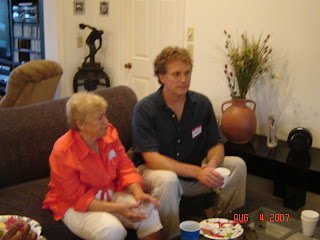
PALM BEACH COUNTY ACLU POT LUCK

We had a great time at the Palm Beach county ACLU Potluck dinner at Geoffrey and Debbie's house in Boynton Beach. Everybody seemed to have a great time. The Palm Beach chapter of the ACLU is the largest chapter in the state of Florida with over 3,000 members.

Friday, August 03, 2007

WORLD RECORD IN EPISCOPAL DEFROCKINGS?

EPISCOPAL DEFROCKINGS OF MASSIVE PROPORTIONS This is from thediocese.net. This has got to be the largest single day defrocking in the history of The Episcopal Church. I might check out Guiness Book of World Records and see if they'll consider it for publication. Yesterday, in an official act observed by two presbyters of The Diocese of Virginia and with the advice and consent of the diocesan Standing Committee, the Rt. Rev. Peter James Lee took the required canonical action to remove from the priesthood clergy inhibited by him on January 22, 2007. Those clergy were inhibited following a determination by the diocesan Standing Committee January 18 that they had abandoned the Communion of The Episcopal Church. The possibility of such a determination was explained by the Bishop in a December 1, 2006 letter to the clergy and leadership of the now- former Episcopal congregations. By this action, the former Episcopal clergy are "released from the obligations of Priest or Deacon and . deprived of the right to exercise the gifts and spiritual authority conferred in Ordination." In addition to losing their capacity to officiate in Episcopal churches or in any manner as Episcopal priests, the former Episcopal clergy lose their capacity to contribute to pension plans begun during their time as Episcopal priests and any other benefits of service as Episcopal priests or employees of Episcopal churches or institutions. Pension benefits accrued to this point will remain payable. Those removed from the ordained ministry of The Episcopal Church are: The Rev. Robin Adams The Rev. George Beaven The Rev. Mark Brown The Rev. Marshall Brown The Rev. Neal Brown The Rev. Jeffrey Cerar The Rev. Kathleen Christopher The Rev. Richard Crocker The Rev. Ramsey Gilchrist The Rev. Jack Grubbs The Rev. John Guernsey The Rev. David Harper The Rev. David N. Jones The Rev. Marion D. Lucas III The Rev. Herbert McMullan The Rec. Clancy Nixon The Rev. Robin Rauh The Rev. Valerie Whitcomb The Rev. Elijah White The Rev. Frederick M. Wright The Rev. John W. Yates II Of the 21 clergy determined to have abandoned the Communion of The Episcopal Church and subsequently inhibited by Bishop Lee in January, only one has made a good faith retraction and has had his inhibition lifted. The Rev. Nicholas Lubelfeld "has declared his loyalty to the doctrine, discipline and worship of The Episcopal Church" wrote Bishop Lee in the notice lifting Mr. Lubelfeld's inhibition. Mr. Lubelfeld has accepted a call to serve as priest associate of Church of Our Redeemer in Aldie, Va., serving under the supervision of the Rev. John Sheehan, rector of that church. In making his retraction, Mr. Lubelfeld sent a letter to Bishop Lee dated June 30 in which he states his "intention to remain a member of The Episcopal Church and of the clergy of The Diocese of Virginia." In that letter he also states, "I did not and do not intend to renounce or be disloyal to the doctrine, discipline or worship of Christ as The Episcopal Church has received them." He further states "I have not sought or received admission into any religious body not in communion with The Episcopal Church, or in any way severed my ties with The Episcopal Church." http://www.thediocese.net/News_services/pressroom/newsrelease40.html

Sunday, July 29, 2007

Introducing my Favorite Anglican Composer: R. VAUGHN WILLIAMS

Ralph Vaughn Williams
1872-1958
Born: Otober 12, 1872, Down Ampney, Gloucestershire, England. Died: August 26, 1958, London, England. Buried: Westminster Abbey, London, England.
One of the things that drew me to The Episcopal Church is it's music. I love organ and choral music and that's something that Anglicans do well! During the ten years I've been an Episcopalian, I gradually became curious about the composers whose music I love so much.
I fell in love with the national hymn of England, Jerusalem by Parry while at a concert in Huddersfield by the joint Anglican-Methodist Community Choir. So when I got home I was able to find Parry's collection by Hyperion Music, London which began my hobby of collecting Anglican music CD's.
But sometimes sitting in church certain hymns touch me so strongly that it's in my head throuout the week while at work, driving or whatever. One stands out as my absolutely favorite Anglican hymn....For all the Saints. And NOBODY can sing this particular hymn like Anglicans can. I really believe this from listening to recordings by other choirs. You see, this particular hymn is one adored by Anglicans on both sides of the pond. Anglican ladies anticipate the high notes and are prepared to hit them...and they always do.
Another great Anglican hymn is an Easter Hymn, Come ye Festival Day, which is rather complicated to sing, but rousing and indeed festive.
So, who wrote the beautiful music to these two beloved Anglican hymns, I wondered? They were written by a great English composer, Ralph Vaughn Williams, the son of a vicar.
Vaughan Williams is one of the best known English composers of the 20th Century. All the major music biographical dictionaries carry articles about him. He served as musical editor for The English Hymnal in 1906.
Hymns Mr. Vaughn Williams composed: The Airmen's Hymn At the Name of Jesus (tune : King's Weston) Blake's Cradle Song A Call to the Free Nations Come down, oh Love Divine (tune : Down Ampney) The English Hymnal (1906, revised 1933) Fierce raged the Tempest (tune : White Gates) Five wartime hymns For all the Saints (tune : Sine Nomine) God be with you till we meet again The Golden Carol Hail thee, Festival Day (tune : Salve feste Dies) He who would valiant be (tune : Monk's Gate) A Hymn of Freedom Into the woods my master went I vow to Thee my Country Let us now praise famous men The night has come Saviour, again to Thy dear name Servants of God Servants of the great adventure Snow in the Street Songs of Praise (1925, enlarged edition 1931) The Oxford book of Carols (1927) Wither's Rocking Hymn
Biographical information from the Internet:
Ralph Vaughan Williams was born in Down Ampney, Gloucestershire, where his father, the Rev. Arthur Vaughan Williams, was vicar. Following his father's death in 1875 he was taken by his mother, Margaret Susan Wedgwood (1843–1937), the great grand daughter of the potter Josiah Wedgwood, to live with her family at Leith Hill Place, the Wedgwood family home in the North Downs. He was also related to the Darwins, Charles Darwin being a great-uncle. Ralph (pronounced "Rafe"[1]) was therefore born into the privileged intellectual upper middle class, but never took it for granted and worked tirelessly all his life for the democratic and egalitarian ideals he believed in.
As a student he had studied piano, "which I never could play, and the violin, which was my musical salvation." After Charterhouse School he attended the Royal College of Music (RCM) under Charles Villiers Stanford. He read history and music at Trinity College, Cambridge where his friends and contemporaries included the philosophers G. E. Moore and Bertrand Russell. He then returned to the RCM and studied composition with Hubert Parry, who became a close friend. His composing developed slowly and it was not until he was 30 that the song "Linden Lea" became his first publication. He mixed composition with conducting, lecturing and editing other music, notably that of Henry Purcell and the English Hymnal. He had further lessons with Max Bruch in Berlin in 1897 and later a big step forward in his orchestral style occurred when he studied in Paris with Maurice Ravel. In 1904 he discovered English folk songs, which were fast becoming extinct owing to the increase of literacy and printed music in rural areas. He travelled the countryside, transcribing and preserving many himself. Later he incorporated some songs and melodies into his own music, being fascinated by the beauty of the music and its anonymous history in the working lives of ordinary people. His efforts did much to raise appreciation of traditional English folk song and melody. Later in his life he served as president of the English Folk Dance and Song Society (EFDSS) which in recognition of his early and important work in this field, named its Vaughan Williams Memorial Library after him. In 1905 RVW conducted the first concert of the newly founded Leith Hill Music Festival at Dorking and thereafter held that conductorship until 1953 when he passed the baton to his successor. In 1909, he composed incidental music for the Cambridge Greek Play, a stage production at Cambridge University of Aristophanes' The Wasps, and the next year, he had his first big public successes conducting the premieres of the Fantasia on a Theme of Thomas Tallis (at The Three Choirs Festival in Gloucester Cathedral) and A Sea Symphony (Symphony No. 1), and a greater success with A London Symphony (Symphony No. 2) in 1914, conducted by Geoffrey Toye. Being 40, he could have avoided war service. Having had a public school education he could have tried for a commission. He chose to enlist as a private in the Royal Army Medical Corps and had a gruelling time as a stretcher bearer before being commissioned in the Royal Garrison Artillery. On one occasion he was too ill to stand but continued to direct his battery lying on the ground. Prolonged exposure to gunfire began a process of loss of hearing which was eventually to cause deafness in old age. In 1918 he was appointed Director of Music, First Army and this helped him adjust back into musical life. After the war he adopted for a while a profoundly mystical style in the Pastoral Symphony (Symphony No. 3) and Flos Campi, a work for viola solo, small orchestra, and wordless chorus. From 1924 a new phase in his music began, characterised by lively cross-rhythms and clashing harmonies. Key works from this period are Toccata marziale, the ballet Old King Cole, the Piano Concerto, the oratorio Sancta Civitas (his favourite of his choral works) and the ballet Job (described as "A Masque for Dancing") which is drawn not from the Bible but from William Blake's Illustrations to the Book of Job. He also composed a Te deum in G for the enthronement of Cosmo Gordon Lang as Archbishop of Canterbury. This period in his music culminated in the Symphony No. 4 in F minor, first played by the BBC Symphony Orchestra in 1935. This symphony contrasts dramatically with the frequent "pastoral" orchestral works he composed; indeed, its almost unrelieved tension, drama, and dissonance has startled listeners since it was premiered. Acknowledging that the fourth symphony was different, the composer said, "I don't know if I like it, but it's what I mean." Two years later Vaughan Williams made a historic recording of the work with the same orchestra for HMV (His Master's Voice), one of his very rare commercial recordings. During this period he lectured in America and England, and conducted the Bach Choir. He was appointed to the Order of Merit in 1935, having previously declined a knighthood. His music now entered a mature lyrical phase, as in the Five Tudor Portraits; the "morality" The Pilgrim's Progress; the Serenade to Music (a setting of a scene from act five of The Merchant of Venice, for orchestra and sixteen vocal soloists and composed as a tribute to the conductor Sir Henry Wood); and the Symphony No. 5 in D, which he conducted at the Proms in 1943. As he was now 70, many people considered it a swan song, but he renewed himself again and entered yet another period of exploratory harmony and instrumentation. Before his death in 1958 he completed four more symphonies, including No. 7 Sinfonia Antartica, based on his 1948 film score for Scott of the Antarctic. He also completed a range of instrumental and choral works, including a tuba concerto, An Oxford Elegy on texts of Matthew Arnold, and the Christmas cantata Hodie. At his death he left an unfinished Cello Concerto, an opera Thomas the Rhymer and music for a Christmas play, The First Nowell, which was completed by his amanuensis Roy Douglas (b. 1907). He also wrote an arrangement of The Old One Hundredth Psalm Tune for the Coronation Service of Queen Elizabeth II. Despite his substantial involvement in church music, and the religious subject-matter of many of his works, he was described by his second wife as "an atheist … [who] later drifted into a cheerful agnosticism." It's noteworthy that in his opera The Pilgrim's Progress he changed the name of the hero from Bunyan's Christian to Pilgrim. He also set Bunyan's hymn Who would true valour see to music using the traditional Sussex melody "Monk's Gate. For many church-goers, his most familiar composition may be the tune Sine Nomine for the hymn "For All the Saints". During his life he also worked as a tutor for Birkbeck College. [2]
In the 1950s, the composer supervised recordings of all but his ninth symphony by Sir Adrian Boult and the London Philharmonic Orchestra for Decca.[3] At the end of the sessions for the mysterious sixth symphony, Vaughan Williams gave a short speech, thanking Boult and the orchestra for their performance, "most heartily," and Decca later included this on the LP.[4] He was to supervise the first recording of the ninth symphony (for Everest Records) with Boult; his death the night before the recording sessions were to begin resulted in Boult announcing to the musicians that their performance would be a memorial to the composer.[5] He died in 1958 and is buried in Westminster Abbey. Vaughan Williams is a central figure in British music because of his long career as teacher, lecturer and friend to so many younger composers and conductors. His writings on music remain thought-provoking, particularly his oft-repeated call for everyone to make their own music, however simple, as long as it is truly their own. He was married twice. His first wife, Adeline Fisher (daughter of the historian Herbert William Fisher), died in 1951 after many years of suffering from crippling arthritis. In 1953 he married the poet Ursula Wood (b. 1911), whom he had known since the late 1930s and with whom he collaborated on a number of vocal works. Ursula later wrote Vaughan Williams's biography RVW: A Biography of Ralph Vaughan Williams, which remains the standard work on his life. Vaughan Williams appears as a character in Robert Holdstock's novel Lavondyss.

Saturday, July 28, 2007

The Aquafina Fuss

I don't understand all of the fuss about Aquafina and it's being tap water instead of from some mountain stream or idyllic spring.
Yes, it's tap water, but it's not like turning on your facet at home and getting a glass of water. Most bottled water which comes from the tap goes through a purifying process which makes it taste a heck of alot better than many municipal water companies provide. The water in West Palm Beach is just plain nasty tasting and Aquafina is a big improvement.
But when it comes to a cut above purified bottled water, my favorite is Poland Spring which comes from Poland Springs and other springs in Maine. It's a few pennies more than Aquafina, but no matter which one you prefer, if you find yourself visiting West Palm Beach, you might want to consider getting some bottled water.

A Hard Truth, From Stand Firm in Faith

This isn't one of my favorite sources of information, but I thought that this article from Stand Firm in Faith would be worth sharing. http://www.standfirminfaith.com/index.php/site/article/4631/
Matt Kennedy
A Hard Truth
If we were to take a straw poll of the primates of the Anglican Communion on the question of human sexuality, we would, no doubt, find that somewhat more than 20 agree with Lambeth Resolution 1.10. Were we, however, to ask which primates would be prepared to stand against or, if need be, apart from Canterbury if push came to shove, the number would be reduced to somewhere near 6 or, if we want to be optimistic, 8. The fact is that while the vast majority of the Anglican primates hold fast to the orthodox position on human sexuality, only a small minority are willing to do much about it apart from issuing statements or voting “yes” on various orthodox resolutions. It seems, unfortunately for us, that Canterbury knows this too. He tested the strength of the Global South coalition in Tanzania and found, in the end, that only a small number of primates were prepared to walk if need be. The bold intransigence of these few courageous primates saved the day in Dar. But the damage was done. The strength of the orthodox primates and the orthodox position within the primates meeting once lay in the potential loss of up to 20 provinces. At Dar, the Archbishop of Canterbury put this potential to the test. He lost his gambit to push through the Sub-Group Report, but he gained a much greater strategic victory: knowledge. Now he knows the real rather than the supposed strength of the orthodox primates. And this knowledge has added a certain measure of steel to his spine. Why carry forward with the process articulated at Dar? Why heed calls from communion conservatives to appoint a provincial council? Why call a primates meeting after September 30th? Politically speaking, there is no reason to do any of these things and every reason not to do them. Knowledge of the real political weakness of the orthodox coalition is why we’ve seen, since Tanzania, such a noticeable and aggressive shift in Canterbury’s public position and posture beginning with his issuance of Lambeth Conference invitations. The worst case scenario for Archbishop Rowan Williams, supposing he refuses to act in accordance with the Tanzania Communique’s Pastoral Scheme and/or refuses to discipline the Episcopal Church, would be the loss of some populous but politically isolated provinces in the Global South and the loss of several primates--primates who, frankly, threaten the power and position of the see of Canterbury and that of the Church of England. Canterbury has nothing to lose. This is a hard truth. I’ve written about it before. I do so again because I think it is something with which we must come to terms if we are to think clearly about the Network, Common Cause, the upcoming House of Bishops meeting, Lambeth, and the Communion as a whole. And the most profound question is this: Is Canterbury essential to Anglicanism? My own answer, as you might have guessed, is “no”. What is yours? The way various parties, far more powerful and influential, answer that fundamental question will determine the ultimate shape of the Communion.

....and from across the pond

My thoughts on Collier's Article:
Bishop Robinson exposed the hypocrisy of the Church of England. The COE exported English homophobia worldwide. Therefore it shares a big chunk of responsibility for the state in which the Anglican Communion now finds itself. Canterbury is reaping what it once sowed. This article unveils the hypocrisy of the COE and the Archbishops of Canterbury past and present. I'm happy that Collier exposed it. An open wound can be treated and dressed. That's when the healing begins.
gjb
The Scotsman
Saturday July 28, 2007
Millions believe this man is the Antichrist
ANDREW COLLIER
FORTY years after the decriminalisation of homosexuality in England and Wales, American The Rt Rev V Gene Robinson, the world's first openly gay bishop, explains to ANDREW COLLIER in an exclusive interview what it's like to be many Christians' number one enemy.
THE Devil has arranged to meet me in the lobby of a London tourist hotel. It's an odd choice of venue: Westminster Cathedral, the great temple of Roman Catholicism in England, is close by; and a glimpse of the fire and colour of Hell would have been more interesting.Nor does he look like Satan. No horns, no tail, no pitchfork, no smoke and sulphur. He's of medium height, thinning hair, wearing a smart shirt and tie. He's immediately warm, friendly, open and assured. I like him.
Yet millions of Christians the world over are convinced - absolutely assured - that this man is the Antichrist. They believe he is the Devil, sent to destroy the church from within. Welcome to the fan club of the Rt Rev V Gene Robinson, Primate of the American diocese of New Hampshire and the world's first openly gay bishop.
This week may mark the 40th anniversary of the legalisation of homosexuality in England and Wales, but attitudes in many ways still lag behind legislation. Even on this side of the Atlantic, Robinson's public homosexuality has made him the most controversial figure in worldwide Anglicanism since Henry VIII split with Rome in 1538 and created the church.
His ordination as bishop four years ago sparked a global outrage. Here was a cleric not only living in a sexual relationship with another man, but proud of it. Fellow Anglicans around the world erupted in fury. Some of the insults from other bishops in the 77 million strong worldwide Anglican Communion have been poisonous.
It is yet possible - some would say probable - that Robinson's election will very soon unleash a chain of events blowing the global church apart.'Did I think my ordination would be controversial? Of course,' he says. 'We took seriously the voices that were coming our way and we knew this would be a shock in many quarters. But did I have any idea that the furore over my consecration would be as broad or as deep as it was? Absolutely not.'
Robinson has been a controversial figure from the moment he came into the world. Born in 1947 in the Bible Belt in Lexington, Kentucky, he was not expected to survive the delivery, so his sharecropper parents were asked to give names for both the birth and death certificates. Expecting a girl, they opted for Vicky Imogene. He has never changed it.Religion was important to the young Gene Robinson. He grew up in the evangelical tradition - 'quite conservative, bordering on fundamentalist' - and went to church every Sunday.
By the age of 11, he was sensing that his sexual urges were different from those of his schoolmates.'It was not something easily admitted to oneself, let alone the world', he recalls. 'Friends of mine got hold of a Playboy magazine and I realised they were very much more interested in those pictures than I was.'Given what the church had taught me and what scripture seemed to be saying about this, being aware of my attraction to other boys seemed a despicable possibility. I was ashamed of it and fearful about it. I grew up in middle, southern America - a place where that sort of thing was not remotely tolerated. You just pray it's a phase you're going through; something you'll outgrow.'At the same time, he was feeling a calling towards God, rejecting his conservative church upbringing in favour of what he saw as the more tolerant, open, enquiring and honest nature of the Episcopal Church of the US, part of the worldwide Anglican Communion.
He went to seminary in New York, only three months after the Stonewall riots which heralded the beginning of the modern gay liberation movement. He found himself in a relationship with another man. 'It felt very positive to be falling in love with someone, to have them falling in love with me and to experience this kind of bond, and at the same time it was horrifically awful because I thought, 'Oh my goodness, maybe this isn't a passing phase. Maybe I am this way. Oh my God, what am I going to do?''Robinson knew his sexuality could destroy his chances of ordination. He had also always loved children and yearned for a family. So he went into therapy. 'It didn't work and almost never does, though I guess I thought it had. It didn't make the same-sex feelings go away, but I certainly felt emotionally, spiritually and physically ready for a relationship with a woman.'
When he met his wife, Boo, he was determined to maintain his honesty and integrity. 'Within a month of meeting her, I shared that all of my primary relationships had been with men, but that I had been in therapy to make a heterosexual relationship possible. She seemed to fully understand that. She said we loved each other very much and that if something happened we would deal with it together.'But his feelings did not go away.
After about ten years of marriage, and following the births of his two daughters, the doubts began to overwhelm him. 'We began to talk about it more and more, and sought counselling, trying to discern what was the right thing for us to do.' The couple finally decided to divorce. 'Almost everyone we knew were devastated. We had the marriage everyone hoped for. We tried to do the dissolution in a very holy way. We took a priest with us to the judge's chambers for the decree and went back to his church. In the context of the holy Eucharist we released each other from the vows we had taken, asked each other's forgiveness for ways in which we might have hurt one another, pledged ourselves to the joint raising of our children and gave our rings back as a symbol of the vows we no longer held each other to. It was one of the most healing moments of my whole life.'
ROBINSON DID NOT meet his life partner, Mark Andrew, until three years after the divorce, and by then his wife had remarried. 'The thing that has hurt me most in the press - and there have been some awful things said - is the charge that I abandoned my wife and children to move in with another man. There wasn't another man. And I never abandoned my responsibilities.'
He remains close to his ex-wife, and he says that his now grown-up children adore his partner. 'He's just wonderful with them. I would say I've been blessed. I've had the best of both worlds. I had a wonderful relationship with my wife and I have had a wonderful relationship now of almost 20 years with my partner.'
As he progressed through the church, it became clear that he was an exceptional pastor, capable of engaging with clergy and people in a compelling and spiritual way. He was also an effective and forceful administrator. As it became clear that he might be a candidate for bishop, so the voices against him became louder. His detractors have always found him difficult to target, he says, because he doesn't fit stereotypes. 'I have a wonderful family and had a wonderful marriage. I wasn't duplicitous. And I'm not a misogynist; I don't hate women. I have wonderful relationships with women.'
When he was elected bishop in 2003, it was by a clear two-thirds majority among the laity, the clergy and the American bishops. It was a massive validation, but it sparked a fireball. The death threats, many of them from fundamentalist Christians, flooded in.NEW HAMPSHIRE DOES not have any great cathedrals, and the most suitable venue which could be found for the ceremony was a local ice rink.
The event sparked worldwide interest and condemnation, and Robinson started to realise the scale of the price he would have to pay.'We had to spend $100,000 on security. I wore a bulletproof vest under my vestments. We did have a contingency plan that if shots were fired or a bomb went off and I was still alive, I was to be taken to a separate location. Three bishops - it takes three bishops to lay hands on you and ordain you - would be there with a photographer, so if I was still alive the consecration would not be thwarted.'The personal attacks on him have been venomous. The Baptist preacher Fred Phelps called him 'a disgusting, detestable, loathsome, filthy abomination - the great whoremonger'. Internet sites commonly refer to him as Satan or Beelzebub's Boy.
When Robinson recently went into rehab to deal with an alcohol problem, you could almost hear their whoops of joy. More serious is the response of other parts of the Anglican Communion. The Church of England has tried to maintain a lofty silence, though the Archbishop of Canterbury has asked him not to preach or celebrate Mass within his jurisdiction.
Churches such as those in Nigeria, which has 17 million Anglicans, have been more venomous, seeking to have the American church expelled from the communion. They have described gay people as 'beasts' with whom they will not share a room, and the Nigerian bishops said the Americans were a 'cancerous lump' which should be 'excised'.The whole issue is likely to come to a head at the Lambeth Conference next year. This gathering, held every ten years, brings together all the Communion's bishops for prayer and discussion at Canterbury. Robinson says he is the only bishop in the world who has so far not been invited.It could well turn into a firestorm. If the Americans and the Nigerians cannot share a room, let alone communion, it could well spell the end of Anglicanism as we know it. There will be plenty willing to blame Robinson for its demise.
HE TAKES COMFORT from a statement from the Scottish Episcopal Church, whose bishops said publicly two years ago that being homosexual is not a bar to ministry. 'It was supportive and I was grateful for it. As you can imagine, statements like that are few and far between at the moment in the Anglican Communion. It was a refusal to draw a line in the sand.'Robinson warns, though, that the price of support could see the Scottish church, as well as the American one, being forced out of the Communion. 'If the Episcopal Church in America is to bear some sort of punishment, it would not seem unlikely that all those who have stood with us might be so punished.'As a Christian, can he forgive his enemies? 'You know, I can. And here's why. They only believe what the church has taught them to believe, and I believed those same things myself for a very long time. That is what a gay person has to contend with. We've been taught the same things everyone else has. The church has taught us all to condemn homosexual behaviour. I would argue it has taught that mistakenly, but I can certainly understand why people feel this way, so no, I don't have any trouble forgiving.'
IT WAS FORTY YEARS AGO TODAY...THE Sexual Offences Act, which partially decriminalised homosexual acts in private between two men, both of whom had to be over 21, was given Royal Assent 40 years ago today, on 28 July 1967, after a night of heated debate in the Commons. It applied only to England and Wales: Scotland would have to wait until 1980 for such liberalisation, while the Armed Forces remained exempt until 2000.The Sexual Offences Act was significantly influenced by the Wolfenden Report of 1957, which recommended the decriminalisation of certain homosexual acts between consenting adults in the privacy of their homes, and established a certain legitimacy for same-sex relationships which hitherto had been mired in discrimination, repression and very necessary secrecy.
The gay community had hitherto existed as a shady and persecuted subculture, perpetually fearful of discovery which might destroy lives and reputations. One of the bill's sponsors, Lord Arran, commented: 'Perhaps a million human beings will be able to live in greater peace. I find this an awesome and marvellous thing.' He quoted from a letter Oscar Wilde, left, wrote after his release from Reading gaol: 'Yes, we shall win in the end; but the road will be long and red with monstrous martyrdoms.'The act set the age of consent between men at 21, and raised the penalties for certain 'acts of gross indecency'.
North of the Border, where sexual activity between males, consenting or otherwise, remained punishable by heavy prison sentences, the Scottish Minorities Group, later to become the Scottish Homosexual Rights Group and then Outright Scotland, was established in 1969, its campaigning playing a significant part in prompting the Criminal Justice (Scotland) Act of 1980.
The first International Gay Rights Conference was held in Edinburgh in 1974.In the Eighties, while openly gay pop stars such as Boy George, Jimmy Sommerville and Frankie Goes to Hollywood gave a certain popular voice to the gay community, the continuing harassment and even murder of gay men prompted the formation of Outrage!
And despite the advent of 'gay pride' (the UK's first Gay Pride march was held in London in 1972; Glasgay was founded in 1993), prejudice hardly evaporated overnight - witness the 'gay plague' witchhunts during the AIDS epidemic of the 1980s and 1990s.
In February 1994, the age of consent for sex between men was reduced by parliament to 18 and, after two attempted blocks by the House of Lords, in 2000 the age of consent for gay men was lowered to 16, on a par with heterosexuals. A further step on the road to normalisation was taken on 18 November, 2004, with the Civil Partnerships Act. More than 15,500 gay and lesbian couples put a seal on their relationships between December 2005, when the first registrations took place, and December 2006.
Just this week, a small but telling victory was chalked up when the reggae star Buju Banton, whose 1990 hit Boom Bye Bye, which advocated the shooting of gay men, pledged to desist from singing homophobic lyrics.

Sermon by Bishop Gene Robinson

THE GOOD SAMARITAN
A sermon preached by Bishop Gene Robinson at
All Saints Episcopal Church, Pasadena, CA
15 July, 2007

It's important to remember that, though this is called The Good Samaritan, no word like "good" appears in this parable. It's our tendency to rush to judgement about something. It reminds me of the cartoon where the dog is lying on his therapist's couch, and the dog is saying, "It's always 'good dog' or 'bad dog'! Why can't it just be judgement free?"So I think we rush to label things good and bad. And part--maybe even most--of what this story is about is that this is actually about three good people.

The priest and the Levite, who come off looking pretty awful, are actually *very* good people. They are religious people, they are upstanding, they take their religion seriously, they know all the right answers to things, they can recite the creeds--they do all of that exactly right. They "get it" intellectually and theoretically. Even, perhaps, theologically. And it seems that Jesus tells this story in order to show us that it is not 'right belief", it is not "right thinking" that gets us to the heart of God, but actually doing the will of God. That's what actually gets us to know the heart of God.The priest and the Levite actually had very good reasons not to take care of this fellow on the side of the road. First of all, this road, which still exists--it's the road from Jericho to Jerusalem. Jerusalem is at about 2500 feet above sea level, and Jericho is at 800 feet below sea level, near the Dead Sea. And it was a very crooked road, it was a very dangerous place. There were robbers all along it, and to slow down for anything was thought to be terribly dangerous. And indeed, this could well have been a trap. It was not unknown that people would fake being hurt, and the unsuspecting traveler would stop and try to do something, and in doing so would be robbed and mugged, and perhaps killed. Not only that, but the priest would have been expected to go to Jerusalem as every priest did, and serve for two weeks in the temple. And he know, being a student of the law, that if he touched a dead body, he would be ritually unclean, and it would take quite a lot of purification rites to make him capable of performing the service that he was due to give. And so, why would he risk touching this comatose traveler, only to discover that he was dead, and in doing so, defile himself, and delay his service in the temple? These were good people. These were good people. And then, of course, along comes the Samaritan. And Luke, as you know, is the outsider writing a Gospel for people on the outside. And Luke understands that this Gospel of Jesus Christ turned the whole world on its ear. Turned the world upside-down. And so, sure enough, as in so many of Luke's stories, it's the Samaritan who actually does the will of God. It's the priest and the Levite who know the will of God, but seem unable to do it.It's almost as if, when the lawyer asks the question "What must we do to gain eternal life?", and then he gives the right answer. His head knows the right answer--it's to love God with all your heart, soul, mind and strength, and to love your neighbor as yourself. And Jesus says, "A+, very good!" And then he pushes the point and asks about the neighbor, and Jesus tells this story, I think, to show what love of God looks like detached from love of neighbor. They got the "love of God" part. They understand that. But the priest and the Levite didn't connect that to the love of neighbor, which is really the heart of the Gospel.
You know, more and more, I am convinced that the Christian life is not about life after death--it's about life before death. What God does for us after death, God will take care of. But what we do with life before death is up to you and me. That's the real reward of Christianity, isn't it? Not so much life after death, but life before death. It's not an accident that in our confession now, and in the absolution which follows, we don't say "and may God *bring* you to everlasting life", but keep you in everlasting life. It gets to start now...if we are awake. If we understand that in the doing of God's will, we already participate in everlasting life.
So, it is right action, not right belief, not right thinking, that gets us to the heart of God.A little while ago, in the only time that the Archbishop of Canterbury ever deigned to see me, we were having a little "chat", and at one point in our conversation, he was explaining to me that, actually what the Episcopal church should have done prior to electing and consecrating me, was that we should have figured all this out theologically and intellectually... We should have come to a common mind, and then passed canons and and then done this thing. And I said to him with as much respect as I could, "Your Grace, it seems to me that all of the great steps that has taken, have been as a result of our doing the right thing, and only then, "thinking" our way to what we did. It's not the other way around. I mean, if we had waited for instance in this country for everyone to have been on the same page about civil rights, there would still be separate drinking fountains, wouldn't there? And if we had waited until women were valued as equal and full members of society and the human race for goodness sakes, all of that discrimination would still exist.And, does anyone think that if those 11 women hadn't been "irregularly" ordained in Philadelphia, that we would be ordaining women yet? I'm not sure we would! And it seems that all the great steps forward we have made have been a result of our doing the right thing, and then thinking our way theologically to how that was the right thing. He didn't have a really good response. (Laughter) So, this lawyer (no lawyer jokes!) this lawyer then pushes the point and says, "So then, what must I do?" And Jesus' answer in this story seems to be "love that costs". Love that actually costs us something--costs us time, costs us money, costs us focus, costs us convenience, love that actually costs us something. There was a young seminarian who one summer worked with an old priest at a homeless shelter, and they had a feeding program at noontime. A lot of people, and on this particular day, there just seemed to be an unusual amount of people who came. And they were *just* exhausted, and it was nearly 3:00 before the last person left. The old priest asked the seminarian to go and close up the front door and shut down for the day, and just as this young seminarian got to the front door, thinking that this long and difficult day was about to be over, saw yet one more homeless man making his way up the front walk. And in his exhausted state, and thinking he had nothing left to give, he said, "Jesus Christ!" And the old priest said, "It just might be. "Love that costs, even when we think we're depleted, I'm always reminded--you know how when you throw away an old tube of toothpaste that's done, and then you go to the closet, and you've forgotten to buy another one? And so you reach into the trash can and you haul out the thing? Every time you can make one more toothbrush full of toothpaste--yeah? But isn't that the way God is--just when we think there's nothing left to give, if we make but the simplest effort, God provides. God provides manna in the desert--and maybe just enough for that day--but it's enough. God gives us what we need to respond in the way the Good Samaritan responded. That's the real miracle of life in God.And this is really important: we must do the work of ministry--not just give a nod to it. Louie Crew, who I think was here not to long ago, was the one, I believe, who discovered this mistake in our prayer book. It's in the catechism--it's the only real mistake that I know of in the prayer book, and it's in the section on the Hebrew covenant. And it says "What must we do to please God?" And the answer, in the prayer book, which means to be a quote from Micah, the prophet. It sayw that we must love justice, do mercy, and walk humbly with our God. Well, that would all be very nice, except that's not what Micah said. Micah said we must do justice, love mercy, and walk humbly with our God. And it strikes me, maybe you're like me, we just looove to love justice, don't we? And even an astounding witness to justice, like All Saints Pasadena can so love to love justice, and sit around, and form committees, and talk about it all day, that we forget that what Micah said is that we must do justice and walk humbly with our God. I think that what Jesus is teaching in this story about the Good Samaritan is that it's not enough to be good. It's not enough to know the creeds and say you believe all the things that you're supposed to believe.Remember that our baptismal covenant, which is as close to a purpose statement as we have in the Episcopal church, are all action verbs. Right? They're all action verbs. It's not about which doctrines you ascribe to, but will you love and serve one another, will you respect the dignity of every human being, if you make mistakes, will you repent and come back to God? It's all about doing. It's not about ascribing to the right tenets and the right doctrines. That stuff is dry. It's important, but it's not the most important. Because what we see in the story of the Good Samaritan, is the danger of loving God separate from doing the work of loving our neighbor. So it seems to me, that the real question, the challenge, really, of this story for you and me, is whether or not we want to be admirers of Jesus, or disciples. It's easy to admire Jesus--to think he was a nifty guy with really wonderful ideas. Following Jesus is a whole lot harder. Doing the work of ministry and doing justice--getting into some "Gospel trouble" is what we are meant to do.You know, this Lent, I realized for the first time that this symbol, this cross, is such a political symbol. Now, let's be clear: the Jews did not kill Jesus. That's a bunch of anti-semitic stuff that runs throughout some of the Gospels, especially John, and it is not true. The Romans killed Jesus. Now, the Romans killed lots of people, but they saved crucifixion for a very specific kind of criminal. And it was the one who challenged the Powers That Be. Who took on the government, who threatened the Pax Romana with their notions of turning the world upside-down like Jesus did. And they didn't put them all high and lifted up like Cecil B. DeMille--I realize that criticizing Cecil B. DeMille in Los Angeles is...(laughter). But, crosses were actually quite low to the ground, so that as people died and began to rot away, the dogs could eat their flesh, and there would be almost nothing left to bury. They wanted to make a real example of anyone who challenged the Powers That Be. And it is an indictment of you and me that we can wear this symbol around, and it doesn't threaten anybody. When we wear a cross, it ought to scare people to death! And the more powerful they are, the more it ought to scare them. We should be being followed around by the F.B.I.--I know you're being followed by the I.R.S. (laughter). You've got a good start on this one! But really, really--shame on us that this doesn't threaten anybody! When we put this on, when we put on the cross of Christ, we are saying that it's not just religion that we are about. We are about changing the world, as Jesus changed it. We are about loving the people that Jesus loved--those in the margins. And it doesn't mean sitting in a committee room somewhere talking about loving those people, but actually loving them, and doing the hard work of justice.Are you and I going to be admirers of Jesus only, or are we going to be disciples? You know how an innoculation works, right? You don't want to get chicken pox, so you go to the doctor, and they give you just enough chicken pox to make your body form antibodies to it, so you never get a full-blown case of chicken pox. God help us if we come here on Sunday mornings just to get enough religion to keep us from having a full-blown case. It is so easy, isn't it, to come here, isn't it? It feels so good, and you see people you know, and the music's great, and the preaching is good. It just all works! But if we leave here, and it causes us to not do anything any differently, then this is nothing but a religious theme park. Really! We have to be out there doing the work that God has given us to do, or else it is all ultimately just self-serving. And it'll be hard work! When Jesus says "Take up your cross and follow me", he means it's going to be tough. It's going to be very hard--it means taking risks, it means loving that costs. But the miracle, the miracle is that when we do that, and we face that trouble, we come to know the very God who is at the center of all that is. It's the only way we get to know him--we don't get to know him by memorizing the creed. We get to know him by doing the work that he did. So, you and I can do that--especially if we do it with him, that he can work in and through us, to do the work that he has given us to do. So the question for you and me today is, do we just come here for an innoculation? Or do we come here for a full blown infection of God's love? Because it's only when you are fully infected yourself with the love that simply know no bounds, can you go out there and love the world, and God's children, in God's name. And this God promises to be with you and me from now on! There is no better news than that, on this, or any Sunday. Amen.

Sunday, July 22, 2007

Congratulations to Rev. Jeannie Martz

St. Mark's Episcopal's former priest-in-charge, Rev. Jeannie Martz is moving to California. She will be the rector at Trinity Episcopal Church in Orange, CA in the diocese of Los Angeles.

Here is a picture of me and Pastor Martz at her farewell party a few months ago.

Best wishes to pastor Martz on her new ministerial journey. http://www.trinityorange.org/ http://www.stmarkspbg.org/

Rest In Peace Tammy Faye

It was hard watching Tammy Faye on Larry King Live Thursday night. She weighted 65 Lbs. But in spite of her emaciation, she was all made up in true Tammy Faye fashion with a bright red dress on.
But listening to her story about her faith and love was an inspiration.
Tammy Faye was as one of the few evangelical Christians (heck, I think the only one I ever heard of ) who had the support of the gay community. She was one of the first televangelists to reach out to those with AIDS when it was a little-known and much-feared disease. She had an MCC pastor on PTL...probably much to the horror of Jerry Falwell and Pat Robertson. On Larry King Live Thursday night a gay man called in and asked Tammy Faye why she cared for the gay community so much and she replied,
"When I went -- when we lost everything, it was the gay people that came to my rescue, and I will always love them for that."
Tammy Faye passed away the next morning. She is at peace and now, healed from the cancer that took her life.