Saturday, June 14, 2008

2008 West Palm Beach Alzheimer's Conference

On June 5th and 6th, Alzheimer's Community Care had their annual conference.  It was a great event and has become so popular nationally through the year that Dr. Todd, our keynote speaker from the Broward Neurological and Memory Center announced that it is the largest Alzheimer's event in the U.S.
The speaker were great, the people we met and got to talk were wonderful.  Sometimes Larry and me went to breakaway sessions together, other times we split up and went to sessions we had individual interests in. It was great to see my neurologist and give my nurse care manager Jo Ellen a hug. She's such a wonderful person and I could kick myself for not asking Larry to take a picture of us together.
We both attended both research presentations on the two days and learned alot. One thing we learned that was breath taking is that it looks like the vaccine will be out in five years or less.
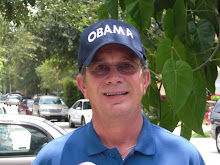
The picture about is one I took of Larry on a break. We were outside on the upper terrace of the West Palm Beach Convention Center looking over to the Kravis Center of the Performing Arts in beautiful West Palm.

Obama Nomination Party

The night of the Montana and South Dakota primaries, Palm Beach Obama supporters gathered at Abbey Road restaurant in Palm Beach Gardens, hoping that Senator Obama would have enough pledged and super delegates to put him over the top.
When the headlines came on the multiple televisions in the room, the crowd roared and the news media arrived a few minutes later.  Channel 5 interviewed Larry which aired on and off throughout the next day.
It was a great event and we also got to meet the 3 fulltime staffers from Obama headquarters assigned to work full time in Palm Beach County.

Obama's Fort Lauderdale Rally

It's been six weeks since I've posted a blog entry. May was a busy month of working on the Obama campaign. It culminated on May 23rd when Senator Obama came to the Fort Lauderdale for a rally at the BankAtlantic Center. 
I got off work at noon that Friday, came home, changed into my Obama tee shirt and cap, got Larry and our neighbor Carmen and off we went to Sunrise for the rally.
What impressed us was how organized it was. Everything went like clockwork. After clearing TSA we got into the stadium kind of looking around to what section ramp we were going to go up when a young man approached us and said that we've been selected for seating behind Senator Obama. He let us make a bathroom stop and then escorted us to our seats. 
One of the things done differently at the Obama rally which I never saw done at Kerry rallies, was that hundreds of Obama volunteers were getting names and email addresses of people not signed up to volunteer and getting folks registered to vote. They went through every row in that arena.
The Cuban reggae band was fantastic and everybody clapped to the music. 
My congressman, Rep. Robert Wexler served as MC and gave a wonderful speech. 
As the time got nearer for Obama to arrive, people had their cameras fixed on the entrance where the speakers had come thru. 
But then, out of nowhere, Obama is walking the circumference of the arena walking toward the stage and the crowd went wild.
It was a great event. Afterward, we went to the Wilton Manors area of FTL to eat dinner at the Old Florida Fishhouse which was fantastic.

Wednesday, April 23, 2008

Retirement Party in Punta Gorda

Top: brother Ted and sister-in-law, ReLinda
Middle: My niece Lisa and me
Bottom: My great niece, Claire and her dad, Jim
After many years of service to the Charlotte County Sheriff's Dep't, my brother and siste-in-law retired.  
The party was held Saturday night at the Fraternal Order of Police Lodge in Port Charlotte, FL, right across Charlotte Harbor from their home in Punta Gorda.
It was a great parrot head party with all kinds of food.
On Sunday morning, I went to church at the Episcopal Church of the Good Shepherd in Punta Gorda then to Ted and ReLinda's for a cookout with friends and family. 
I drove back home to West Palm Beach Monday morning.
I had a great time and it was nice being with my family. Lisa and Jim and Claire flew down from Portland, OR for the occasion and we had a great time.
We all wish ReLinda and Ted a fun and happy retirement.

Monday, April 07, 2008

Sir Ian McKellen Comes to the Aid of Bishop Robinson

The Daily Telegraph is reporting that Sir Ian McKellen is coming to the aid of Bishop Robinson. It'll be a hoot and a Lambeth to be remembered for many years. Although banned from the conference by the Archbishop of Canterbury, Bishop Robinson is going over anyway. Last I heard, the Archbishop has no control over ones freedom to travel.
Gordon
 

Sir Ian McKellen becomes bishop for a day

By 
Richard Eden
Last Updated: 2:43am BST 07/04/2008

Bishop for a day

Never one to shy away from controversy, Sir Ian McKellen is secretly plotting to launch a campaign to shame the Anglican Church over its refusal to give equal rights to homosexual clergy.

In an act of solidarity with the Rt Rev Gene Robinson, the Church's first openly homosexual bishop, the celebrated actor intends to read out a sermon written by the prelate, who has been barred from the landmark Lambeth Conference this summer that is seeking to prevent a schism over the issue.Standing alongside the bishop, who will remain silent throughout, the star of The Lord of the Rings will deliver a broadside against the Church's attitude to homosexuals with the kind of passion and force normally reserved for his performances on the stage.

 Rev Gene Robinson, the Church's first openly homosexual bishop, the celebrated actor intends to read out a sermon written by the prelate, who has been barred from the landmark Lambeth Conference this summer that is seeking to prevent a schism over the issue. Standing alongside the bishop, who will remain silent throughout, the star of The Lord of the Rings will deliver a broadside against the Church's attitude to homosexuals with the kind of passion and force normally reserved for his performances on the stage."

Saturday, March 29, 2008

Is Wright Right About Racism?

http://www.creators.com/opinion/david-sirota/is-wright-right-about-racism.ht http://www.creators.com/opinion/david-sirota/is-wright-right-about-racism.h tml>  Is Wright Right About Racism? By David Sirota Creators Syndicate, 3/28/08 Since the 1960s, bigotry has undergone an aesthetic makeover. Today, the most pernicious racists do not wear pointy hoods, scream epithets and anonymously burn crosses from behind masks. They don starched suits, recite sententious bromides and stage political lynchings before television cameras. For proof, behold the mob stalking Barack Obama's former pastor, Jeremiah Wright. Wright has long delivered fiery (and occasionally outrageous) sermons, to little fanfare. Now, though, a gang of thugs is inflicting a guilt-by-association blow to Obama by excoriating his spiritual adviser for three specific declarations. Sean Hannity, Fox News' own George Wallace, turned a fire hose on Wright for his church's focus. " is all about the black community," Hannity thundered, claiming that means Wright supports "a black-separatist agenda." Pat Buchanan billy-clubbed Wright for saying, "God damn America." The MSNBC commentator, who avoided the draft, implied that Wright, a former Marine, lacks sufficient loyalty to country. Out of context, Wright's exclamation was admittedly offensive. But remember: It punctuated a speech about segregation. Buchanan, nonetheless, unleashed, deriding "black hustlers" and insisting descendants of those "brought from Africa in slave ships" owe whites a thank you. "Where is the gratitude?" he asked. Fox's Charles Krauthammer berated Wright for saying the 9/11 attacks were "chickens coming home to roost." Krauthammer labeled the pronouncement "vitriolic divisiveness" despite our government acknowledging the concept of "blowback" or retaliation Wright was referencing. The CIA knows that when it supports foreign dictatorships, there can be blowback from radicals. While blowback is often immoral and undeserved, its existence is undisputed. Yet, Krauthammer alleged that Wright takes "satisfaction in the deaths of 3,000 innocents." In promoting the Wright "controversy," most media outlets joined this mob and embraced "colorblind racism," says Duke University's Eduardo Bonilla-Silva, author of "Racism Without Racists." It is polite pinstriped prejudice shrouding bigotry in feigned outrage against extremism the operative word being "feigned." After all, John McCain solicited the endorsement of John Hagee the pastor who called the Catholic Church "a great whore." Similarly, according to Mother Jones magazine, Hillary Clinton belongs to the "Fellowship" a secretive group "dedicated to 'spiritual war' on behalf of Christ." She is also friendly with Billy Graham, the reverend caught on tape spewing anti-Semitism. But while Wright's supposed "extremism" blankets the news, McCain and Clinton's relationships with real extremists receive scant attention. Why is it "controversial" for one pastor to address the black community, racism and blowback, but OK for another pastor to slander an entire religion? Why is it news that one candidate knows a sometimes-impolitic clergyman, but not news that his opponent associates with an anti-Semite? Does the double standard prove the dominant culture despises a black man confronting taboos, but accepts whites spewing hate? Does the very reaction to Wright show he's right about racism? Clinton seems to think so. Her aides have been calling the states they believe Obama will lose their political "firewall." That's campaign-speak for "race wall" one built with bricks like Pennsylvania and Indiana. These aren't the near-purely white states where racial politics is often muted (and Obama won). They are the slightly diverse states where racial politics simmers and where the black vote is too small to offset a motivated racist vote. This race wall is now being fortified. ABC News reports that Clinton's campaign is "pushing the Wright story" ahead of the Pennsylvania and Indiana primaries. The crass tactic is designed to motivate the racist vote by reminding whites of Obama's connection to the African-American community. Put another way, Clinton's message has become simply: Obama Is Black. Wright probably expected this brouhaha. He says our government is "controlled by rich white people" and our culture afflicted by racism. Though these statements are also deemed distasteful by the Establishment, they are truisms. You can see their veracity in the collected portraits of white millionaires commonly called the congressional photo directory. Or, just turn on your television and watch the mob continue stoking the Wright "controversy."

Wednesday, March 19, 2008

United Church of Christ Leader Responds to Pastor Wright

I'm not going to post the Rev. Dr. Wright's words here because it would be redundant since we've seen the video countless times. But what I wanted to share is the thoughts of the leader of the United Church of Christ. 
Note that this statement was released the day before Senator's Obama's speech in response to the way Dr. Wright had been portrayed by the media.
This is a powerful message and well worth the read.
BTW, somebody sent me an email with the following expression which applies to Dr. Wright's situation:  
 A pastor's job is to comfort the afflicted 
and to afflict the comfortable.
Written by staff reports

March 17, 2008

The Rev. John H. Thomas, UCC general minister and president, released the following statement on March 17 on the rhetoric of preaching, in light of recent news coverage of Jeremiah A. Wright, Jr., and Chicago's Trinity UCC.

What Kind of Prophet? Reflections on the Rhetoric of Preaching in Light of Recent News Coverage of Jeremiah A. Wright, Jr. and Trinity United Church of Christ

The Rev. John H. Thomas General Minister and President United Church of Christ

Over the weekend members of our church and others have been subjected to the relentless airing of two or three brief video clips of sermons by the Rev. Dr. Jeremiah A. Wright, Jr., pastor of Trinity United Church of Christ for thirty-six years and, for over half of those years, pastor of Senator Barack Obama and his family.  These video clips, and news stories about them, have been served up with frenzied and heated commentary by media personalities expressing shock that such language and sentiments could be uttered from the pulpit.  

One is tempted to ask whether these commentators ever listen to the overcharged rhetoric of their own opinion shows.  Even more to the point is to wonder whether they have a working knowledge of the history of preaching in the United States from the unrelentingly grim language of New England election day sermons to the fiery rhetoric of the Black church prophetic tradition.  Maybe they prefer the false prophets with their happy homilies in Jeremiah who say to the people:  "You shall not see the sword, nor shall you have famine, but I will give you true peace in this place."  To which God responds, "The prophets are prophesying lies in my name; I did not send them, nor did I command them or speak to them.  They are prophesying to you a lying vision, worthless divination, and the deceit of their own minds. . . .  By sword and famine those prophets shall be consumed," (Jeremiah 14.14-15).   The Biblical Jeremiah was coarse and provocative.  Faithfulness, not respectability was the order of the day then.  And now?

What's really going on here?  First, it may state the obvious to point out that these television and radio shows have very little interest in Trinity Church or Jeremiah Wright.  Those who sifted through hours of sermons searching for a few lurid phrases and those who have aired them repeatedly have only one intention.  It is to wound a presidential candidate.  In the process a congregation that does exceptional ministry and a pastor who has given his life to shape those ministries is caricatured and demonized.  You don't have to be an Obama supporter to be alarmed at this.  Will Clinton's United Methodist Church be next?  Or McCain's Episcopal Church?  Wouldn't we have been just as alarmed had it been Huckabee's Southern Baptist Church, or Romney's Church of Jesus Christ of Latter Day Saints?   

Many of us would prefer to avoid the stark and startling language Pastor Wright used in these clips.  But what was his real crime?  He is condemned for using a mild "obscenity" in reference to the United States.  This week we mark the fifth anniversary of the war in Iraq, a war conceived in deception and prosecuted in foolish arrogance.  Nearly four thousand cherished Americans have been killed, countless more wounded, and tens of thousands of Iraqis slaughtered.  Where is the real obscenity here?  True patriotism requires a degree of self-criticism, even self-judgment that may not always be easy or genteel.  Pastor Wright's judgment may be starker and more sweeping than many of us are prepared to accept.  But is the soul of our nation served any better by the polite prayers and gentle admonitions that have gone without a real hearing for these five years while the dying and destruction continues?

We might like to think that racism is a thing of the past, that Martin Luther King's harmonious multi-racial vision, articulated in his speech at the Lincoln Memorial in 1963 and then struck down by an assassin's bullet in Memphis in 1968, has somehow been resurrected and now reigns throughout the land.  Significant progress has been made.  A black man is a legitimate candidate for President of the United States.  A black woman serves as Secretary of State.  The accomplishments are profound.  But on the gritty streets of Chicago's south side where Trinity has planted itself, race continues to play favorites in failing urban school systems, unresponsive health care systems, crumbling infrastructure, and meager economic development.  Are we to pretend all is well because much is, in fact, better than it used to be?  Is it racist to name the racial divides that continue to afflict our nation, and to do so loudly?  How ironic that a pastor and congregation which, for forty-five years, has cast its lot with a predominantly white denomination, participating fully in its wider church life and contributing generously to it, would be accused of racial exclusion and a failure to reach for racial reconciliation.

The gospel narrative of Palm Sunday's entrance into Jerusalem concludes with the overturning of the money changers' tables in the Temple courtyard.  Here wealth and power and greed were challenged for the way the poor were oppressed to the point of exclusion from a share in the religious practices of the Temple.  Today we watch as the gap between the obscenely wealthy and the obscenely poor widens.  More and more of our neighbors are relegated to minimal health care or to no health care at all.  Foreclosures destroy families while unscrupulous lenders seek bailouts from regulators who turned a blind eye to the impending crisis.  Should the preacher today respond to this with only a whisper and a sigh? 

Is Pastor Wright to be ridiculed and condemned for refusing to play the court prophet, blessing land and sovereign while pledging allegiance to our preoccupation with wealth and our fascination with weapons?  In the United Church of Christ we honor diversity.  For nearly four centuries we have respected dissent and have struggled to maintain the freedom of the pulpit.  Not every pastor in the United Church of Christ will want to share Pastor Wright's rhetoric or his politics.  Not every member will rise to shout "Amen!"  But I trust we will all struggle in our own way to resist the lure of respectable religion that seeks to displace evangelical faith.  For what this nation needs is not so much polite piety as the rough and radical word of the prophet calling us to repentance.  And, as we struggle with that ancient calling, I pray we will be shrewd enough to name the hypocrisy of those who decry the mixing of religion and politics in order to serve their own political ends.   

Saturday, March 08, 2008

Bush Vetos Waterboarding Ban

This is so un-American and so sleazy. America's reputation in the world continues to take a dive as America becomes guilty of the same method of torture we executed Japanese POW's our country is using.
The Washington Post   
Bush Announces Veto of Waterboarding Ban

By Dan Eggen Washington Post Staff Writer Saturday, March 8, 2008; 1:47 PM

President Bush vetoed Saturday legislation meant to ban the CIA from using waterboarding and other harsh interrogation tactics, saying it "would take away one of the most valuable tools on the war on terror."

"This is no time for Congress to abandon practices that have a proven track record of keeping America safe," Bush said in his weekly radio address.

Congress approved an intelligence authorization bill that contains the waterboarding provision on slim majorities, far short of the two-thirds needed to override a presidential veto.

Bush's long-expected veto reignites the Washington debate over the proper limits of U.S. interrogation policies and whether the CIA has engaged in torture by subjecting prisoners to severe tactics, including waterboarding, a type of simulated drowning.

The issue also has potential ramifications for Sen. John McCain (Ariz.), the presumptive Republican presidential nominee and a longtime critic of coercive interrogation tactics who nonetheless backed the Bush administration in opposing the CIA waterboarding ban. The Democratic presidential candidates, Sens. Hillary Rodham Clinton (N.Y.) and Barack Obama (Ill.), both support the ban, though neither was present for last month's Senate vote for the bill that Bush is to veto.

"It is shameful that George Bush and John McCain lack the courage to ban torture," said Democratic National Committee Chairman Howard Dean.

McCain has said that, while he opposes waterboarding, he agrees with the Bush administration that the CIA needs to be able to use tactics banned by the military but which fall short of torture or cruel treatment.

The legislation would have limited the CIA to 19 less-aggressive tactics outlined in a U.S. Army field manual on interrogations. Besides ruling out waterboarding, that restriction would effectively ban temperature extremes, extended forced standing and other harsh methods that the CIA used on al-Qaeda prisoners after the Sept. 11, 2001, attacks.

The president said in his radio address that the agency needs to use tougher methods than the U.S. military to wrest information from terrorism suspects.

"Limiting the CIA's interrogation methods to those in the Army Field Manual would be dangerous because the manual is publicly available and easily accessible on the Internet. . . . If we were to shut down this program and restrict the CIA to methods in the Field Manual, we could lose vital information from senior al-Qaeda terrorists, and that could cost American lives," Bush said.

CIA Director Michael V. Hayden has also spoken out against the Senate bill and defended the methods as lawful and effective.

"The US Army and CIA clearly have different missions, different capabilities and therefore different procedures," Hayden wrote in a message sent Saturday to CIA employees. "CIA's program, atightly controlled and carefully administered national option that goes beyond the Army Field Manual, has been a lawful and effective response to the national security demands that terrorism imposes."

Most of the Washington debate over the CIA interrogation program has focused on waterboarding, which was used on three al-Qaeda suspects held in secret prisons in 2002 and 2003. The tactic involves strapping a prisoner to a board with their head lower than their feet, placing cloth or cellophane over the face and pouring water on their head to make them fear they are drowning.

The practice as used by the CIA bears similarities to the methods of the Khmer Rouge in Cambodia, and by the current dicatorship in Burma, according to congressional testimony and torture experts.

But as Bush emphasized in his remarks, the program also included other coercive tactics that are forbidden in the U.S. military and widely considered unlawful among human rights advocates.

The CIA has not specified all the tactics it wants to keep using but says it no longer uses waterboarding. Bush administration officials have not ruled out using waterboarding again.

Many Democrats and human-rights groups say coercive tactics are often counterproductive and that, regardless, constitute illegal torture under U.S. and international law. Frank Donaghue, chief executive officer of Physicians for Human Rights, said many of the agency's tactics may constitute war crimes.

"America must not be scared into thinking that these 'additional' tactics are anything other than what they are -- torture," Donaghue said in a statement Saturday.

Senate Majority Leader Harry M. Reid (D-Nev.) said Bush has "compromised the moral leadership of our nation," and said the administration is ignoring the advice of military experts who oppose harsh techniques.

Retired Army Lt. Gen. Harry E. Soyster, a former director of the Defense Intelligence Agency, suggested that those who support harsh methods simply lack experience and do not know what they are talking about. "If they think these methods work, they're woefully misinformed," Soyster said at a news briefing called in anticipation of the veto. "Torture is counterproductive on all fronts. It produces bad intelligence. It ruins the subject, makes them useless for further interrogation. And it damages our credibility around the world."

In two separate forums earlier this week, FBI Director Robert S. Mueller III and Navy Rear Adm. Mark H. Buzby, commander of the military detention facility at Guantanamo Bay, Cuba, defended the efficacy of less-coercive, "rapport-building" interrogation tactics.

"We get so much dependable information from just sitting down and having a conversation and treating them like human beings in a businesslike manner," Buzby told reporters in a conference call Thursday.

Staff writer Joby Warrick contributed to this report.

The Clinton Rules: From Andrew Sullivan's Blog

THE CLINTON RULES

The new meme is that politics has returned to normal and that this election will now be run by Clinton rules. Many are relieved by this. You could sense the palpable discomfort among many in Washington that their world might actually shift a little next year. But if elections are primarily about fear and mud, and who best operates in a street fight, Beltway comfort returns. This we know. This we understand. This we already have the language to describe. And, the feeling goes, the Clintons can win back the White House in this atmosphere. What she is doing to Obama she can try to do to McCain. Maybe Limbaugh will help her out again.

What I think this misses are the cultural and social consequences of beating Obama (or McCain) this way. I don't mean beating Obama because the Clintons' message is more persuasive, or because the Clintons' healthcare plan is better, or because she has a better approach to Iraq. I mean: beating him by a barrage of petty attacks, by impugning his clear ability to be commander-in-chief, by toying with questions about his "Muslim past", by subtle invocation of the race card, by intermittent reliance on gender identity politics, by taking faux offense to keep the news cycle busy ("shame on you, Barack Obama!") and so on. If the Clintons beat Obama this way, I have a simple prediction. It will mean a mass flight from the process. It will alter the political consciousness of an entire generation of young voters - against any positive interaction with the political process for the foreseeable future. I'm not sure that Washington yet understands the risk the Clintons are taking with their own party and the future of American politics.

The reason so many people have re-engaged with politics this year is because many sense their country is in a desperate state and because only one candidate has articulated a vision and a politics big enough to address it without dividing the country down the middle again. For the first time in decades, a candidate has emerged who seems able to address the country's and the world's needs with a message that does not rely on Clintonian parsing or Rovian sleaze. For the first time since the 1960s, we have a potential president able to transcend the victim-mongering identity politics so skillfully used by the Clintons. If this promise is eclipsed because the old political system conspires to strangle it at birth, the reaction from the new influx of voters will be severe. The Clintons will all but guarantee they will lose a hefty amount of it in the fall, as they richly deserve to. Some will gravitate to McCain; others will be so disillusioned they will withdraw from politics for another generation. If the Clintons grind up and kill the most promising young leader since Kennedy, and if they do it not on the strength of their arguments, but by the kind of politics we have seen them deploy, the backlash will be deep and severe and long. As it should be.

He has a million little donors. He has brought many, many Republicans and Independents to the brink of re-thinking their relationship with the Democratic party. And he has won the majority of primaries and caucuses and has a majority of the delegates and popular vote. This has been a staggering achievement - one that has already made campaign history. If the Clintons, after having already enjoyed presidential power for eight long years, destroy this movement in order to preserve their own grip on privilege and influence in Democratic circles, it will be more than old-fashioned politics. It will be a generational moment - as formative as 1968. Killing it will be remembered for a very, very long time. And everyone will remember who did it - and why.

logspot.com/

St. Andrew's Episcopal Gospel Choir, Cincinnati, OH

While at the spring conference at Duncan Center last weekend, I stopped in the bookstore to check out the CD's.  I've got 1,300+ songs on my ipod. It's not like I don't have enough music to listen to.
But one CD caught my eye and I bought it. It's called, My House Must be Filled" and was done by a African American Episcopal Church in Cincinnati, St. Andrew's.
Wow! What a choir!  I have many black gospel choirs on my ipod, including all of the major mass choirs.  But this choir is the absolute best.
The soloists are fantastic and the choir is so good. They also provide beautifully done enunciation.
The sing the spirituals in the style Dr. Judy taught us about at the Absolam Jones celebration a couple of weeks ago.  The songs that are meant to be lamentations are sung in that manner and the ones that are praise are rocking and rolling.
I have never given every song on an entire rating, the ipod rating of 5. But truly, every song was supurb.
One song number 13,  "I don't feel No Ways Tired,"  touched my heart.  While the choir sings in the background, the rector is reading the Baptismal Sacrament from the Prayer Book and gives a sermon on carrying that Sacrament out into the world.
If my readers who aren't in Florida want to purchase one, it is available on the Washington National Cathedral website.  It's the particular CD isn't listed, just email them or call and they will he happy to sell you a copy. 

Episcopal Diocese of SE Florida Spring Conference

Top: The Rt. Rev. Michael Curry,  Episcopal Bishop of the Diocese of North Carolina
Bottom:  Bill Wrenn, Missioner for Stewardship & Evangelism, Diocese of NC
Our diocesean spring conference was held at Duncan Center Feb 29th & March 1, 2008.
The topic for this year's conference was "Creating a Spirit of Generosity."
It was great seeing old friends again and learning new ways at looking at the way churches 
do things. We were challenged to think outside of the box and become open to new ideas; 
ideas that seem strange to us who are set in our ways "because we've always done it that way."
Bill Wren talked some about the importance of a congregation being aware of their local social responsibilities.  He said, "We are a mission with the church. 
What is the reality ourside our church doors?  What are the changes taking place in our community?  What is my church going to do about it?"
Bishop Curry preached Friday afternoon and again on Saturday morning.  What a preacher!
And what a kind, good hearted bishop he is! 
Here are a few of the things Bishop Curry said that I jotted down:
"The best evangelism done is the witness of our love.:
"Read Hebrew 10.  Fear is dealt with by faith."
"The thing to remember is to keep the main thing the main thing."
And last, but not least, "Shepards don't make sheep.  Sheep make sheep."
Bishop Curry was well, to put it mildly, enthusiastic.  Many in attendance had never seen clergy
get so excited about the gospel that he shouts and runs the aisle. Bishop Curry did. He was wonderful and touched all of us.
It was a great conference and I'm glad I went. 

Wednesday, March 05, 2008

Easter 2008 Comes Early

Several folks have made comments about Easter being so early this year. Sombebody sent me this and I think it's worth sharing.
---------------------------------------------------
I've been doing some research, realizing how early Easter is this year. As you may have heard, Easter is always the 1st Sunday after the 1st full moon after the Spring Equinox (which is March 20). This dating of Easter is based on the lunar calendar that Hebrew people used to identify Passover, which is why it moves around on our Roman calendar. Found out a couple of things you might be interested in! Based on the above, Easter can actually be one day earlier (March 22) but that is pretty rare. This year is the earliest Easter any of us will ever see the rest of our lives! And only the most elderly of our population have ever seen it this early (95 years old or above!). And none of us have ever, or will ever, see it a day earlier!
Here are the facts: 
1)The next time Easter will be this early (March 23) will be the year 2228 (220 years from now). The last time it was this early was 1913 (so if you're 95 or older, you are the only ones that were around for that!). 
2) The next time it will be a day earlier, March 22, will be in the year 2285 (277 years from now). The last time it was on March 22 was 1818. So, no one alive today has or will ever see it any earlier than this year! 

Tuesday, March 04, 2008

Taking the Gay Lesbian Experience into the Church

 
From Ben Smith over at Politico, which is really a great blog   

February 28, 2008 Read More: Barack Obama

Selling gay rights

Obama's rally in Beaumont today was the highest-energy of this Texas swing, with a crowd that was about three-quarters black cheering at almost every turn.

An interesting moment came when he was asked a question about LGBT rights and delivered an answer that seemed to suit the questioner, listing the various attributes — race, gender, etc. — that shouldn't trigger discrimination, to successive cheers. When he came to saying that gays and lesbians deserve equality, though, the crowd fell silent.

So he took a different tack:

"Now I’m a Christian, and I praise Jesus every Sunday," he said, to a sudden wave of noisy applause and cheers.

"I hear people saying things that I don’t think are very Christian with respect to people who are gay and lesbian," he said, and the crowd seemed to come along with him this time.

The moment reminded me of a conversation I had recently with a senior figure in the national gay rights movement, who noted that Obama's deference to some black Christian discomfort with homosexuality — his refusal to dump the "ex-gay" gospel singer Donnie McClurkin from a tour — angered some gays and lesbians; but conversely, that his ability to sell gay rights in the black church is unique and appealing.

Monday, February 18, 2008

St. Andrew's Episcopal Presents South Florida Harp Trio

***************************************
***************************************
Top: South Florida Harp Trio
Center, from left: Stacey Berkley, Charlene Conner, Nany Ann Gillian
Bottom:  Stacey Berkley
***********************************************
***********************************************
Well, the Martha Stewart of Episcopalia has done it again.  Sunday, Feb, 17th was the second of St. Andrew's Concert Series.  And what a great event it was. The concert was supurb as well as the beautiful reception afterward. 
This concert was a Heavenly Harps belated Valentine concert.  The musicians were the South Florida Harp Trio.  They were wonderful!  All three are sought after around the world and are a part of orchestras in Europe and the U.S.
The lead harpist in Sunday afternoon's concert was Stacey Berkley, a graduate of the University of Miami School of Music where she studied with renowned harpitst. Edward Vito.  She has won many harp awards around the wold and has been a featured performer with the World Harp Congress in Prague, Czech Republic. She has been on public television many times and has cut two CD's.  I bought two which Stacey autographed for me.
A couple of weeks ago I was talking about this upcoming concert with a St. Mark's friend, Bruce.
He was planning to go as well and he talked about having heard Marcos Vega, another South Florida harpist.  Actually, I had forgot about the wonderful harpist Larry and I had heard at Easter Brunch at the Breakers years ago.  Bruce let me borrow his two Vega CD's to burn on my ipod.
I hope these three wonderful and talented women cut a CD together. It's a rare opportunity to hear a concert of only harps. There is only one, maybe two harps used in an orchestra.  So last night's concert was really something special.
 

Saturday, February 16, 2008

Absalom Jones Celebration, Episcopal Diocese of Southeast Florida

Above at top: Judy Fentress-Williams, Ph.D  
Above center:Absalom Jones Window at St. George's Episcopal Church, Dayton, OH Above bottom:Painting of the Rev. Absalom Jones, first African-American Priest of the Episcopal Church
***************************************
***************************************
Today, Larry and me went to Delray Beach to attend the Episcopal Diocese of SE Florida South Deanery Absalom Jones celebration.
What a day it was! We were deeply moved by the morning service with guest speaker, Dr. Judy Fentress-Williams. Dr. Fentress-Williamsis Associate Orofessor of Old Testament Studies at Virginia Theological Seminary. Dr. Judy received her Ph.D in Religious Studies from Yale University in 1999. Prior to that, she received her M.Div. from Yale Divinity School. She is a researcher, publisher and writer and all around warm and wonderful person.
We also had quite a south Florida history lesson. Mrs. Ineria Hadley Hudnell has been a collector of African American historical events and the fellowship hall was turned into a remarkable history museum.
Throughout the day's events, Absalom Jones was mentioned a lot. In the Episcopal Church we have a feast day in his honor, Feb. 13th.
After lunch, (catered by Too-Jays), we went back to the sanctuary at St. Pauls Episcopal Church) where Dr. Judy gave a wonderful talk on the lamentations of slaves in America and the role of the Psalms and the early African American spirituals. We did a lot of singing during the discussion.
I was totally blown away when Dr. Judy presented me with a Barack Obama sticker written in Hebrew and I learned that the Hebrew translation of Barack is "Blessed." In turn, I gave her one of my "Time for Change" Obama buttons.
ABSALOM JONES
The years between 1740 and 1764 in America are known as the Great Awakening, a period of sweeping revival, with an emphasis on personal aspects of Christianity, “new birth” and corresponding sanctity of life.  
The effects were far reaching, and included a significant increase in the status of, and educational opportunities for black Americans, especially in the parishes most receptive to the movement.  
Missionaries came from England to work with blacks, and by 1765, Anglican schools for blacks were open in four colonies.  These changes laid the groundwork for black advances after the Revolutionary War, when many began to act on the ideals that it represented, including finding their voice in the Church.  A total of 16 blacks were ordained in the Episcopal Church prior to the Civil War, and many Episcopalians, including blacks became missionaries to Liberia. 
Absalom Jones was born a house slave in Delaware, in 1746.  He taught himself to read using a New Testament, and later attended night school.  At 20, he married and bought his wife’s freedom; at 38, he was able to purchase his own.  While living in Philadelphia, he became a lay minister for black members of St. George’s Methodist Episcopal Church.  
When black membership soared, the vestry was taken by surprise and attempted to segregate the congregation.  The blacks refused and walked out, forming the Free African Society, with Jones as an overseer.  The Society collected money from members in order to help the needy, and was the first organized African American society.  In 1794, the Society built a church that was admitted into the Episcopal Diocese of Pennsylvania as St. Thomas African Episcopal Church.  
Within the year, membership grew to more than 500.  Soon Jones was ordained as a deacon, and finally a priest (1804), becoming the first African American to be ordained by a hierarchical denomination.  Jones was a gifted evangelist and earnest preacher.  These traits, along with his constant visiting and mild manner, endeared him to the community.  
Though he was never consecrated, he became known as “the Black Bishop of the Episcopal Church.” 
Jones’ history or, and denunciation of, slavery are remembered in this window by the chains and the cameo of a house slave learning gracefulness with a book on her head.  The American flag symbolizes Jones’ eventual freedom, and his remarkable string of American firsts:  his black society, parish, and ordination

Sunday, January 20, 2008

Senator Obama's Sermon in Atlanta on 1/20/08

The Scripture tells us that when Joshua and the Israelites arrived at the gates of Jericho, they could not enter. The walls of the city were too steep for any one person to climb; too strong to be taken down with brute force. And so they sat for days, unable to pass on through. But God had a plan for his people. He told them to stand together and march together around the city, and on the seventh day he told them that when they heard the sound of the ram’s horn, they should speak with one voice. And at the chosen hour, when the horn sounded and a chorus of voices cried out together, the mighty walls of Jericho came tumbling down. There are many lessons to take from this passage, just as there are many lessons to take from this day, just as there are many memories that fill the space of this church. As I was thinking about which ones we need to remember at this hour, my mind went back to the very beginning of the modern Civil Rights Era. Because before Memphis and the mountaintop; before the bridge in Selma and the march on Washington; before Birmingham and the beatings; the fire hoses and the loss of those four little girls; before there was King the icon and his magnificent dream, there was King the young preacher and a people who found themselves suffering under the yolk of oppression. And on the eve of the bus boycotts in Montgomery, at a time when many were still doubtful about the possibilities of change, a time when those in the black community mistrusted themselves, and at times mistrusted each other, King inspired with words not of anger, but of an urgency that still speaks to us today: “Unity is the great need of the hour” is what King said. Unity is how we shall overcome. What Dr. King understood is that if just one person chose to walk instead of ride the bus, those walls of oppression would not be moved. But maybe if a few more walked, the foundation might start to shake. If a few more women were willing to do what Rosa Parks had done, maybe the cracks would start to show. If teenagers took freedom rides from North to South, maybe a few bricks would come loose. Maybe if white folks marched because they had come to understand that their freedom too was at stake in the impending battle, the wall would begin to sway. And if enough Americans were awakened to the injustice; if they joined together, North and South, rich and poor, Christian and Jew, then perhaps that wall would come tumbling down, and justice would flow like water, and righteousness like a mighty stream. Unity is the great need of the hour – the great need of this hour. Not because it sounds pleasant or because it makes us feel good, but because it’s the only way we can overcome the essential deficit that exists in this country. I’m not talking about a budget deficit. I’m not talking about a trade deficit. I’m not talking about a deficit of good ideas or new plans. I’m talking about a moral deficit. I’m talking about an empathy deficit. I’m taking about an inability to recognize ourselves in one another; to understand that we are our brother’s keeper; we are our sister’s keeper; that, in the words of Dr. King, we are all tied together in a single garment of destiny. We have an empathy deficit when we’re still sending our children down corridors of shame – schools in the forgotten corners of America where the color of your skin still affects the content of your education. We have a deficit when CEOs are making more in ten minutes than some workers make in ten months; when families lose their homes so that lenders make a profit; when mothers can’t afford a doctor when their children get sick. We have a deficit in this country when there is Scooter Libby justice for some and Jena justice for others; when our children see nooses hanging from a schoolyard tree today, in the present, in the twenty-first century. We have a deficit when homeless veterans sleep on the streets of our cities; when innocents are slaughtered in the deserts of Darfur; when young Americans serve tour after tour of duty in a war that should’ve never been authorized and never been waged. And we have a deficit when it takes a breach in our levees to reveal a breach in our compassion; when it takes a terrible storm to reveal the hungry that God calls on us to feed; the sick He calls on us to care for; the least of these He commands that we treat as our own. So we have a deficit to close. We have walls – barriers to justice and equality – that must come down. And to do this, we know that unity is the great need of this hour. Unfortunately, all too often when we talk about unity in this country, we’ve come to believe that it can be purchased on the cheap. We’ve come to believe that racial reconciliation can come easily – that it’s just a matter of a few ignorant people trapped in the prejudices of the past, and that if the demagogues and those who exploit our racial divisions will simply go away, then all our problems would be solved. All too often, we seek to ignore the profound institutional barriers that stand in the way of ensuring opportunity for all children, or decent jobs for all people, or health care for those who are sick. We long for unity, but are unwilling to pay the price. But of course, true unity cannot be so easily won. It starts with a change in attitudes – a broadening of our minds, and a broadening of our hearts. It’s not easy to stand in somebody else’s shoes. It’s not easy to see past our differences. We’ve all encountered this in our own lives. But what makes it even more difficult is that we have a politics in this country that seeks to drive us apart – that puts up walls between us. We are told that those who differ from us on a few things are different from us on all things; that our problems are the fault of those who don’t think like us or look like us or come from where we do. The welfare queen is taking our tax money. The immigrant is taking our jobs. The believer condemns the non-believer as immoral, and the non-believer chides the believer as intolerant. For most of this country’s history, we in the African American community have been at the receiving end of man’s inhumanity to man. And all of us understand intimately the insidious role that race still sometimes plays – on the job, in the schools, in our health care system and in our criminal justice system. And yet, if we are honest with ourselves, we must admit that none of our hands are entirely clean. If we’re honest with ourselves, we’ll acknowledge that our own community has not always been true to King’s vision of a beloved community. We have scorned our gay brothers and sisters instead of embracing them. The scourge of anti-Semitism has, at times, revealed itself in our community. For too long, some of us have seen immigrants as competitors for jobs instead of companions in the fight for opportunity. Every day, our politics fuels and exploits this kind of division across all races and regions; across gender and party. It is played out on television. It is sensationalized by the media. And last week, it even crept into the campaign for President, with charges and counter-charges that served to obscure the issues instead of illuminating the critical choices we face as a nation. So let us say that on this day of all days, each of us carries with us the task of changing our hearts and minds. The division, the stereotypes, the scapegoating, the ease with which we blame our plight on others – all of this distracts us from the common challenges we face – war and poverty; injustice and inequality. We can no longer afford to build ourselves up by tearing someone else down. We can no longer afford to traffic in lies or fear or hate. It is the poison that we must purge from our politics; the wall that we must tear down before the hour grows too late. Because if Dr. King could love his jailor; if he could call on the faithful who once sat where you do to forgive those who set dogs and fire hoses upon them, then surely we can look past what divides us in our time, and bind up our wounds, and erase the empathy deficit that exists in our hearts. But if changing our hearts and minds is the first critical step, we cannot stop there. It is not enough to bemoan the plight of poor children in this country and remain unwilling to push our elected officials to provide the resources to fix our schools. It is not enough to decry the disparities of health care and yet allow the insurance companies and the drug companies to block much-needed reforms. It is not enough for us to abhor the costs of a misguided war, and yet allow ourselves to be driven by a politics of fear that sees the threat of attack as way to scare up votes instead of a call to come together around a common effort. The Scripture tells us that we are judged not just by word, but by deed. And if we are to truly bring about the unity that is so crucial in this time, we must find it within ourselves to act on what we know; to understand that living up to this country’s ideals and its possibilities will require great effort and resources; sacrifice and stamina. And that is what is at stake in the great political debate we are having today. The changes that are needed are not just a matter of tinkering at the edges, and they will not come if politicians simply tell us what we want to hear. All of us will be called upon to make some sacrifice. None of us will be exempt from responsibility. We will have to fight to fix our schools, but we will also have to challenge ourselves to be better parents. We will have to confront the biases in our criminal justice system, but we will also have to acknowledge the deep-seated violence that still resides in our own communities and marshal the will to break its grip. That is how we will bring about the change we seek. That is how Dr. King led this country through the wilderness. He did it with words – words that he spoke not just to the children of slaves, but the children of slave owners. Words that inspired not just black but also white; not just the Christian but the Jew; not just the Southerner but also the Northerner. He led with words, but he also led with deeds. He also led by example. He led by marching and going to jail and suffering threats and being away from his family. He led by taking a stand against a war, knowing full well that it would diminish his popularity. He led by challenging our economic structures, understanding that it would cause discomfort. Dr. King understood that unity cannot be won on the cheap; that we would have to earn it through great effort and determination. That is the unity – the hard-earned unity – that we need right now. It is that effort, and that determination, that can transform blind optimism into hope – the hope to imagine, and work for, and fight for what seemed impossible before. The stories that give me such hope don’t happen in the spotlight. They don’t happen on the presidential stage. They happen in the quiet corners of our lives. They happen in the moments we least expect. Let me give you an example of one of those stories. There is a young, 23-year-old white woman named Ashley Baia who organizes for our campaign in Florence, South Carolina. She’s been working to organize a mostly African American community since the beginning of this campaign, and the other day she was at a roundtable discussion where everyone went around telling their story and why they were there. And Ashley said that when she was nine years old, her mother got cancer. And because she had to miss days of work, she was let go and lost her health care. They had to file for bankruptcy, and that’s when Ashley decided that she had to do something to help her mom. She knew that food was one of their most expensive costs, and so Ashley convinced her mother that what she really liked and really wanted to eat more than anything else was mustard and relish sandwiches. Because that was the cheapest way to eat. She did this for a year until her mom got better, and she told everyone at the roundtable that the reason she joined our campaign was so that she could help the millions of other children in the country who want and need to help their parents too. So Ashley finishes her story and then goes around the room and asks everyone else why they’re supporting the campaign. They all have different stories and reasons. Many bring up a specific issue. And finally they come to this elderly black man who’s been sitting there quietly the entire time. And Ashley asks him why he’s there. And he does not bring up a specific issue. He does not say health care or the economy. He does not say education or the war. He does not say that he was there because of Barack Obama. He simply says to everyone in the room, “I am here because of Ashley.” By itself, that single moment of recognition between that young white girl and that old black man is not enough. It is not enough to give health care to the sick, or jobs to the jobless, or education to our children. But it is where we begin. It is why the walls in that room began to crack and shake. And if they can shake in that room, they can shake in Atlanta. And if they can shake in Atlanta, they can shake in Georgia. And if they can shake in Georgia, they can shake all across America. And if enough of our voices join together; we can bring those walls tumbling down. The walls of Jericho can finally come tumbling down. That is our hope – but only if we pray together, and work together, and march together. Brothers and sisters, we cannot walk alone. In the struggle for peace and justice, we cannot walk alone. In the struggle for opportunity and equality, we cannot walk alone In the struggle to heal this nation and repair this world, we cannot walk alone. So I ask you to walk with me, and march with me, and join your voice with mine, and together we will sing the song that tears down the walls that divide us, and lift up an America that is truly indivisible, with liberty, and justice, for all. May God bless the memory of the great pastor of this church, and may God bless the United States of America.

Saturday, January 19, 2008

Judging Those in the Pews

I thought this article from the Jan 18th issue of the Wall Street Journal describes the spiritual terrorism spreading throughout churches across America. I have been getting emails describing similar events as those described in the article below for several years and it's a disheartening to swallow. Yes, I love Jesus and He is my Savior, but too often I am not real sure about His fan club. Gordon ------------------------- Banned From Church Reviving an ancient practice, churches are exposing sinners and shunning those who won't repent. By ALEXANDRA ALTER January 18, 2008; Page W1 On a quiet Sunday morning in June, as worshippers settled into the pews at Allen Baptist Church in southwestern Michigan, Pastor Jason Burrick grabbed his cellphone and dialed 911. When a dispatcher answered, the preacher said a former congregant was in the sanctuary. "And we need to, um, have her out A.S.A.P." Half an hour later, 71-year-old Karolyn Caskey, a church member for nearly 50 years who had taught Sunday school and regularly donated 10% of her pension, was led out by a state trooper and a county sheriff's officer. One held her purse and Bible. The other put her in handcuffs. (Listen to the 911 call) The charge was trespassing, but Mrs. Caskey's real offense, in her pastor's view, was spiritual. Several months earlier, when she had questioned his authority, he'd charged her with spreading "a spirit of cancer and discord" and expelled her from the congregation. "I've been shunned," she says. Her story reflects a growing movement among some conservative Protestant pastors to bring back church discipline, an ancient practice in which suspected sinners are privately confronted and then publicly castigated and excommunicated if they refuse to repent. While many Christians find such practices outdated, pastors in large and small churches across the country are expelling members for offenses ranging from adultery and theft to gossiping, skipping service and criticizing church leaders. Dave Krieger/Getty Images PODCASTS   • Hear an interview with Doug Laycock, a professor of constitutional law at the University of Michigan, about the legal implications of church discipline. • Hear the 911 call made by Pastor Burrick. * * *   CAST OFF   • Timeline: View a brief history of shunning and excommunication. The revival is part of a broader movement to restore churches to their traditional role as moral enforcers, Christian leaders say. Some say that contemporary churches have grown soft on sinners, citing the rise of suburban megachurches where pastors preach self-affirming messages rather than focusing on sin and redemption. Others point to a passage in the gospel of Matthew that says unrepentant sinners must be shunned. Causing Disharmony Watermark Community Church, a nondenominational church in Dallas that draws 4,000 people to services, requires members to sign a form stating they will submit to the "care and correction" of church elders. Last week, the pastor of a 6,000-member megachurch in Nashville, Tenn., threatened to expel 74 members for gossiping and causing disharmony unless they repented. The congregants had sued the pastor for access to the church's financial records. First Baptist Church of Muscle Shoals, Ala., a 1,000-member congregation, expels five to seven members a year for "blatant, undeniable patterns of willful sin," which have included adultery, drunkenness and refusal to honor church elders. About 400 people have left the church over the years for what they view as an overly harsh persecution of sinners, Pastor Jeff Noblit says. The process can be messy, says Al Jackson, pastor of Lakeview Baptist Church in Auburn, Ala., which began disciplining members in the 1990s. Once, when the congregation voted out an adulterer who refused to repent, an older woman was confused and thought the church had voted to send the man to hell. Karolyn Caskey was expelled from Allen Baptist Church after clashing with the pastor. Amy Hitt, 43, a mortgage officer in Amissville, Va., was voted out of her Baptist congregation in 2004 for gossiping about her pastor's plans to buy a bigger house. Her ouster was especially hard on her twin sons, now 12 years old, who had made friends in the church, she says. "Some people have looked past it, but then there are others who haven't," says Ms. Hitt, who believes the episode cost her a seat on the school board last year; she lost by 42 votes. Scholars estimate that 10% to 15% of Protestant evangelical churches practice church discipline -- about 14,000 to 21,000 U.S. congregations in total. Increasingly, clashes within churches are spilling into communities, splitting congregations and occasionally landing church leaders in court after congregants, who believed they were confessing in private, were publicly shamed. In the past decade, more than two dozen lawsuits related to church discipline have been filed as congregants sue pastors for defamation, negligent counseling and emotional injury, according to the Religion Case Reporter, a legal-research database. Peggy Penley, a Fort Worth, Texas, woman whose pastor revealed her extramarital affair to the congregation after she confessed it in confidence, waged a six-year battle against the pastor, charging him with negligence. Last summer, the Texas Supreme Court dismissed her suit, ruling that the pastor was exercising his religious beliefs by publicizing the affair. Allen Baptist Church Courts have often refused to hear such cases on the grounds that churches are protected by the constitutional right to free religious exercise, but some have sided with alleged sinners. In 2003, a woman and her husband won a defamation suit against the Iowa Methodist conference and its superintendent after he publicly accused her of "spreading the spirit of Satan" because she gossiped about her pastor. A district court rejected the case, but the Iowa Supreme Court upheld the woman's appeal on the grounds that the letter labeling her a sinner was circulated beyond the church. Advocates of shunning say it rarely leads to the public disclosure of a member's sin. "We're not the FBI; we're not sniffing around people's homes trying to find out some secret sin," says Don Singleton, pastor of Ridgeview Baptist Church in Talladega, Ala., who says the 50-member church has disciplined six members in his 2½ years as pastor. "Ninety-nine percent of these cases never go that far." When they do, it can be humiliating. A devout Christian and grandmother of three, Mrs. Caskey moves with a halting gait, due to two artificial knees and a double hip replacement. Friends and family describe her as a generous woman who helped pay the electricity bill for Allen Baptist, in Allen, Mich., when funds were low, gave the church $1,200 after she sold her van, and even cut the church's lawn on occasion. She has requested an engraved image of the church on her tombstone. Gossip and Slander Her expulsion came as a shock to some church members when, in August 2006, the pastor sent a letter to the congregation stating Mrs. Caskey and an older married couple, Patsy and Emmit Church, had been removed for taking "action against the church and your preacher." The pastor, Mr. Burrick, told congregants the three were guilty of gossip, slander and idolatry and should be shunned, according to several former church members. "People couldn't believe it," says Janet Biggs, 53, a former church member who quit the congregation in protest. The conflict had been brewing for months. Shortly after the church hired Mr. Burrick in 2005 to help revive the congregation, which had dwindled to 12 members, Mrs. Caskey asked him to appoint a board of deacons to help govern the church, a tradition outlined in the church's charter. Mr. Burrick said the congregation was too small to warrant deacons. Mrs. Caskey pressed the issue at the church's quarterly business meetings and began complaining that Mr. Burrick was not following the church's bylaws. "She's one of the nicest, kindest people I know," says friend and neighbor Robert Johnston, 69, a retired cabinet maker. "But she won't be pushed around." Karolyn Caskey reads her Bible. In April 2006, Mrs. Caskey received a stern letter from Mr. Burrick. "This church will not tolerate this spirit of cancer and discord that you would like to spread," it said. Mrs. Caskey, along with Mr. and Mrs. Church, continued to insist that the pastor follow the church's constitution. In August, she received a letter from Mr. Burrick that said her failure to repent had led to her removal. It also said he would not write her a transfer letter enabling her to join another church, a requirement in many Baptist congregations, until she had "made things right here at Allen Baptist." She went to Florida for the winter, and when she returned to Michigan last June, she drove the two miles to Allen Baptist as usual. A church member asked her to leave, saying she was not welcome, but Mrs. Caskey told him she had come to worship and asked if they could speak after the service. Twenty minutes into the service, a sheriff's officer was at her side, and an hour later, she was in jail. "It was very humiliating," says Mrs. Caskey, who worked for the state of Michigan for 25 years before retiring from the Department of Corrections in 1992. "The other prisoners were surprised to see a little old lady in her church clothes. One of them said, 'You robbed a church?' and I said, 'No, I just attended church.' " Word quickly spread throughout Allen, a close-knit town of about 200 residents. Once a thriving community of farmers and factory workers, Allen consists of little more than a strip of dusty antiques stores. Mr. and Mrs. Church, both in their 70s, eventually joined another Baptist congregation nearby. About 25 people stopped attending Allen Baptist Church after Mrs. Caskey was shunned, according to several former church members. Current members say they support the pastor's actions, and they note that the congregation has grown under his leadership. The simple, white-washed building now draws around 70 people on Sunday mornings, many of them young families. "He's a very good leader; he has total respect for the people," says Stephen Johnson, 66, an auto parts inspector, who added that Mr. Burrick was right to remove Mrs. Caskey because "the Bible says causing discord in the church is an abomination." Mrs. Caskey went back to the church about a month after her arrest, shortly after the county prosecutor threw out the trespassing charge. More than a dozen supporters gathered outside, some with signs that read "What Would Jesus Do?" She sat in the front row as Mr. Burrick preached about "infidels in the pews," according to reports from those present. Once again, Mrs. Caskey was escorted out by a state trooper and taken to jail, where she posted the $62 bail and was released. After that, the county prosecutor dismissed the charge and told county law enforcement not to arrest her again unless she was creating a disturbance. In the following weeks, Mrs. Caskey continued to worship at Allen Baptist. Some congregants no longer spoke to her or passed the offering plate, and some changed seats if she sat next to them, she says. Mr. Burrick repeatedly declined to comment on Mrs. Caskey's case, calling it a "private ecclesiastical matter." He did say that while the church does not "blacklist" anyone, a strict reading of the Bible requires pastors to punish disobedient members. "A lot of times, flocks aren't willing to submit or be obedient to God," he said in an interview before a Sunday evening service. "If somebody is not willing to be helped, they forfeit their membership." In Christianity's early centuries, church discipline led sinners to cover themselves with ashes or spend time in the stocks. In later centuries, expulsion was more common. Until the late 19th century, shunning was widely practiced by American evangelicals, including Methodists, Presbyterians and Baptists. Today, excommunication rarely occurs in the U.S. Catholic Church, and shunning is largely unheard of among mainline Protestants. Little Consensus Among churches that practice discipline, there is little consensus on how sinners should be dealt with, says Gregory Wills, a theologian at Southern Baptist Theological seminary. Some pastors remove members on their own, while other churches require agreement among deacons or a majority vote from the congregation. Since Mrs. Caskey's second arrest last July, the turmoil at Allen Baptist has fizzled into an awkward stalemate. Allen Baptist is an independent congregation, unaffiliated with a church hierarchy that might review the ouster. Supporters have urged Mrs. Caskey to sue to have her membership restored, but she says the matter should be settled in the church. Mr. Burrick no longer calls the police when Mrs. Caskey shows up for Sunday services. Since November, Mrs. Caskey has been attending a Baptist church near her winter home in Tavares, Fla. She plans to go back to Allen Baptist when she returns to Michigan this spring. "I don't intend to abandon that church," Mrs. Caskey says. "I feel like I have every right to be there." Write to Alexandra Alter at alexandra.alter@wsj.com