Pictures:
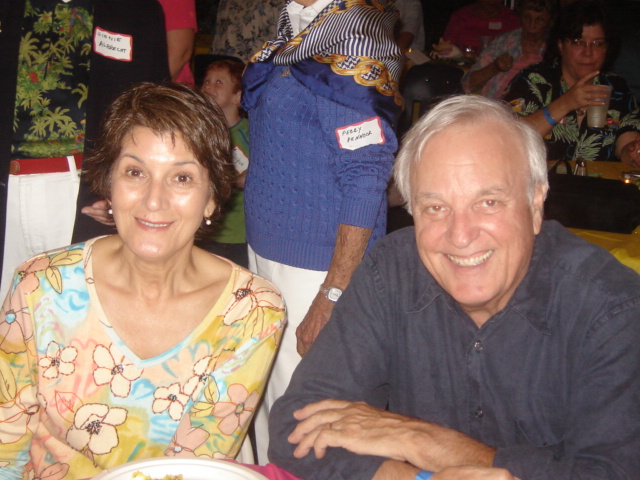
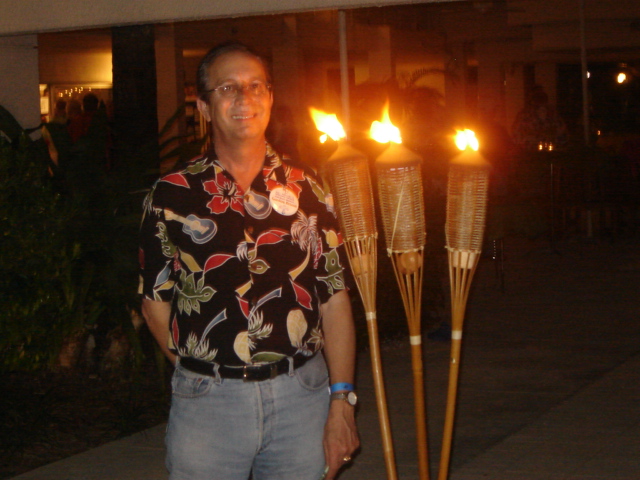
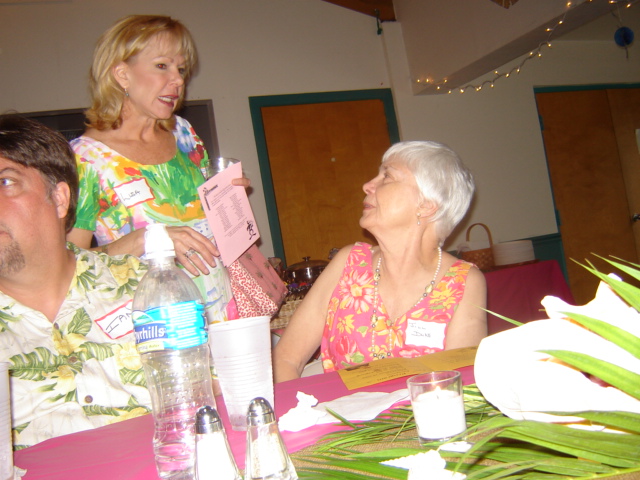
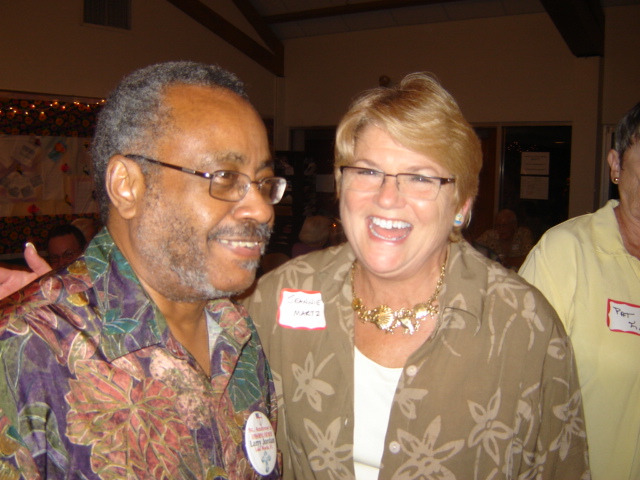
the Reverend jurist Harry Coverston, Father Harry and Gordon, Bruce, Ben and my partner, Larry, filling out the evaluation forms after the lecture, their are a couple of the group of folks who attended, a picture of Father Harry and Canon Nolan and Father Harry being introduced by our lovely MC and grant writer, Ms. Margo Emery and of the priest-in-charge of St. Andrew's Episcopal Church, Lake Worth, FL, Father Paul Rasmus and lovely wife, Brenda.
Father Harry's lecture was great. He talked about power and control issues related to sex and religion, the competitive nature of sex in control and power, the scientific studies on human sexuality as well as the Natural Science studies of the etiology of homosexuality and much more.
Folks asked great questions. We also found out that Father Harry went to seminary with our Presiding Bishop and had very positive things to say about her.
Thanks to Father Harry for participating in the Florida Humanities Council Grant Program and for Margo for taking the grant writing class a couple of years ago and getting St. Andrew's Episcopal Church on the Humanities Council grant circuit.
Regards,
Gordon
www.cafepress.com/fartotheleft
Pictures:
the Reverend jurist Harry Coverston, Father Harry and Gordon, Bruce, Ben and my partner, Larry, filling out the evaluation forms after the lecture, their are a couple of the group of folks who attended, a picture of Father Harry and Canon Nolan and Father Harry being introduced by our lovely MC and grant writer, Ms. Margo Emery and of the priest-in-charge of St. Andrew's Episcopal Church, Lake Worth, FL, Father Paul Rasmus and lovely wife, Brenda.
Father Harry's lecture was great. He talked about power and control issues related to sex and religion, the competitive nature of sex in control and power, the scientific studies on human sexuality as well as the Natural Science studies of the etiology of homosexuality and much more.
Folks asked great questions. We also found out that Father Harry went to seminary with our Presiding Bishop and had very positive things to say about her.
Thanks to Father Harry for participating in the Florida Humanities Council Grant Program and for Margo for taking the grant writing class a couple of years ago and getting St. Andrew's Episcopal Church on the Humanities Council grant circuit.
Regards,
Gordon
www.cafepress.com/fartotheleft
--------------------------------------------------------------------
Trancript of Lecture by the Rev. Jurist Harry Coverston
Religion, Science and Sex
Harry S. Coverston, Ph.D., J.D.
St. Andrews Episcopal Church and the Florida Humanities Council
February 2, 2007
I. Why all the fuss?
I want to start my discussion tonight with a quote from Christel Manning and Phil Zuckerman's very fine text, Sex and Religion:
Every culture grapples and dances in its own ways with the seemingly universal
questions of what it means to be intimate with other humans and what it means to
be intimate with the otherworldly. The rapture of sexual union and the rapture of
communion with the divine are strikingly similar in their power and transcendence,
and there isn't a religion on earth that hasn't constructed barriers and/or bridges
between these two experiences….As (sociologist of religion) Bryan S. Turner
observes, "religious orientations to human sexuality have occupied a variety of
positions along a continuum between total denial and orgy." Indeed, there is no one
specific religious approach to sex within any one given religion. Rather the
relationship between sex and religion involves a myriad of perspectives,
contradictions and debates.
There are few aspects of the interface between religion and sexuality that produce more perspectives, contradictions and heated debates today than issues surrounding homosexuality. A full consideration of the debates surrounding homosexuality in today's culture wars inevitably includes aspects of the sciences, both natural and social, and philosophy in addition to religion. This discussion will attempt to identify some of the aspects from the realms of the sciences, philosophy and religion with hopes of furthering the conversation regarding sexuality generally and homosexuality specifically as it takes place within the context of American religions. While our discussion will include a number of religions, my focus tonight will be on the aspect of American religion I know best - western Christianity as found in the Anglican tradition of which I am an ordained priest.
So, why all the fuss? Why do presidential candidates make same sex marriage their primary campaign issue when issues such as a costly and deadly war in the Middle East and global warming which threatens to inundate communities such as this one within the next few decades confront us and demand our attention? Why are institutional religions such as the Anglican Communion facing threats of schism and the willingness to engage in mutual anathematization over the consecration of a gay bishop in New Hampshire? How do issues of sexuality come to be seen as equal in importance and emphasis to questions of war and environmental devastation? When did issues of sexual mores become elevated to confessional status in churches with disagreement becoming tantamount to excommunication of heretics?
I do not have a single answer to these questions tonight but I have some thoughts on some possible general explanations. I would like to begin with some tensions between religions and sexuality generally and then draw a more specific focus on homosexuality specifically.
The first general aspect in the tension between religions and sexuality I would point to is a concern for power. Sociologist of religion Max Weber called sexual love the "greatest irrational force of life." Weber, who was the first to observe the driven pattern of work that today we call the Protestant work ethic, spent most of his life work trying to explain how the west had become dominated by reason and bureaucracy. Weber believed that the primary role of religions was to systematize, rationalize, and thus control and harness irrationality.
According to Weber, religions work best when they provide a sense of control over chaos to its adherents. The more intellectualized and rationalized religions become, the more the irrational, uncontrolled force of sexuality is seen in need of being controlled, harnessed and eventually overcome. As an aside, one might note that the rise of vehement antagonism toward homosexuality in western Christianity parallels the rationalization and systematization of religion in the form of scriptural literalism, confessional statements like the Windsor Report of the Anglican primates and the muscular reassertion of the magisterium of the Roman Catholic hierarchy under the new Pope Benedict XVI.
Sociologist Meredith McGuire speaks of the "chaotic power of sexuality" that religions have historically seen a need to control in their efforts to provide order in people's lives. Not only is sexuality the moment of utmost vulnerability on the part of human beings, it is also marked by a decided lack of rational control. Historian James Brundage, author of Law, Sex and Christian Society in Medieval Europe, observes that human sexuality is such a powerful, explosive force that it requires strict regulation by any group which would seek to establish and maintain authority.
In short, religion's perennial role in the regulation of sexuality has much to do with providing a sense of existential security on the one hand - a primary function of any religion - and maintaining a perspective of authority and thus power as a social institution on the other.
A second possible explanation for religion's concern about sexuality is the function of sexuality as a possible means to peak or unitive experiences. First described by humanist psychologist Abraham Maslow in his work on the famed hierarchy of needs, peak experiences are
"sudden feelings of intense happiness and well-being, and possibly the awareness of 'ultimate truth' and the unity of all things. Accompanying these experiences is a heightened sense of … awareness, as though one was standing upon a mountaintop. The experience fills the individual with wonder and awe. He feels at one with the world and is pleased with it; he or she has seen the ultimate truth or the essence of all things."
In Daniel Helminiak's 1998 article in Pastoral Psychology on Sexuality and Spirituality: A Humanist Account, he says:
[T]he sexual experience can also rightly be called spiritual or, if you prefer to push the envelope, mystical. Indeed, in those rare and extraordinary moments, mere outgrowths of the mundane, when the arousal of sexual excitement allows the dynamism of the spirit to break through in force, the unitive experience of sex might include an experience of the unity of all things. Open to the dynamism of the spirit through sexual arousal, one glimpses the anticipated goal of the human spirit.
Helminiak argues that "human sex should lead to spiritual integration, for such is precisely the nature of all truly human experience" even as he observes that far too frequently, it does not.
While many religions consider sexuality primarily a function of the body with its temporally limited existence and thus a distraction from true ultimate concerns of the immortal soul, some religions consider sex as outright competition - and tough competition at that. In the sexual act, one derives overwhelming satisfaction directly from another human being or possibly even from oneself, rather than a god, spirit, religious leader or system of beliefs. It is quite possible to lose oneself while experiencing sexual pleasure, to achieve a state of transcendence, to feel at peace, to feel released, liberated and loved. All of these results are often the manifest goals of religious systems. Given the intrinsic and visceral power of sex, it could readily be viewed as ultimately threatening religious hegemony on transcendence.
A third possible explanation of why the current fuss over sexuality is ancient in origins. The earliest known human religious systems frequently featured a focus on sexuality in terms of fertility, a focus which found expression in the worship of earth goddesses embodying sexual power and fertility. Such religious systems frequently employed temple prostitution in which erotic rites featured sexual practices.
With the rise of Iron Age warrior kingdoms and their male sky gods such as the Hebrew gods YHWH, Adonai and Elohim, the suppression of earth goddess cults became a part of the sky god religious agenda. It is significant to note that in the passage from the Hebrew Scripture book of Exodus containing what Jews and Christians today call the 10 Commandments, Elohim, the male, sky warrior god, commands that the Hebrew people worship no other gods, ending the commandment with a self-disclosure: For I am a jealous god.
Evidence of the suppression of the goddess cults with their focus on fertility and sexual rites is rife within the Hebrew Scripture. Some aspects are obvious: the destruction of the cults of Baal and the goddess Ashtarte at Mt. Carmel, destruction that resulted from the rain of fire from the sky god Yahweh upon the altar of Elijah, a sign of the true god. The lesson of that story: the earth goddess fertility cults with their focus on sexual rites are false gods and must be destroyed.
Less obvious is the more generalized suppression of the feminine that becomes connected to the body and sexuality generally and to pagan gods. We see hints of that connection in the Garden of Eden story sometimes called the Fall narrative after St. Augustine's interpretation of the account in his work The City of God. There the Yahwist writer connects a number of aspects of this discussion:
It is the woman who causes the loss of innocence and thus Eden for humanity
She is seduced by a serpent, a common symbol of goddess cultures
The sky god Yahweh is ultimately triumphant, subduing the serpent and the
associated goddess culture as well as punishing the disobedient woman with a socially prescribed role of submission to her male counterpart
The submissive socially prescribed role of women will play a dominant part in the social construction of the mother of Jesus in Christian thought. The rise of the virgin Mary cult of the middle ages will feature a woman who is submissive to the warrior sky god, responding to the angel's news that she is to bear a child out of wedlock with "Be it unto me according to thy will." Thereafter, Mary will be constructed by Christian theologians as eternally virginal, pure, and submissive to G_d including the willingness to suffer the most intense pain human beings know - the brutal slaughter of her own child.
The motif of women as temptress and threat to male dominance is a constant of Hebrew and Christian scriptures ranging from Delilah's betrayal of Sampson to the Whore of Babylon of Revelation. An ongoing imperative of the male dominant, warrior sky god religions of the Iron Age is the suppression of the goddess and thereby of women. It is also critical to note that the practice of writing rises concurrently with the Iron Age patriarchal societies. The question that must constantly be raised regarding the negativity of Hebrew and Christian scriptures regarding the body, sexuality and women is simply this: Who is writing the story and what agenda might that writing serve?
This leads to a fourth possible explanation of why all the fuss. An essential role of religion in every human society is the legitimization of the status quo. Peter Berger's 1965 work The Sacred Canopy described the social construction of the social world with all of its institutions which he called the nomos. Because human beings desire to see their social world in enduring, authoritative terms, they often turn to religions as the means by which an eternal order can be expressed in the socially constructed institutions and self-understandings of the current place, time and culture.
Legitimization can be political: G_d bless America. It can be personal: G-d has called me to be a priest. But most importantly, it can be social: Marriage is an institution created by G-d, a statement which by definition ignores a long history of social construction of the institution of marriage and cultural diversity in its expression.
With the liberation movements of the 1960s and 70s, questions regarding the socially constructed roles of women, people of color, the disabled and gays and lesbians sprang from the back burners to the forefront of social discussion. It is not surprising that Berger's work on social construction arose during this time frame. What was troubling to many people, however, was the clear implication of recognizing the socially constructed nature of all human institutions: if a social institution such as marriage could be constructed in one manner depending upon the place, time and culture, it could be constructed in other manners.
Not surprisingly, the liberation movements of the 1960s and 1970s were met by what feminist writer Susan Faludi called the backlash of the Reagan Revolution of the 1980s in which the defenders and beneficiaries of the status quo desperately sought to put the genie of liberation movements back in the bottle. The confrontation of the thesis of liberation with the antithesis of backlash has resulted in the culture wars of the late 20th and early 21st Century, a key focus of which is the role of gays and lesbians in the wider society and particularly within organized religions.
Before moving from this subject, it is important to recognize a key element in the vehemence of the anti-gay backlash. The 1956 work of psychologist Leon Festinger described a phenomenon he called cognitive dissonance, the uncomfortable tension that results from attempting to hold two incompatible, if not contradictory, understandings at the same time. Festinger found that the more an individual or group had invested in an understanding drawn into question by new evidence to the contrary, particularly when those investments were public, the more difficult it was to reconcile the two conflicting understandings. Festinger's work focused in part on the failure of millenialist visions of the end of the world to materialize at the beginning of the 20th Century and their subsequent adaptations of their beliefs into new religious movements called the Seventh Day Adventists and the Jehovah's Witnesses. Festinger observed that cognitive dissonance was profoundly disturbing to those enduring it, thus leading many to deny the conflict, to dismiss any evidence contrary to the prior beliefs, to attack those who were seen as agents of the cognitive dissonance (sometimes called killing the messenger or stoning the prophets) or possibly to seek to recruit others to hold the beliefs in question as an attempt largely to reassure themselves of the credibility of those challenged beliefs.
The recent movement within Anglican bodies such as the Episcopal Church of the United States and the Anglican Church of Canada to ordain gays and lesbians and recognize their unions if not their marriages, examples of a much wider movement toward equality for gays and lesbians within those societies and within organized religions generally, have no doubt produced no small amount of cognitive dissonance for many within North America. Questions of gay priests and bishops run completely counter to traditional understandings of homosexuality as a sin within western Christianity. It is important to note that this development occurs in the wake of a similarly dissonance producing event of a decade ago when women clergy began to integrate what had been an exclusive all male club, a pattern that continues to hold true in Roman Catholicism and Eastern Orthodoxy.
More importantly, given the frequent use of religion as the means of legitimizing the social institution of heterosexual marriage, the question of recognizing and liturgically celebrating same sex marriages may well produce major cognitive dissonance for many. James Dobson, the evangelical Protestant psychologist who produces the Focus on the Family radio program, readily reflects this dissonance when he states in his 2004 book Marriage Under Fire that even tolerance of same-sex marriage, much less its legalization, would redefine the family and lead to an increase in homosexual couples.
Same sex marriage raises questions of individual identities, socially constructed gender roles and socially constructed institutions. It is asking a lot of human beings to reconsider their understandings of marriage, parenthood, their definitions of family if not their very understandings of what attitudes and behaviors are considered right and wrong if not sinful. Indeed, the ultimate effect of cognitive dissonance is disequilibration if not disorientation: if I can no longer believe these aspects of my social reality which I have taken for granted up to now, what can I believe about myself and the world in which I live? For those who have been given charge of education and pastoral care, these are no minor considerations.
II. Science and Sex
I'd like to turn now to the second part of my discussion, the intersection of sexuality with science, specifically what science can tell us about the phenomenon of homosexuality. One of the perennial questions regarding homosexuality is its aetiology: How do some people come to experience themselves as constitutionally homosexual or bisexual and not heterosexual?
For the vast majority of recorded history, homosexual behavior was seen as an aberrant though commonly occurring behavioral pattern in virtually every culture on the planet. While some of the clearest records of homosexual behavior come from the ancient Greeks and Romans, every culture from American Indians to Asians to Africans reflects the presence of homosexual behavior in their midst, often in negative, proscriptive terms. From this pattern, two observations arise: One, regardless of its causation, homosexual behavior is a given in the human species, and two, such behavior has frequently been met with negative response.
The negative responses of most cultures to homosexual behavior would appear on their face to arise from an understanding of human sexuality that is heteronormative, i.e., that heterosexuality is the norm for human beings, a presumption readily stated by the American Family Association in its publication Homosexuality in America: Exposing the Myths. The AFA tract asserts that:
Fundamental to human life in society is the creation of humankind as male and female, which is typically and paradigmatically expressed in the marriage of a man and a woman who form a union of persons in which two become one flesh – a union which, in the Biblical tradition, is the foundation of all human community.
In practical terms, then, the heteronormative presumption means that everyone either is heterosexual or ought to be. Further, if heterosexuality is the normative behavioral pattern, the natural presumption that arises from homosexual behavior is that the homosexual actors have chosen to act in a manner contradictory to the norm. And it is precisely upon the heteronormative presumption that human beings are deliberately choosing to violate the heterosexual norm that moral and religious condemnation is based. The salient question, then, is whether the heteronormative presumption is valid.
Challenges to the presumption have evolved over time. It was not until the late 19th Century that psychologists began to discuss the predilection toward homosexual behavior as indicative of a basic sexual orientation which was itself homosexual. But even with that understanding, the causes of homosexual orientation were understood in psychopathological terms due in no small part to Freud's theory that weak fathers and dominant mothers caused homosexuality.
Up until the 1970s, homosexuality was seen in much of the world as being a form of mental disorder, a diagnosis which continues to be heard in the current Roman Catholic teachings on homosexuality as a morally disordered behavioral pattern. In 1973 the American Psychiatric Association removed homosexuality from its Diagnostic and Statistical Manual of Mental Disorders, a definition which the APA would later admit had served largely to buttress society's moral disapproval of same-sex relationships. In 1998 the APA decided to oppose any psychiatric treatment, such as "reparative" or conversion therapy, which is based upon the assumption that homosexuality per se is a mental disorder or that a patient should change his/her sexual homosexual orientation. In such a priori assumptions is readily seen the heteronormative presumption.
A major reason cited by the APA in its recent decision to oppose reparative and other conversion therapies was the lack of scientifically rigorous studies indicating the success of therapies aimed at changing sexual orientation. A second reason that the APA cited is their ready use in the culture wars by conservatives who oppose the ending of discrimination against gays and lesbians. A final reason cited by the APA was the blurring of the now discredited Freudian psychological theory of weak fathers and dominant mothers causing homosexuality with conservative religious beliefs.
What resulted from the APA reversal of its pathologizing of homosexuality was what philosopher of science Thomas Kuhn called a paradigm shift - a change in basic assumptions about scientific reality which in turn determines how subsequent scientific research occurs and its findings evaluated. With behavioral and psychopathological explanations no longer available, those who sought to determine the origins of homosexual orientation had to look elsewhere. It was at this point that a concerted effort to explain homosexual orientation in scientific terms ensued.
Over 30 years later, the exact aetiology of homosexuality is not yet clear. But a number of studies have proved enlightening. To wit:
A 2003 study from UCLA which found 54 different genes which affected differences in male and female brains as well as sexual orientation and the development of sexual organs in mice
A 1999 study by linguist and cognitive scientist Bruce Bagemihl who found that homosexual behavior is observable in 450 vertebrate species. Bagemihl also found that many scientists reported being afraid to make their findings public because of homophobia within academia, a tendency he noted in the descriptions of animal same-sex behaviors in terms such as "insulting, unfortunate, and inappropriate."
A 1994 study which found that differences in brain structure, particularly the size of the hypothalamus, appear to be correlated to sexual orientation
A series of studies from 1993-1995 examined the role of a genetic marker on the X chromosome of gay men with at least one team of scientists concluding that the Xq28 marker strongly correlated to male homosexual orientation and that it may be maternally transmitted
A 1993 study of twins found that in 52 percent of gay identical twins both twins were gay compared with only 24 percent of fraternal twins and only 9 percent of non-twin siblings.
A 1997 study of birth order suggests that in gay males, the likelihood of a male sibling reporting a homosexual orientation increases in proportion to the number of his older brothers.
Part of the difficulty in obtaining scientific evidence regarding homosexuality is the omnipresent heteronormative presumption which may well serve to prevent many from reporting their sexual identity. Such difficulties are well represented by a study from the University of Georgia which appeared in the Journal of Abnormal Psychology in 1994. A team of three behavioral scientists conducted a study of 65 male undergraduates at the university who reported having had no homosexual experiences and experiencing sexual desires only for the opposite sex. The team used a survey instrument called the Index of Homophobia to measure their attitudes regarding homosexual men and behaviors. They then followed the survey with a screening of both heterosexual and homoerotic pornographic films while documenting the degree of sexual arousal in each of the subjects' penises using an instrument called a plethysmograph measuring device (aka the peter meter). The results showed that those men who had reported the most virulently homophobic attitudes were also those with the highest levels of sexual arousal from homoerotic film. The conclusion of the researchers was that homophobic attitudes may be expressed more emphatically by those with repressed homosexual desires.
What can be surmised from this pastiche of studies and surveys of the past 30 years? First, it would be fair to say that knowledge of the exact factors which lead to homosexual orientations in individuals continue to elude us. The more information we have amassed, the more questions arise:
To what extent do hormonal and neural factors influence sexual orientation?
To what extent do genetic factors influence sexual orientation?
To what extent might cultural and environmental factors influence sexual orientation?
What role does the heteronormative presumption play in preventing accurate information gathering regarding sexual orientation?
But while it would be fair to say that biological explanations for sexual orientation are not yet firmly and irrefutably established, it would correspondingly be fair to say that the past 30 years of research have fairly assuredly ruled out prior understandings of homosexuality being a psychopathology capable of treatment with an outcome of the recovery of the normative heterosexual orientation. Second, it would also be fair to say that given the initial indicators of neural, hormonal, genetic and birth order natural factors correlated to the occurrence of homosexual orientation in human beings, it is highly unlikely that the realization of homosexual orientation by a given individual is the result of a choice of orientation. Third, the widespread observable pattern of homosexual behaviors among vertebrate animal species whom human beings have historically considered to be incapable of rational thought suggests a natural explanation for homosexual orientation and gravitates against the notion of such orientations being a matter of choice. In short, there is a strong though still rebuttable presumption in the scientific community today that homosexual orientation is a naturally occurring phenomenon in the animal kingdom including the species homo sapiens.
Such an understanding clearly presents problems for many within organized religion and it is to that subject we now turn.
III. Religion and Sex
It must be noted at the outset of any discussion of sexuality and religion that world religions have hardly been uniformly negative regarding sexuality. As I noted previously, many ancient religions incorporated sexuality into their rites recognizing the power of fertility. And traces of that sex-positive approach continue into the evolution of world religions. Eastern religions such as Hinduism graphically depicted gods and goddesses in sexual union on their temples and its culture produced the Kama Sutra, literally teachings on sexual pleasure said to have been originally recited by the god Shiva while enjoying intercourse with his consort Parvati. In the west, Judaism reflects a ready willingness to accommodate sexuality within its religious understandings through sexually charged writings such as the Song of Songs and midrash which teaches that married couples have a duty to recognize the Sabbath by engaging in sexual intercourse.
Boston College Ethics Professor Anthony LoPresti describes Christianity's approach to sexuality as "a mixture of both wonder and suspicion. Awed by its power and attraction, yet leery of its destabilizing effect on the mind, Christian thinkers have embraced sex cautiously, seeing it as a part of God's good creation that is nevertheless tinged by the ravages of human sin." LoPresti notes that Christianity's primary appreciation of sexuality has been its procreative potential with other positive qualities of sexuality such as feelings of intimacy and physical pleasure being largely overlooked or disparaged.
The most common Christian moral approaches to questions surrounding sexuality appeal to four basic sources: Scripture, Tradition (which includes church teachings), Reason and Experience. If some of you find that lineup familiar, it largely reflects the three legged stool of Richard Hooker who posited scripture as the beginning point of any discussion regarding Anglican theology and morality but always in the context of the church's traditional teaching to interpret it and critical reason to examine its soundness. LoPresti's fourth leg of experience actually reflects the Wesleyan Quadrilateral of Anglican priest John Wesley whose Methodist movement within Anglicanism later became the foundations for the Methodist Church.
For LoPresti, the use of reason is largely confined within Roman Catholic tradition to the application of Catholic Natural Law, a form of reasoning that appeals to Thomas Aquinas' theory that there is an objective moral order to the universe laid down by God that is independent from but accessible to human beings through the powers of observation and reason. While the idea of a divinely inspired natural order may be comforting to those who wish to believe that the universe is an ordered entity, the problem with Roman Catholic approaches to natural law is that they have tended to become frozen in time, wedded to church politics such as clergy celibacy, and thus static and brittle in their applications in the light of modern science. The official Roman Catholic teaching on homosexuality, for instance, condemns homosexuality as "objectively disordered" and "intrinsically evil because they are closed to the gift of procreation and do not proceed from a genuine affective and sexual complementarity," an assessment supposedly based in the divinely inspired universal order said to be observable in the natural world.
Clearly, the vast majority of animal species comprising the natural world including human beings do exhibit heterosexual inclinations in their behaviors. But, just as clearly, in humans as well as among 450 other vertebrate species, a minority of individuals display homosexual behavioral patterns. Much like the occurrence of left-handedness in human beings, the incidence of which is roughly equal to some estimates of homosexual orientation in the human population, a consistent and persistent minority of exceptions to the norm are observable over time and cultures. If we are talking about a natural law which accounts for the actual natural order, a deference to the majority experience as somehow speaking for the entirety of possible experiences is less than accurate if not less than honest.
In the early 19th Century, a French nobleman named Alexis DeTocqueville visited the young United States. DeTocqueville saw much potential in the American experiment even as he observed some of its potential pitfalls. One of the major concerns DeTocqueville articulated in his resulting book, Democracy in America, was a phenomenon he called the "tyranny of the majority." What DeTocqueville recognized was that majorities - defined either by sheer numerical strength or by social power - tend to see their experience and identity as normative for everyone. In short, everyone is like us or ought to be. And if they refuse to become like us, it is because there is something morally wrong with them. It is interesting to note that the Greek word for left handedness is sinister, an implicit moral judgment on the minority whose experience differs from and draws into question that of the majority.
In the three legged stool of Hooker and the four legged quadrilateral of Wesley, reason is not tied to medieval church teachings about natural law. Rather, the critical reason of the Enlightenment is used to question the soundness of scriptural and traditional teachings. From my rather biased perception as an Episcopal priest, this is a superior approach to moral questions because it encourages the application of the findings of the modern sciences as a means of judging the soundness of both scripture and tradition in making moral judgments. It was precisely the ability to interject the findings of natural and social science into moral discussions that have allowed traditions such as the Episcopal Church to recognize the problems with scriptural and traditional understandings of slavery, racism, the role of women and divorced persons within the church and to formulate new understandings.
But it is perhaps the role of experience that is most important in wrestling with the question of religion and homosexuality. Where conservative approaches to questions about the nature of homosexuality per se and the place of homosexuals in organized religions have tended to focus heavily on traditional exegesis of scripture and appeals to a natural law frozen in time, it is the corners of the Christian tradition where gays and lesbians with new found courage have been willing to tell of their experience that changes have begun to occur.
One of the constants in relationships between socially dominant groups and the powerless groups over whom they exert power is the construction of the powerless in terms of parent/child relations. Socially powerful groups - in this case the heterosexual majority - operate under the rubric of the parent thus capable of defining the experience of the childish minority - in this case the gay and lesbian minority - and constructing rules to govern their behavior often cast in terms of being "for their own good." In parent/child relationships, the powerless child is never expected to speak for themselves or to allowed determine their own behavior. A good example is the 1998 Lambeth Resolution on Human Sexuality issued by the primates of the Anglican Communion which proclaimed the duty of the church "to listen to the experience of homosexual persons." In fact little listening has occurred. Indeed, some of those very primates have lobbied for laws which would make public discussion of homosexuality punishable by prison sentences or death. With the rise of identity and liberation movements of the 1960s, powerless minorities began to insist upon the right to speak for themselves and their own experiences. And it has been precisely the tentative willingness of the dominant majority to hear that experience that has proven a powerful impetus to change discriminatory constructions of social institutions ranging from the workplace to religious institutions.
LoPresti observes that it is the point where one falls on this spectrum from scripture to tradition to reason to experience that frequently determines where one comes down on moral understandings surrounding sexuality. Conservative, classically conscious Christians tend to lean on the right end of the spectrum - scripture, tradition and reason bound by church teachings on natural law. Historically conscious Christians who recognize that moral norms evolve are thus more inclined to trust moral wisdom derived from experience and the critical reason informed by the natural and social sciences in appropriating scripture and church tradition. In between fall perhaps the majority of Christians who are uncommitted to favoring any of the four sources and who thus experience difficulty in deciding how to arbitrate between the conflicting values and claims that they present.
The openness to the claims of natural and social science, then, is a major underlying factor in the chapter of the culture wars currently waging within western Christianity over the issues surrounding homosexuality. It is to the intersection of religion and science that we now turn.
IV. Religion and Science
In his 1970 book on Religion, Values and Peak Experiences, humanist psychologist Abraham Maslow asserted the following:
It is because both science and religion have been too narrowly conceived, and have been too exclusively dichotomized and separated from each other, that they have been seen to be two mutually exclusive worlds. To put it briefly, this separation permitted nineteenth-century science to become too exclusively mechanistic, too positivistic, too reductionistic, too desperately attempting to be value-free. It mistakenly conceived of itself as having nothing to say about ends or ultimate values or spiritual values. This is the same as saying that these ends are entirely outside the range of natural human knowledge, that they can never be known in a confirmable, validated way, in a way that could satisfy intelligent men, as facts satisfy them. Such an attitude dooms science to be nothing more than technology, amoral and non-ethical (as the Nazi doctors taught us). Such a science can be no more than a collection of instrumentalities, methods, techniques, nothing but a tool to be used by any man, good or evil, and for any ends, good or evil. This dichotomizing of knowledge and values has also pathologized the organized religions by cutting them off from facts, from knowledge, from science, even to the point of often making them the enemies of scientific knowledge. In effect, it tempts them to say that they have nothing more to learn.
While Maslow's assessment of religion may be a bit overstated in its indictment of what he saw as a hide-bound anti-intellectualism, it is no doubt fair to say that resistance to gay and lesbian rights in the west has been rooted primarily in religious institutions which have largely ignored or actively rejected the findings of the past 30 years of scientific investigation into sexual orientation. Sociologist Anthony Coxon states it rather plainly: "It is significant that virtually all studies of the determinants and consequences of homophobia, however defined, pinpoint religiosity as a major and important correlate." At a very basic level, such an approach indeed evinces the very attitude of which Maslow accuses religions of holding - cutting themselves off from facts, from sciences, tempting them to say that they have nothing more to learn.
But the unwillingness to consider scientific explanations for sexual orientation occurs in a theological and ideological matrix of at least 2000 years which must be accounted for. Oxford theology professor Andrew Linzley locates the persistence of anti-gay and lesbian attitudes in the matrix of two millennia of Christian teaching that homosexuality is aberrant and disordered. Much like the location of the Holocaust at the end of a long history of first anti-Judaism and later anti-Semitism within Christianity, it is not fair or accurate to say that homophobia is a necessary outcome of the Christian tradition. Nonetheless, it is difficult to avoid the conclusion that without two millennia of teachings that range from the presumption of heteronormativity to the demonization of gays and lesbians by bishops as "intrinsically evil" the persistence of homophobia in the west and its former colonies would have to be seen as much less likely to have persisted into the 21st Century.
Homophobia is clearly one of the more emotionally charged words that is exchanged in the culture wars surrounding homosexuality. The user driven online encyclopedia site Wikipedia provides a number of interesting aspects of this word and its usage:
Homophobia is the fear of, aversion to, or discrimination against homosexuality or homosexuals.[1] It can also mean hatred, hostility, or disapproval of homosexual people, sexual behavior, or cultures, and is generally used to insinuate bigotry.[2] The term homophobic means "prejudiced against homosexual people,"[3] and a person who is homophobic is a homophobe. The word homophobic, when used to label someone as prejudiced against homosexual people, can be a pejorative term, and the identification of a group or person as homophobic is nearly always contested.
A number of particular aspects can be noted in this definition. First, homophobia is almost always seen as a derogatory description. When applied to thinking, it suggests a culturally induced blindness which prevents clear thinking and results in bigotry. When applied to a person in the term "homophobe," it reduces an otherwise complex human being to a single negative characteristic, prejudice against homosexuals. It is not surprising that reductionism to negative terms will be nearly always contested. Sister Helen Prejean, the chaplain on Louisiana's death row who wrote Dead Man Walking about her experience with condemned inmates awaiting execution for murder sums up well the resistance to reductionism: "... people are more than the worst thing they have ever done in their lives."
As an academic and a priest, I tend to strongly resist reductionism, particularly when it is the reduction of a fellow child of G_d to a caricature allowing the reducer to simply dismiss the other and anything they might have to say. Anytime we catch ourselves completing the reductionist sentence "Just a ____" and then filling in the blank, we ought to suspect that our real goal is to avoid what the other might have to say to us if not the intentional ignoring of their very humanity.
On the other hand, people are not reducible to their thoughts and attitudes. Thus it is not only possible but imperative to require people to be responsible for what they feel, think, say and do. In the legal profession to which I devoted eight years of my life there is a standard of liability that lends itself well to this discussion of religiously informed moral values and the findings of modern social and natural science. When people are sued for damages that their actions or lack of attentiveness have caused other people, a common standard for liability imposed by courts is based upon the awareness of the problem. Where juries are able to find, for instance, that a property owner knew or should have known about a dangerous condition on his property which regularly attracted local children one of whom was later injured thereby, they find defendants liable for the damages suffered by the injured child.
Where the term homophobia might fairly be applied to the attitudes, statements and actions of another is in situations where individuals and groups have chosen to avoid or to dismiss without serious consideration the findings of the sciences or the experience of the individuals in question, opting instead to uncritically cling to traditional exegesis of scripture, church teachings and understandings of natural law. In such situations one must honestly ask themselves whether those who either know or ought to have known that their position is questionable when seen in the light of natural and social science as well as the experiences of those they presume to define can be taken seriously. In such situations one must ask if the rejection of the disconfirming evidence and the avoidance of the disconfirming other can be seen in any other light than that of homophobia.
In the mid 20th Century, French existentialist philosopher Jean-Paul Sartre provided a useful understanding of the avoidance of unpleasant realities with his concept of bad faith. Sartre saw bad faith as simply lying to oneself about a particular reality, hiding a displeasing truth or presenting as truth a pleasing untruth, a practice he distinguished from lying in general. For Sartre, bad faith was never a state of consciousness imposed from without but rather a willing act of accepting a situation as fact on what the person knows - and I would add here "or should have known" - is objectively faulty evidence.
The question that is raised by the willful ignoring of the findings of the sciences and the experience of the other is whether the advocate of such a position can be seen as arguing in good faith. Can those who know, or should have known, of the contradictions found in science and life experience to positions such as homosexuality being a choice and thus as sinful be seen as operating in good faith? Note, while this query does not question the general honesty of those who make such arguments, it does question whether on this particular subject the maker of the arguments is doing so in good faith and thus can be taken seriously.
Of course, denial, dismissal and avoidance of the findings of science by the guardians of traditional religious beliefs and institutions is hardly new. Perhaps the best example of the failure of religion to countenance the disconfirming findings of science was the collision between the astronomical observations of Galileo and both the Roman Catholic Church and the newly arising Protestant churches of the early 17th CE. It is telling that Galileo believed that the servants of the Inquisition would simply see the light, quite literally, if they merely looked through his telescope to observe what the miracles of contemporary science would provide. What he had not anticipated is that many of the investigators in the Inquisition would refuse outright to even look through the telescope and that many of those who did would find themselves unable to report in good faith what they saw there. It is also telling that 250 years later, the same Roman Catholic Church who required perhaps the brightest man in the world of his time to recant his findings and repent of heresy to save his life would ultimately find itself apologizing to Galileo and admitting their error.
The issue of good faith is brought into pointed focus for the Judeo-Christian traditions with the question of gays and lesbians and the church and synagogue. In both Jewish and Christian belief systems, the principle of reciprocity is embodied in what is frequently called the Great Commandments - Love G-d and love one's neighbor as oneself, commandments which are said to be the basis for all the Hebrew law and prophets. The principle of reciprocity is at the heart of the second commandment - the ability to treat the other as one would wish to be treated. Its restatement in the Golden Rule, the ethical maxim found in every cultural value system in the world, is even more pointed: Do unto others as you would have them do unto you. Thus a quick check for the ethical soundness of any socially constructed role is simply whether one would be willing to trade places with those disadvantaged by that role.
For American Episcopalians, the question of good faith became even more pointed with the adoption of a new prayer book in 1976 with its new liturgy for baptisms including a Baptismal Covenant. Each baptism, the assembled congregation is asked to reaffirm a series of statements which begin with the Apostles Creed and end with two very interesting promises: "Will you seek and serve Christ in all persons, loving your neighbor as yourself?" and "Will you strive for justice and peace among all people, and respect the dignity of every human being?" to which the congregants respond "I will with God's help."
Thus, for Christians generally and Episcopalians specifically, opposition to the recognition of the human rights of gays and lesbians both within the church and in the larger society raises a question of good faith. Einstein stated the conflict well in the mid 20th: "You cannot simultaneously prepare for and prevent war." A restatement of that question in the current context might well go something like this: You cannot simultaneously preach love of neighbor and practice discrimination against them. What Christians generally must explain is how discriminatory attitudes and practices can be reconciled with the reciprocity - the love of neighbor as oneself - that forms the foundation of their faith. What Episcopalians must explain is how the practice of discrimination within the church and in advocacy against issues of equality in the larger society can be reconciled with promises to strive for justice and respect the dignity of every human being.
This brings me to my final topic - where does this question go from here? It is perhaps a given that religious institutions tend by nature to be conservative and frequently are the last of the social institutions to change over time. And as Anglican theologian Andrew Linzey noted, on the issues surrounding the role of homosexuals in our society, it is the religious institutions in which the most resistance to the movement for equality and the recognition of the human dignity of homosexuals has been rooted. The question I would raise tonight is whether that is a wise stance for organized religion to take as a practical matter. As my liturgics professor in seminary was wont to ask, "Is that the ditch you want to die in?"
In the past round of national elections, five states held referenda on banning same sex marriages. Of the five, four were passed, the exception being Arizona. But the exit polls reveal some interesting demographic patterns with two distinct markers serving to define voters' attitudes: age and religion. Of those who voted in favor of banning same sex marriage, two groups stood out - those over 60 and those who attended church weekly or more often. Conversely the group reporting the lowest support for the ban was those 24 years old or younger. Indeed, in the majority of the states, the 24 and younger group voted against the ban. This is also the group that reports the lowest levels of church affiliation. The other group with low levels of support for the ban was those unaffiliated with organized religious bodies, a group which over the past decade has in a number of surveys shown a major increase in numbers nearing one quarter of the total population.
The implications of these statistics ought to provide no small amount of concern for those in organized religion. With the graying of many American churches including the Episcopal Church, the potential of a disinterested youngest cohort of potential members could spell disaster in a relatively short time. Moreover, given the relative support for human rights of homosexuals expressed by this youngest cohort, the identification of organized religious bodies with resistance to those human rights might well prove to be an obstacle for that cohort's committing itself to organized religion. As one of my students said to me recently, if the church has nothing more to talk about than gays and lesbians, who needs it? Who indeed.
Bibliography
American Family Association. 2007. Homosexuality in America: Exposing the Myths. [online] Available from http://www.afa.net/homosexual_agenda/homosexuality.pdf [Cited February 1, 2007]
Berger, P. (1967) The Sacred Canopy: Elements of a Sociological Theory of Religion. N.Y. Doubleday.
Book of Common Prayer 1979 (1980) N.Y. Seabury Press
CNN.com [online] America Votes 2006, Key Ballot Measures. Available at http://www.cnn.com/ELECTION/2006/pages/results/ballot.measures/ [Cited February 1, 2007]
DeTocqueville, A. (1994) Democracy in America. N.Y. Random House.
Festinger, L. (1956) When Prophecy Fails: a social and psychological study of a modern group that predicted the destruction of the world. N.Y. Harper& Row
Helminiak, D. (Nov. 1998) Sexuality and Spirituality: A Humanist Account. Pastoral Psychology. Vol. 47, No. 2, Pg. 119.
Linzeky, A. and Kirker, R. eds. (2005) Gays and the Future of Anglicanism: Responses to the Windsor Report. N.Y. O Books.
Manning, C. and Zuckerman, P. eds. (2005) Sex and Religion. Belmont, CA. Wadsworth.
Maslow, A. (1970) Religion, Values and Peak Experiences. N.Y. Penguin Books.
Sartre, J-P. (1993) Essays in Existentialism. N.Y. Citadel Press.
Wikipedia.com [online] Homophobia. Available at http://en.wikipedia.org/wiki/Homophobia [Cited February 1, 2007]